There is a quiet but genuine radicalism in the decision to release a recording made on a slightly out-of-tune upright piano during pandemic isolation, conditions far from ideal and intentionally kept that way, rather than re-recording it under controlled circumstances once those circumstances became available again. That single decision defines the entire moral and aesthetic position of Something to Remember, the fourth album from Juan J. Ochoa, released May 19, 2026 via Protomaterial Records. At a time when the line between the authentic and the artificial has become genuinely difficult to locate, Ochoa has made an album that treats imperfection not as a flaw to be corrected but as the very point of the exercise, the evidence that a real person was present at the moment of creation, the proof of human presence in an increasingly mediated world.
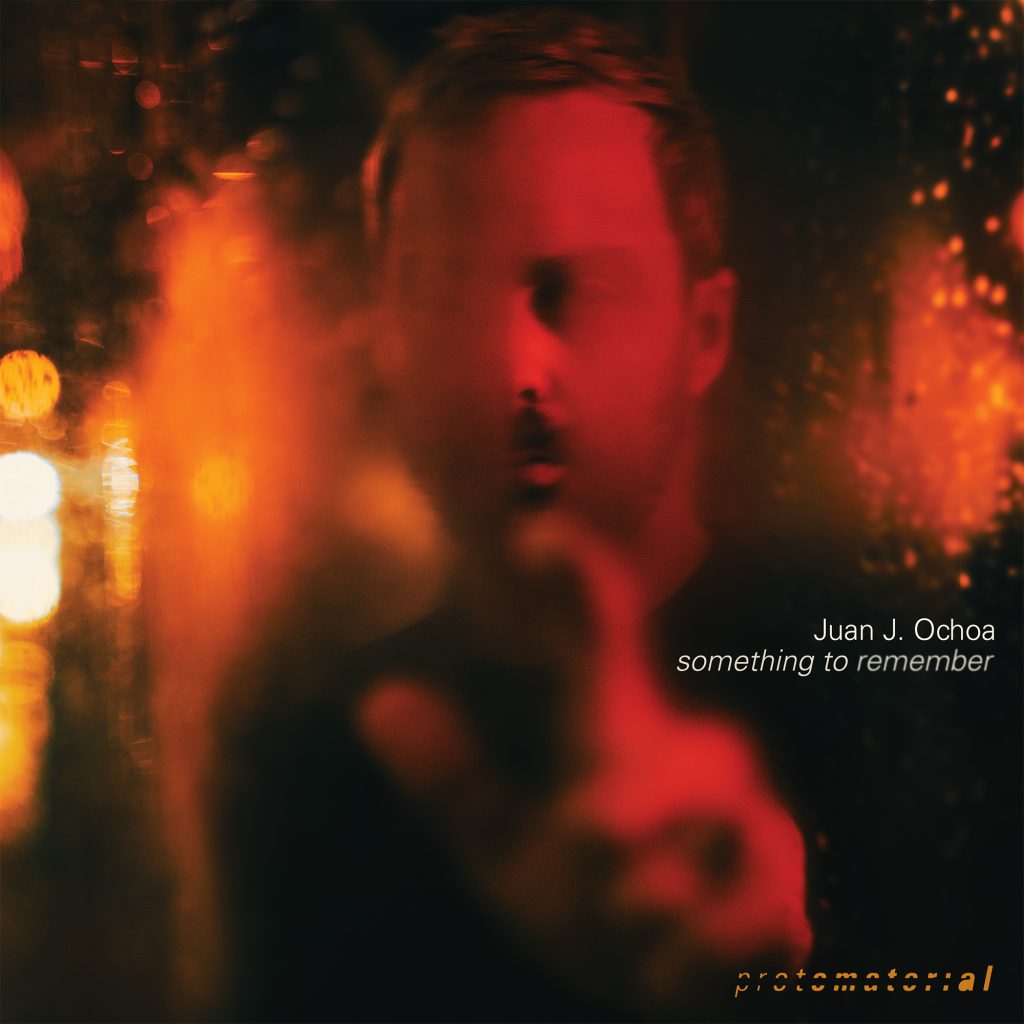
The conviction that runs through every track, that imperfections can be very promising as Ochoa has put it, is not merely a recording philosophy but a worldview, the belief that the unintended string scrapings and the notes that do not quite land and the ambient noise of a room at a particular hour are not noise to be eliminated but signal to be preserved. What another artist might cut, Ochoa keeps, and the keeping is an argument about what music is for and what it captures. A perfectly polished recording erases the circumstances of its making, presenting an idealized version that exists nowhere in actual experience. Ochoa’s recordings preserve the circumstances, the slightly out-of-tune piano and the room and the hour and the human imperfection all remaining as testimony that the music happened, that it was made by a person in a place at a time rather than assembled into flawless artificiality.
The centerpiece of the album, Alone, is the fullest expression of this philosophy. Recorded in isolation on the out-of-tune upright piano during the pandemic, the fragility of the moment is the composition, the piece being inseparable from the conditions of its creation. The decision to release this version rather than a cleaner re-recording is the album’s defining gesture, the acceptance that the imperfect original captures something the perfect version never could, the specific quality of a real moment of solitude during a period of global isolation rendered in sound with all its fragility intact. The loneliness of the title is not merely a theme but a recorded reality, the conditions of the recording being the conditions the title describes.
Ochoa’s work centers on the prepared piano, the technique inherited from John Cage in which objects like felts and screws and vibrators are placed inside the instrument to alter its timbre and behavior, and on Something to Remember the prepared piano sits at the structural and emotional core of the record. But the preparation is used with particular restraint, Ochoa deploying the technique not for its own sake or for novelty but in service of specific emotional and conceptual purposes. On Hannah, inspired by Sion Serra’s autofictional novel about a dual gender transition across nine months, Ochoa uses screws on the strings to produce impossible tunings, shifting the harmony toward something genuinely ambiguous. The ambiguity of the prepared piano’s altered tuning becomes the sonic correlative of the ambiguity and transformation that the novel explores, the unstable and deliberately unresolved tonalities reflecting the in-between state of transition, the technique serving the subject rather than displaying the technique.
The album moves between ambient electronics and solo piano with bowed and pizzicato string textures and keyboard passages, sometimes within a single piece, and this range gives Something to Remember a breadth that prevents its conceptual seriousness from becoming monotonous. Alone establishes the fragile solo piano core, and Night Bus follows as a soundtrack to late-night London journeys and long tram rides in the rain and dreams that did not materialize, the string imprecisions kept intact as part of the composition’s honest texture. The nocturnal quality of Night Bus captures the specific emotional state of late-night travel through a city, the suspended time and the reflective solitude and the slight melancholy of dreams that did not come to pass, all rendered with the imperfections preserved as evidence of genuine feeling.
Extrait de Bayadère refigures Minkus’s melody from the ballet as a slow interior dance, a reclamation of the body as a site of beauty, the classical source transformed into something more inward and more personal. This kind of engagement with the classical tradition, taking a familiar ballet melody and refiguring it as interior experience, reflects Ochoa’s broader project of making the classical and contemporary world more universal and more scenic, the high cultural source brought into a more intimate and accessible emotional register without losing its essential beauty. Paradise Found, the second part of a diptych, builds from a piano melody gradually joined by orchestral voices toward a climax that suggests the paradise is already here, the title’s discovery being not of a distant ideal but of the recognition that what was sought has been present all along.
The album closes with the three-part Earth, three movements of ambient electronics and prepared solo piano and synthesis that together form a conclusion refusing geography as a reason for division. This closing statement extends the album’s humanism into the global and the planetary, the Earth being shared rather than divided, the refusal of geography as a basis for division being a quietly political statement embedded in the album’s broader meditation on human connection and presence. The movement through electronics and prepared piano and synthesis across the three parts demonstrates the full range of Ochoa’s sonic vocabulary while unifying it under a single conceptual umbrella, the technical variety serving the thematic coherence rather than fragmenting it.
The title Something to Remember carries three distinct registers, and understanding all three illuminates the album’s full meaning. It refers to what cannot be forgotten, the experiences and recordings that persist in memory regardless of intention. It refers to Ochoa’s own archive of personal recollection, the album being assembled from pieces held in reserve for years, some doubted and some set aside, brought together in a moment of professional crisis and transformed into something like a declaration. And it refers, obliquely, to Madonna’s 1995 ballad compilation of the same name, an acknowledgment that the impulse to make the classical and contemporary world more universal and more pop-inflected has always animated Ochoa’s practice. This triple meaning reflects the sophistication of the album’s conception, the title working simultaneously on the levels of memory and archive and cultural reference.
Despite its title’s suggestion, Something to Remember is not a nostalgic record. Ochoa frames the act of finally releasing these long-reserved pieces not as looking back but as recognizing that what was once possible remains so, that connection without mediation and attention to the natural world and music made for and by human beings are not lost possibilities to be mourned but enduring ones to be reclaimed. The memory of the title is forward motion rather than backward longing, the recollection serving as the foundation for a renewed commitment to the human and the unmediated and the real.
In an age when the artificial grows ever more sophisticated and the authentic ever harder to locate, Juan J. Ochoa has made an album that plants its flag firmly in the territory of the genuinely human. The out-of-tune piano, the preserved imperfections, the ambient noise of real rooms at real hours, all of it stands as evidence that a person was present, that the music was made rather than generated, that imperfection is not a problem to be solved but the very thing that makes the music worth remembering.
Something to remember, indeed. And in its embrace of the unpolished and the real, something genuinely worth holding onto.