There is a particular courage in deciding, sometime in your thirties, to pick up an instrument you have never played and pursue a dream that the people around you consider delusional, and there is an even greater courage in following that dream all the way to writing and recording and releasing your own music as an independent artist. Montana Joanna picked up the bass five years ago, and Same Stars, released June 5, 2026, is the debut single of her solo project, a groove-centric soul tune about meeting an alien and finding yourself attracted to them, delivered by a singing bassist who five years ago could not have imagined she would be here. The song is the proof of a principle she holds dear, that music is for everyone, and that if you have a desire to do something you must follow it to see where it leads.
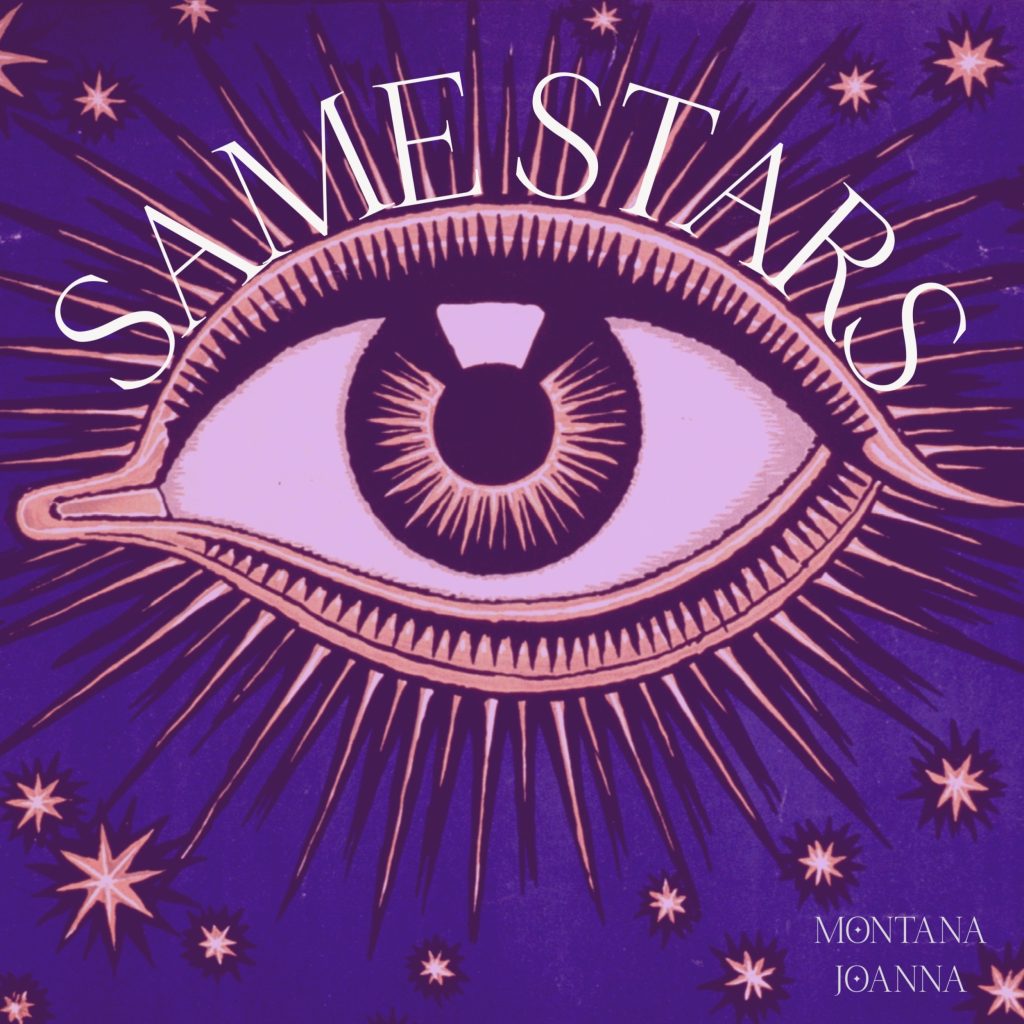
The premise of Same Stars is one of the more delightful and unexpected concepts to anchor a soul song. The lyrics, which Montana Joanna says came to her almost all at once and almost as an inside joke full of wordplay, build around the scenario of meeting an alien and developing an attraction to them, playing with astrology concepts like birth charts and rising signs along the way. The astrological dimension grounds the cosmic conceit in a thoroughly contemporary and relatable behavior, the googling of a crush’s astrology chart the moment you meet them, a habit that anyone who has navigated modern romance will recognize with a guilty smile. And the song lands on the comforting and familiar idea that we are all made of stardust, the cosmic premise resolving into the genuinely moving recognition that the alien and the human and everyone else share the same fundamental origin in the matter of the stars.
This combination of the quirky and the profound is what gives Same Stars its specific charm, the song being simultaneously a fun and playful take on astrology and aliens and a meditation on the deeper truth of shared cosmic origin. Not the usual subject matter for a soul tune, as Montana Joanna correctly notes, and the unexpectedness of the lyrical content against the classic soul groove is part of what makes the song memorable, the listener drawn in by the groove and then surprised and delighted by the wit and the warmth of the words.
The musical foundation of Same Stars reflects Montana Joanna’s love of the groove-centric soul music of the 1960s and 1970s, but the song took on a contemporary quality when drummer Bobby Nelson, son of the keyboardist of funk band Cameo, brought a J Dilla type of behind-the-beat syncopation to the drums. This fusion of old-school soul and horns and jazz-inspired vocals with the contemporary feel of Dilla-influenced rhythm is the song’s defining sonic characteristic, the classic and the modern coexisting in a way that honors the tradition Montana Joanna loves while bringing it into the present. Nelson tracked the drums with her bass before heading off to study jazz drumming at the New School, and the chemistry between the rhythm section is the foundation on which everything else was built.
The full band sound that Same Stars achieves was assembled with genuine care over more than two years, the limited budget of an independent artist requiring that everything be overdubbed piece by piece as Montana Joanna could afford to bring in the musicians she wanted. Multi-instrumentalist Jamie Harrison laid down guitar and piano and some funky clavinet, trombonist Bryant Letellier arranged horn parts for himself and saxophonist Randy Leago, the current horn player for The Beach Boys, and Montana Joanna tracked both the lead and backing vocals along with her signature semi-hollow body bass. The result is a rich full-band soul sound with horns, assembled through patience and determination rather than through a budget that would have allowed everyone to record together at once.
The commitment to live instruments and minimal vocal effects is central to the authenticity Montana Joanna aims to convey, everything from the semi-hollow body bass to the clavinet to the horns and even the wind chimes tracked live with nothing sampled. This dedication to the genuine and the organic connects Same Stars to the soul tradition it draws from, the music of the 60s and 70s having been made by real musicians playing real instruments in real rooms, and Montana Joanna’s insistence on the same approach gives her recording the warmth and the authenticity that sampling and programming cannot replicate. The recording took place at the Recording Center of New Mexico in Albuquerque, a studio with genuine history that has even been used in film and television including Breaking Bad, and the combination of room acoustics and analog and digital technology serves the authenticity that defines her artistic vision.
The detail that makes Same Stars genuinely distinctive in its creation is that the singer is also the bassist, an unusual configuration that reflects Montana Joanna’s specific dream of being a singing bassist. This was only the second song she ever wrote, and somewhere on her phone there is a voice memo of those first verses written while driving to work, the humble origin of a song that has now become a fully realized recording with a full band and horns. As a committed member of three other bands who performs often at local venues like Tumbleroot and the Santa Fe Bandstand, Montana Joanna brings real musicianship to her solo debut, but the solo project represents the pursuit of her own particular dream rather than a contribution to someone else’s vision.
Five years ago, in her thirties, with many people thinking she was delusional to try, Montana Joanna picked up the bass. Same Stars is where that decision has led, a fun and quirky and genuinely warm soul tune about aliens and astrology and the stardust we all share. The dream was not delusional. It was just waiting to be followed.
We are all made of the same stars. Montana Joanna has made the song that reminds us, and proven that following a desire wherever it leads is the only way to find out what you are capable of.