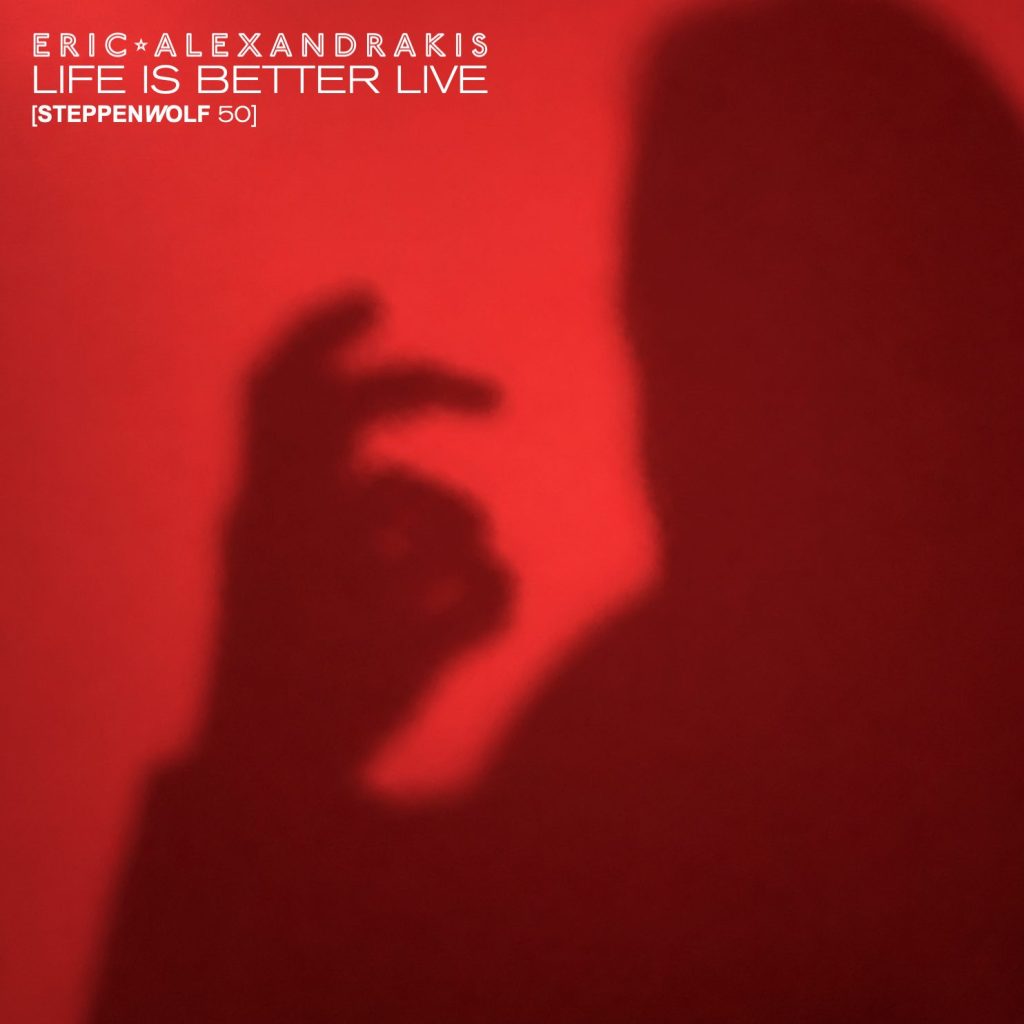
There is a tradition in music that does not seek to please or to soothe but to capture something true about the nature of experience itself, the chaos and the uncertainty and the unpredictable texture of being alive, the tradition that runs through the great avant-garde composers who treated sound as a medium for exploring reality rather than simply for producing pleasure. Eric Alexandrakis, the two-time Grammy-nominated musician from Rethymno in Greece, works within this tradition, and Life Is Better Live, released May 18, 2026, is a striking homage to avant-garde composers Karlheinz Stockhausen and John Cage, an experimental sonic experience that represents chaos and uncertainty and stands deliberately apart from conventional releases. This is music as genuine exploration rather than as product, and it carries the weight of a remarkable career and a serious artistic lineage.
Alexandrakis’s biography reads like a chronicle of significant connections across music and the broader arts. Discovered by Duran Duran’s John Taylor, he has built a collaborative portfolio that includes work alongside John Malkovich and Yoko Ono and members of iconic bands including The Cure and The Smiths and Duran Duran and Tom Petty and the Heartbreakers, as well as the late Dolores O’Riordan of The Cranberries. This is not the resume of a conventional pop musician but of a genuine creative innovator who moves comfortably among the most significant artists across multiple disciplines, and his innovation extends to the technical dimension, having produced the first digitally watermarked CD, a genuine landmark in the history of music technology. This combination of artistic seriousness and technical innovation positions Alexandrakis as exactly the kind of artist capable of creating a meaningful homage to Stockhausen and Cage.
The choice of Stockhausen and Cage as the influences for Life Is Better Live tells you precisely what kind of artistic territory the track inhabits. Karlheinz Stockhausen was one of the most important and most uncompromising composers of the twentieth century, a pioneer of electronic music and aleatoric composition whose work pushed the boundaries of what music could be. John Cage was perhaps the most influential avant-garde composer in American history, whose explorations of chance and silence and the nature of sound itself fundamentally transformed how we understand music. To create an homage to these two figures is to align oneself with the most radical and most intellectually serious strain of twentieth-century composition, the tradition that treated music as philosophical inquiry and sonic experimentation rather than as entertainment, and Alexandrakis’s willingness to work in this demanding territory reflects genuine artistic ambition.
The track’s representation of chaos and uncertainty is its central conceptual purpose, and the unique sound design that Alexandrakis has crafted serves this purpose through the intricate interweaving of musical elements and sonic textures. The creativity, as Alexandrakis describes it, lies in the way the sound design and the musical elements intertwine with each other, the chaos being not random noise but carefully constructed complexity, the uncertainty being deliberately designed rather than accidentally produced. This is the paradox at the heart of the best avant-garde music, the chaos and uncertainty being the result of meticulous craft, the representation of disorder requiring genuine order in its construction, and Life Is Better Live navigates this paradox with the skill of an artist who understands the tradition he is working within.
The recording location adds an intriguing dimension to the track’s creation. Recorded on the picturesque Okanagan Lake in British Columbia, Canada, the piece emerged from a setting of natural beauty and tranquility that stands in interesting contrast to the chaos and uncertainty the music represents. This contrast between the peaceful recording environment and the turbulent sonic content reflects a deeper truth about how art works, the chaos being captured and shaped from within a place of calm, the artist requiring stillness and focus to create the representation of disorder. The lake setting also connects the work to the natural world even as it explores the chaos of human experience, the beauty of the location informing the work in ways that the avant-garde tradition has always valued.
The context of Life Is Better Live as the soundtrack to a short film gives it a purpose beyond standalone listening. Directed by celebrated visual artist Sandro Miller, the film was commissioned for Steppenwolf 50: Through the Eye of Sandro Miller, a multimedia exhibition celebrating the fiftieth anniversary of Chicago’s legendary Steppenwolf Theatre Company. The exhibition, featuring over 100 emotional portraits of the Steppenwolf Ensemble from Miller’s two-decade collaboration with the company, opened on May 8, 2026 at Highland Park Arts Center and runs until June 14. This connection to one of the most significant theater companies in American history, and to a visual artist of Miller’s stature, places Life Is Better Live within a serious multimedia artistic context, the music functioning as one element of a larger work celebrating five decades of theatrical achievement.
The complete artistic control that Alexandrakis exercised over the track, writing and arranging and recording and producing and performing the entire piece himself with mixing handled alongside Brian Leitner, reflects the kind of total creative authorship that the avant-garde tradition has often valued, the single artistic intelligence shaping every dimension of the work. This comprehensive command of the creative process allows Life Is Better Live to be a genuinely unified artistic statement, the chaos and uncertainty it represents emerging from a single coherent vision rather than from the compromises of collaboration.
Life Is Better Live stands apart from conventional releases precisely because it was never intended to be conventional, the homage to Stockhausen and Cage and the representation of chaos and uncertainty placing it firmly in the tradition of music as genuine artistic and intellectual exploration. Eric Alexandrakis has created an experimental sonic experience worthy of the avant-garde masters it honors, and in serving as the soundtrack to Sandro Miller’s celebration of Steppenwolf’s fifty years, it takes its place within a larger tapestry of serious artistic achievement.
The chaos outside finds its sonic representation, shaped by a master from a place of lakeside calm. Life Is Better Live is the avant-garde alive and well in 2026.