There is a profound and terrible irony in the idea of a lullaby written for the context of war, the lullaby being the most fundamental expression of care and protection, the song a parent sings to soothe a child into safe sleep, set against the reality of conflict that destroys exactly the safety the lullaby promises. Alessia Piermarini, the singer-songwriter and pianist and loop artist active between London and Italy, has made exactly this kind of song, and Zagani Lullaby, released April 24, 2026, confronts the human cost of war through the most intimate and tender of forms, a lullaby that holds the fragility of civilians caught in conflict with the care that the lullaby form embodies and that war so brutally denies.
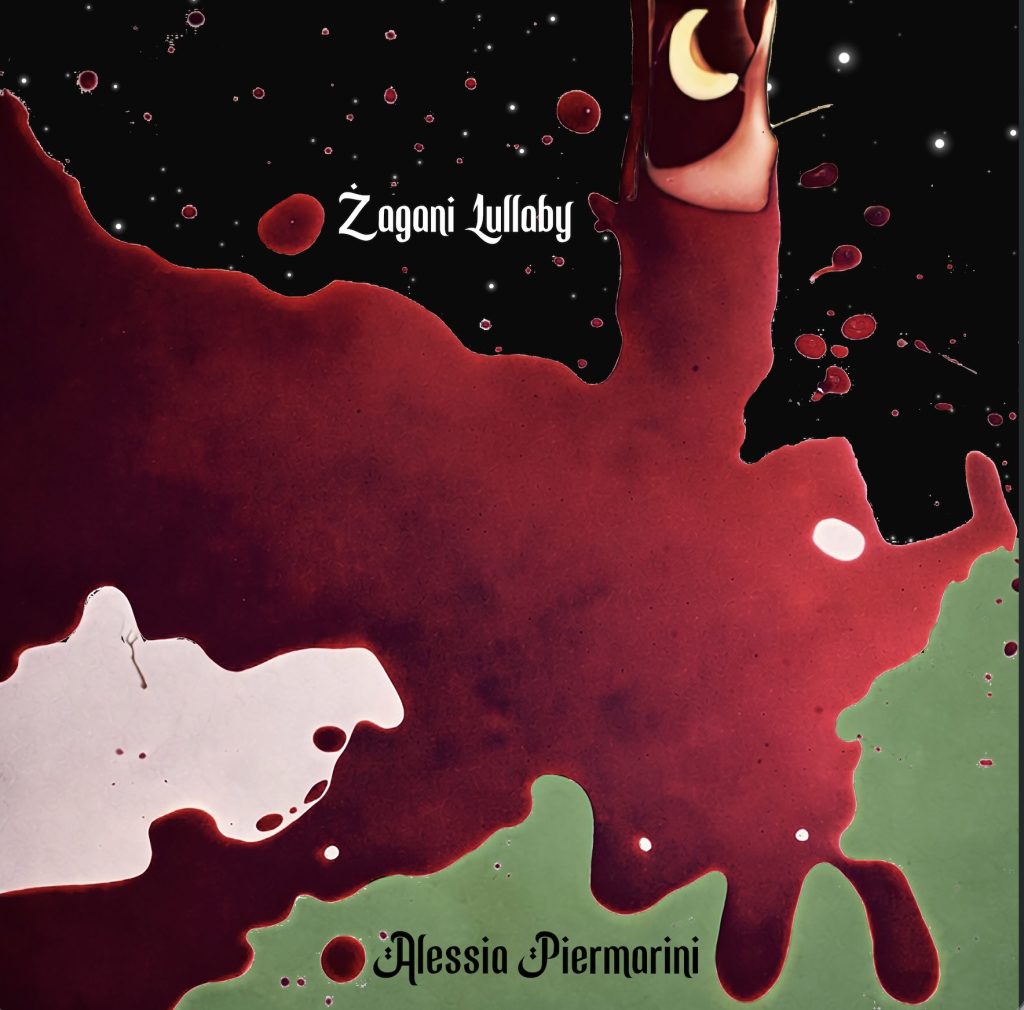
Piermarini’s musical approach is distinctive and well suited to material this emotionally demanding. Her work blends jazz and spoken poetry and hip hop and nu soul, creating intimate yet tension-filled soundscapes, and as a loop artist she builds her arrangements through the layering and repetition that loop-based composition allows. This combination of influences and techniques produces music that can be simultaneously gentle and unsettling, the intimacy of the arrangements coexisting with an underlying tension that suits the subject matter, the soundscapes unfolding from minimal beginnings into moments of intense emotional impact. The lullaby form provides the gentleness and the intimacy, while the tension that runs beneath reflects the violence that the lullaby is set against, the two qualities held together in a way that captures the impossible situation of trying to offer care and comfort in conditions designed to destroy both.
The genesis of Zagani Lullaby in the suffering of civilians caught in war gives the song its moral seriousness and its compassionate purpose. Originally inspired by the suffering of the Palestinian people, the track evolved into a broader reflection on civilians affected by war, and this evolution from a specific situation to a universal human concern reflects the way that genuine compassion tends to expand, the particular suffering opening onto the recognition of suffering wherever it occurs. The civilians caught in conflict, the ordinary people who did not choose the wars that destroy their lives, the children whose sleep should be protected by lullabies rather than shattered by violence, are the subjects of Piermarini’s care, and the song extends its compassion to all of them regardless of which conflict or which side they find themselves on.
This universalizing of the song’s compassion is one of its most important qualities. War’s deepest tragedy is always the suffering of the innocent, the civilians and especially the children who bear the consequences of decisions made by others, and a lullaby for these victims is an act of pure human solidarity that transcends the political dimensions of any particular conflict. The lullaby form is the perfect vehicle for this solidarity, because the lullaby belongs to no nation and no faction but to the universal human relationship between those who care and those who need care, the song sung to children everywhere across all of human history. By choosing the lullaby as her form, Piermarini locates her response to war in the most fundamental and most universal of human impulses, the impulse to protect and comfort the vulnerable.
The minimal arrangements that characterize Piermarini’s recent work, unfolding into moments of intense emotional impact, are the appropriate sonic approach for material this serious. The minimalism creates the space for the emotional content to land fully, the restraint preventing the music from overwhelming or distracting from the gravity of the subject, while the moments of intense impact that emerge from the minimal foundations deliver the emotional weight that the subject demands. This dynamic, the movement from restraint to intensity, mirrors the way that the reality of war’s human cost can be held at a distance through abstraction and then suddenly become unbearably present through a single specific detail or image, the minimal arrangements creating the contemplative space and the intense moments breaking through it with the full weight of recognition.
The themes of conflict and care and human fragility that Piermarini’s recent work explores are among the most important and most difficult that any artist can engage with, and her willingness to confront them directly reflects genuine artistic and moral courage. Music about war can easily fall into either sentimentality or didacticism, either reducing the suffering to an occasion for easy emotion or turning the song into a political argument that loses the human reality in the abstraction. Piermarini avoids both traps by focusing on care and fragility, on the human relationships and the human vulnerability that war destroys, the lullaby keeping the focus on the individual human being who needs comfort rather than on the political abstractions that the conflict involves.
Zagani Lullaby is the second chapter of a two-part project investigating the human cost of conflict, and this larger framework reflects the seriousness and the sustained attention that Piermarini brings to the subject. The investigation of the human cost of conflict is not a single gesture but an ongoing project, the two-part structure allowing for a deeper and more thorough engagement than a single release could provide, the artist committing genuine creative energy to bearing witness to the suffering of those caught in war.
In a world where conflict continues to destroy the lives of countless civilians, the act of writing a lullaby for them is a small but genuine gesture of human solidarity, the assertion that these lives matter and this suffering should be witnessed and mourned. Alessia Piermarini has made a song that holds the fragility of war’s innocent victims with the tenderness they deserve and the world too often denies them.
A lullaby for the children of war, sung with care into a world that has not protected them. Zagani Lullaby is Alessia Piermarini’s act of witness, and its tenderness is its power. This is a sensitive subject, and for any readers personally affected by the realities of conflict, please know that support and resources are available through humanitarian organizations and mental health services in your area.