There is a particular kind of defiance in the heart that has been hurt too many times, the determination to refuse the very thing it most wants, to protect itself from further pain by declaring that it will not love even as love continues to pull at it. Lancaster Rayne has captured this contradiction in a deceptively bright and bouncy package, and I Don’t Wanna Love You, released May 8, 2026, sets the pain of broken hearts and the experience of being used by people who do not reciprocate genuine emotion against a driving country-rock foundation full of energy and twang. This is the Modern Bakersfield sound that Rayne has been carving out from his unlikely home base in Albuquerque, New Mexico, the fusion of traditional honky-tonk grit and sleek contemporary production that makes him a refreshing alternative to the country-pop dominating mainstream radio.
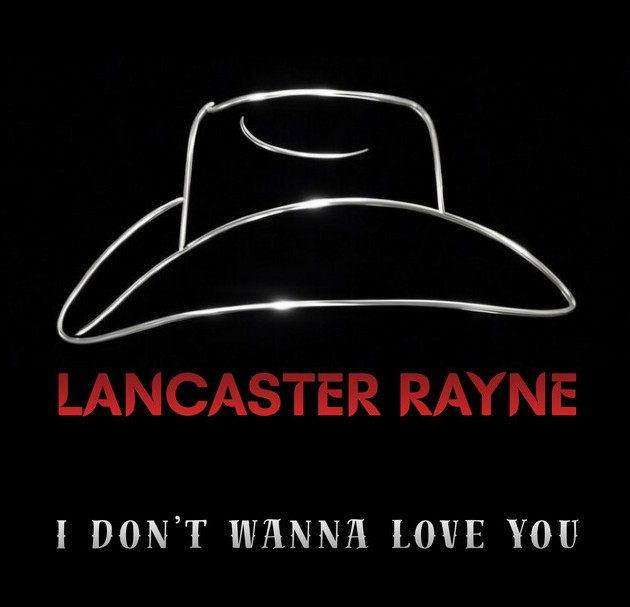
The emotional contradiction at the heart of the song is what gives it its depth beneath the bright surface. The title declaration, I don’t wanna love you, is the statement of someone fighting against their own feelings, the want-to-not-love being itself evidence that the love or the attraction persists despite the speaker’s wishes. This is a more interesting emotional situation than simple heartbreak, the song capturing the specific defiance of someone who has been used and hurt and has consequently resolved to refuse love, even though that resolution is constantly under threat from the feelings it tries to deny. The pain of being used by people who do not return genuine emotion has produced this protective defiance, and the song lives in the tension between the desire to love and the determination not to.
The bright bounce and energy that defines the track creates a productive contrast with its themes of love and loss, the upbeat country-rock foundation carrying the heartbreak in a way that prevents the song from becoming merely mournful. This contrast reflects the influence of Buddy Holly, whose music combined infectious energy and bright melody with genuine emotional content, the brightness never negating the feeling but rather giving it a particular kind of resilient buoyancy. The bounce of I Don’t Wanna Love You is the sound of someone determined to keep moving despite the heartbreak, the energy itself being a form of defiance against the pain, the refusal to be dragged down matching the refusal to love.
The Dwight Yoakam influence is equally central to the song’s character, Yoakam being one of the great modern champions of the Bakersfield sound, the strain of country music that always maintained a harder edge and a more authentic twang than the polished Nashville product. Rayne’s self-defined Modern Bakersfield sound draws directly on this tradition, the authentic Telecaster twang that critics have praised connecting the song to the genuine honky-tonk heritage that the Bakersfield sound preserved. The combination of Yoakam’s Bakersfield grit and Holly’s bright energy gives I Don’t Wanna Love You its specific identity, the harder country edge and the bouncy rock and roll energy meeting in a track that honors both influences.
The Telecaster twang that runs through the song is the sonic signature of Rayne’s commitment to authentic instrumentation and genuine country tradition. The Telecaster is one of the defining instruments of country music, its bright and cutting tone being central to the Bakersfield sound and to country-rock more broadly, and the praise that critics have given Rayne’s Telecaster work reflects his genuine command of this essential element of the genre. The authentic twang is part of what distinguishes his Modern Bakersfield sound from the country-pop that dominates mainstream radio, the real instrumentation grounding the contemporary production in the genuine country tradition.
Rayne’s commitment to keeping the music entirely human and AI-free is a significant part of his artistic identity and his mission. In a moment when AI-generated music has become increasingly prevalent, Rayne’s insistence on entirely human creation is both a value statement and a point of distinction, the human authenticity of his work being part of what makes it a refreshing alternative to the formulaic and increasingly synthetic mainstream. This commitment aligns with his broader mission to fill a void he perceived in contemporary country music, to bring back the nostalgic elements that made the genre resonate while refusing to compromise artistic integrity for commercial trends.
Working as a self-contained artist and songwriter and producer from his private Albuquerque studio, Rayne operates entirely outside the Nashville machinery, and this independence is fundamental to his approach. The decision to work from Albuquerque rather than Nashville, to maintain complete control over his music as a self-contained creator, reflects the independent edge that defines his work, the refusal to be absorbed into the formulaic expectations of the mainstream country industry. I Don’t Wanna Love You was recorded entirely in this private studio, the independent production allowing Rayne to pursue his Modern Bakersfield vision without compromise.
The void that Rayne perceived in contemporary country music, the missing element that he set out to fill, is precisely the nostalgic and authentic quality that I Don’t Wanna Love You embodies. Country music, in Rayne’s view, had lost something in its drift toward pop, and his mission is to restore the throwback elements and the genuine twang and the authentic songwriting that made the genre resonate in the first place. I Don’t Wanna Love You is a statement of this mission, the bright bounce and the Telecaster twang and the genuine emotional content all serving to demonstrate what country music can be when freed from formulaic expectations.
I Don’t Wanna Love You is the sound of a heart fighting against its own desires, set to the bright and twangy energy of a Modern Bakersfield anthem. Lancaster Rayne has captured the specific defiance of someone hurt too many times, the determination to refuse love even as love persists, and he has done it with the authentic instrumentation and human creation and independent edge that define his refreshing alternative to mainstream country.
I don’t wanna love you, the heart insists, even as it keeps on wanting. Lancaster Rayne has made a bright and defiant anthem of protective heartbreak, proving once again what country music can be when an artist refuses to compromise.