There are moments in a life when everything you thought you knew about yourself suddenly reorganizes around a single profound realization, when the pieces that never quite fit finally fall into place and you understand, with sudden clarity, who you have always been. For Danni Hoshino, that moment arrived five weeks before her wedding in 2022, when she realized she was trans. In the unraveling of her old life that followed her coming out, she wove together the life she was always meant to live, and releasing under the artist name Light Bird, her debut eleven-song collection See Her, released June 5, 2026, explores the challenges and the found beauty of this new phase with the kind of honesty and warmth that turns deeply personal experience into something universally resonant.
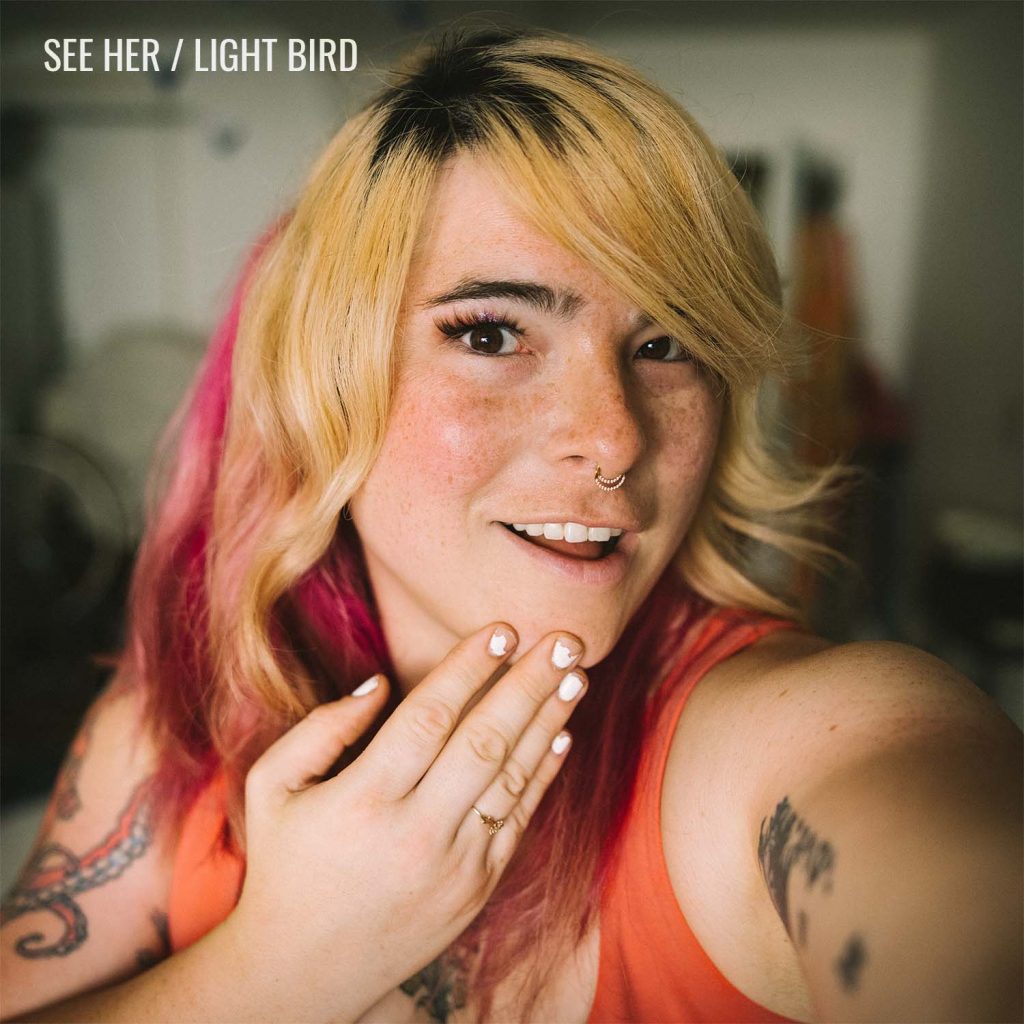
The name Light Bird itself reflects the transformation at the heart of the album. An evolution of one of Hoshino’s older songs, the name captures the experience of becoming a new version of herself, a person who is now much more confident and extroverted and actualized, the becoming feeling like stepping into the light. This image of stepping into the light runs throughout See Her, the album documenting the movement from the uncertain years before her transition into the clarity and self-love that followed, the light bird being the self that emerges when the authentic person is finally allowed to live. The decision to start fresh with a new project and stage name rather than continuing her existing solo project reflects how completely her life had changed, the new artistic identity matching the new and truer self.
The weeks after Hoshino came out were joyous but also filled with fear and doubt and questions, the uncertainty that so often accompanies profound self-discovery. Was she really trans? Was she misinterpreting her feelings? These doubts were quickly trumped by gender euphoria, the joy she felt catching her reflection in the mirror, changing the spelling of her name, dancing in the living room. These pivotal moments of euphoria became touchstones, and in one of the album’s most moving gestures, Hoshino recorded a reminder to her future self, a note crafted as something to return to should she ever doubt who she really is. This original note serves as the introduction to the album’s title track, a song Hoshino describes as the crux of everything.
See Her, the title track, is the emotional and thematic heart of the album. Within it, Hoshino revisits three different points in her life, asking how she saw herself at seventeen, at twenty-three, and at thirty-three, and why she could not see who she really was during all that time. This structure, the looking back across the years at the self that was always there but could not yet be seen, captures something profound about the trans experience and about self-discovery more broadly. As Hoshino explains, for many trans people the discovery takes years of experiences and exploration and ultimately self-love to finally put the pieces together, and the title track documents exactly this gradual coming-into-clarity, the gratitude she feels for the kindness and grace and compassion she gave herself to finally answer the question she had never known to ask.
The album draws on a well-known cast of characters from the storied Boston folk scene, giving See Her its rich and organic sound. Produced by Don Mitchell of Darlingside, engineered by Zachary Hinkman, and mixed by Harris Paseltiner of Darlingside, the album features collaborators Csilla Bonnie on bass and Dave Brophy on drums, with backup vocals from Ri Lotz. The decision to record the bulk of the full band songs live in the studio gives the album an organic tempo that allows the songs to breathe, the live recording capturing the genuine human quality that the deeply personal material requires. This connection to the Boston folk scene, where Hoshino had played in the folk-country band The Novel Ideas in her twenties before setting aside her artistic aspirations for corporate security, reflects the way that her return to music was also a return to a community and a tradition.
The lead single, Williamsburg Bridge, is an ode to a tradition that all New Yorkers will recognize, the cathartic experience of crying on public transit. Hoshino describes riding the J train from Manhattan back to Bushwick and reflecting on all the changes in her life, some beautiful and life-giving and mind-expanding, others hard and sad and incredibly costly. Her love for the experience of crying on the train, both exposed and anonymous, captures something genuinely true about urban life and emotional processing, the train becoming a space where the public and the private meet, where one can feel everything in the midst of strangers. This is a beautifully specific and relatable entry point into the album, the crying on the train being a universal urban catharsis that frames Hoshino’s particular journey.
Big Time Texter offers a lighthearted look at how Hoshino’s attachment style collides with the chaotic queer and poly dating scenes in Brooklyn. The song explores the feeling of being too much for people while also challenging the listener to accept that things will keep changing, that there are as many chances for love as for heartbreak. This track brings humor and warmth to the album’s exploration of Hoshino’s new life, the navigation of dating as a newly out trans woman rendered with self-aware wit and genuine emotional insight.
Alright, the album’s only duet featuring Ri Lotz, is a bittersweet folk-country ballad set at the end of Hoshino’s engagement. The song celebrates good, persistent love alongside the resignation that sometimes things change, like a person’s gender, and that a good thing must come to an end. This is among the album’s most poignant moments, the acknowledgment that Hoshino’s transition meant the end of her engagement, that her coming into her authentic self necessarily transformed a relationship built around who she had been. The song’s grace lies in its refusal to villainize anyone, celebrating the genuine love that existed even as it accepts that the relationship had to end.
The album’s other tracks continue this exploration of the new life Hoshino has built. The Feeling and Whales and Slow Down each contribute to the album’s emotional landscape, while Land of the Free engages with the political dimension of the trans experience, particularly resonant at a time when, as Hoshino notes, the trans community is being villainized and attacked daily. Vienna and Save Myself continue the journey of self-discovery and self-preservation, and the album closes with Like Being Free, a fitting conclusion that captures the liberation at the heart of Hoshino’s story, the freedom of finally living as her authentic self.
What makes See Her so powerful is Hoshino’s clear understanding of who the album is for and what it can do. She loves singing the title track for other trans people who can see their own journey reflected in the story, but just as significantly, she loves performing it for cis people who can perhaps see other moments of self-discovery and acceptance in their own lives, the album working to further humanize the trans experience. Her hope is that people will hear something of an experience they have not had and still find words and moments to relate to and find catharsis in, and that they will play it in the car with the windows down. This generosity, the desire to share her perspective in a way that connects across different experiences, reflects the warmth and openness that animate the entire album.
See Her is the sound of an artist stepping into the light, finding her authentic self and sharing the journey with honesty and grace and warmth. Danni Hoshino has made a debut that documents the challenges and the found beauty of her transition, the live-recorded folk songs breathing with genuine humanity, the perspective she always knew was missing finally given voice.
The self was always there, waiting to be seen, and now Danni Hoshino sees her clearly. See Her is the radiant document of that seeing, a debut of genuine courage and beauty that invites everyone, whatever their experience, to recognize their own moments of self-discovery and to find catharsis in the windows-down freedom of becoming who you were always meant to be.