There is a particular kind of emotional weight that we carry for years, sometimes for the better part of a decade, the accumulated feelings and memories and unresolved attachments that we hold onto long after the moments that produced them have passed. Learning to release that weight, to let it slowly unwind rather than gripping it forever, is one of the quiet labors of a life, and it is the central concern of Finlay Birch‘s debut album. Weight Will Unwind, released June 12, 2026, brings together ten songs written across different chapters of the Scottish songwriter’s life, blending indie folk and alternative rock with intimate storytelling to explore themes of memory and distance and love and change and learning to let go. After almost a decade of writing songs and carrying them from Inverclyde to Brighton and eventually to the Isle of Mull, Birch has made an album about the slow process of setting down what we have carried for too long.
The album’s central metaphor, the unwinding of weight, is beautifully apt for its emotional concerns. As Birch explains, the album is about carrying emotional weight for a long time and slowly learning how to let some of it go, some of these songs having been with him for nearly ten years. This gives the album a genuine emotional authenticity, the songs being not recent compositions about abstract feelings but accumulated pieces written across years of actual experience, the weight they explore being weight that Birch himself has genuinely carried. Releasing them now, he says, feels like closing one chapter and beginning another, the album itself being an act of the unwinding it describes, the long-held songs finally set free into the world.
The recording of the album over ten days on Mull with producer Dylan Cooper gives it a focused intimacy. Cooper, whose credits include work with artists as varied as Charli XCX and Lil Peep and Anne-Marie, brought his production skill to Birch’s intimate folk-rock songs, the ten-day recording period on the remote Scottish island producing an album with a genuine sense of place and concentration. The Isle of Mull, where Birch eventually settled after his journey from Inverclyde through Brighton, infuses the album with its remote, elemental atmosphere, the island setting becoming part of the album’s character, the landscape of memory and place that runs through the songs grounded in the actual Scottish landscape where they were recorded.
The album opens with Fly Us Both Away, a title that suggests escape and transcendence, the longing to be carried away from difficulty toward freedom. This opening establishes the album’s emotional landscape, the yearning to fly away capturing the weight that the album will spend its runtime learning to release, the desire for escape being the first response to the burden that the album ultimately learns to unwind rather than flee. HDN1 follows with an enigmatic title that invites interpretation, the coded designation suggesting something personal and specific, perhaps a place or a moment encoded in shorthand, the kind of private reference that intimate songwriting often contains.
The title track Weight Will Unwind sits early in the album, establishing its central theme and its hopeful trajectory. The promise that weight will unwind is the album’s animating conviction, the belief that the burdens we carry can be released, that the tight coil of accumulated emotion can slowly loosen and let go. This track, championed by Roddy Hart on his Mix Tape and supported by BBC Radio Scotland, is the heart of the album, its message of eventual release providing the hope that balances the album’s engagement with difficult memory and emotional weight. Inside Your Mind follows, a song praised by independent music press as one of the most tender songs a listener might hear, the tenderness reflecting Birch’s gift for intimate emotional expression. The track explores the desire to understand another person’s inner world, the longing to know what exists inside someone else’s mind being one of the most intimate of human yearnings.
I Want You brings a direct expression of desire and longing to the album, the simple and universal statement of wanting someone carrying the emotional directness that defines Birch’s songwriting. As one of the album’s singles to receive national airplay, the track demonstrates Birch’s ability to combine intimate folk sensibility with genuine accessibility, the directness of the longing resonating broadly. The River follows with one of the most enduring images in folk music, the river representing the flow of time and life and change, the constant movement that carries us forward whether we wish it or not. In the context of the album’s themes, the river suggests the passage of time that both creates emotional weight and eventually helps it unwind, the flowing water embodying the change that the album explores.
Two Magpies draws on the rich folklore of the magpie, the old rhyme in which one magpie signifies sorrow and two signify joy. This reference connects the album to the deep traditions of British folklore and superstition, the two magpies suggesting joy, perhaps the joy that emerges once the weight has begun to unwind, the pair of birds being an omen of better things. This folkloric dimension adds texture to the album, the traditional associations enriching the personal storytelling with the resonance of inherited wisdom and superstition. Hebridean Eyes follows, the title evoking the Hebrides, the island chain that includes Mull, where Birch settled and recorded the album. The Hebridean eyes suggest a way of seeing shaped by the islands, the remote and elemental landscape of the Hebrides informing a particular perspective, the eyes that have looked upon the island scenery carrying its beauty and its isolation.
Skim Stones brings one of the album’s most evocative images of memory and simple pleasure, the skimming of stones across water being a childhood activity rich with nostalgic association. The act of skimming stones captures something about the album’s relationship to memory, the simple repeated gesture connecting present to past, the stones skipping across the water before sinking suggesting the fleeting nature of moments and the way they ripple through our lives. And the album closes with Change The Sheets, a title grounded in the most domestic and intimate of acts, the changing of bed sheets suggesting both renewal and the aftermath of relationships, the fresh start and the erasure of what came before. This closing track brings the album’s themes of letting go and beginning again into the most personal and domestic of settings, the changing of the sheets being a small but significant act of moving on.
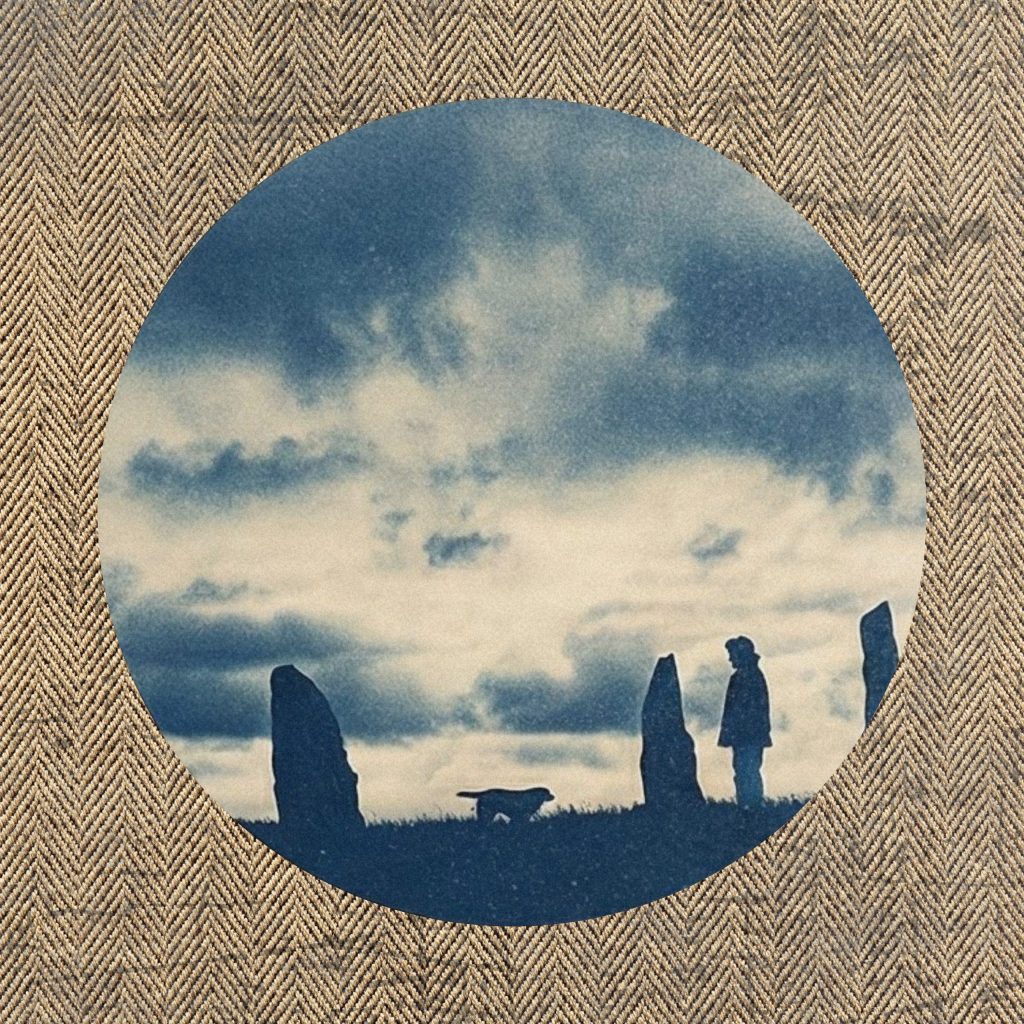
The album artwork deepens its themes of family and memory and place. Created in collaboration with artist Calum Hall, the artwork is based on a transformed photograph taken by Birch’s father in 2016 of his mother and childhood dog Skye at the Glengorm Standing Stones on Mull. This image, rooted in family and the specific Scottish landscape, reflects the album’s recurring themes, the photograph of mother and beloved dog at the ancient standing stones capturing the intersection of family and memory and place that runs throughout the songs. The transformation of this personal photograph into album artwork mirrors the album’s transformation of personal experience into art, the family memory becoming the visual identity of the record.
The support that Weight Will Unwind has received reflects its genuine quality. Following a run of support from BBC Radio Scotland, all three singles have received national airplay, and BBC Radio Scotland presenters have repeatedly championed Birch’s music, declaring themselves huge fans. This support from national radio and independent music press reflects the genuine appeal of Birch’s intimate, emotionally honest songwriting, the recognition of his talent building as the album reaches a wider audience.
Weight Will Unwind is the sound of a songwriter setting down what he has carried for nearly a decade, an intimate debut about memory and distance and love and the slow labor of learning to let go. Finlay Birch has gathered songs from across the chapters of his life and released them into the world, the indie folk and alternative rock carrying the emotional weight toward its eventual unwinding. From Inverclyde to Brighton to the standing stones of Mull, Finlay Birch has carried these songs a long way, and now he sets them free. Weight Will Unwind is a debut of genuine tenderness and emotional honesty, and its slow release of long-held weight offers the quiet hope that what we carry need not be carried forever.