There is a profound paradox at the heart of certain transformations, the way that the moment of total collapse can become the moment of genuine rebirth, the realization that an old version of yourself must completely perish for a new one to emerge. Sometimes the day everything falls apart, the day you let go of the past entirely, turns out to be the exact day you finally start feeling alive. Laji George has built a sonic powerhouse around this paradox, and Day I Died, released June 11, 2026, explores the profound moment of hitting rock bottom and the rebirth that follows, the recognition that total disconnection and the shedding of an old identity became the catalyst for genuine aliveness. The New York City-based alternative rock artist has turned a dark, introspective moment into a massive, cathartic anthem, proving that authentic guitar-driven rock still has the power to connect on a massive scale.
The central paradox of Day I Died is what gives it both its striking title and its emotional depth. The day the singer died is not a literal death but the death of an old self, the complete letting go of the past that felt like an ending but turned out to be a beginning. This is a genuinely profound insight, the recognition that sometimes we must allow an old version of ourselves to perish entirely before a new one can emerge, that the moment of total disconnection from who we were can be the exact catalyst we need to finally feel alive. The paradox thrives throughout the track, the apparent death being revealed as a rebirth, the rock bottom becoming the foundation for renewal, the ending transformed into a beginning. This is the universal experience of profound personal transformation, the shedding of the past to forge a new path forward.
The grunge and alternative influences that shape Day I Died place it firmly in a powerful tradition. Drawing deep inspiration from the iconic movements of the 1990s, George channels the influence of Pearl Jam and Soundgarden and Audioslave, the track reflecting these influences in distinct ways. The vocal intensity draws from the ability of Chris Cornell and Eddie Vedder to shift seamlessly from quiet, vulnerable verses to explosive, high-emotion choruses, this dynamic range being central to the song’s journey from introspection to catharsis. The rhythmic drive aims for the massive power and driving energy characteristic of legendary drummer Dave Abbruzzese, the heavy, grooving rhythm section providing the song’s momentum. And the sonic weight combines the gritty, atmospheric guitar textures of the Seattle era with a modern, hard-hitting edge, creating a sound that feels both nostalgically rooted and intensely personal.
The dynamic structure of Day I Died is essential to its emotional impact. The track begins in a dark, introspective space before building toward a cathartic, explosive release, this journey from quiet vulnerability to massive intensity embodying the death-and-rebirth paradox at the song’s center. The dark opening represents the rock bottom, the moment of disconnection and collapse, while the explosive release represents the rebirth, the cathartic aliveness that emerges from the letting go. This dynamic movement, drawn from the grunge tradition of shifting between vulnerable verses and explosive choruses, gives the song the emotional arc that its theme requires, the music itself enacting the transformation from death to renewed life.
The balance between arena-caliber rock and diary-like intimacy is George’s distinctive achievement. Day I Died bridges the gap between massive, arena-caliber rock instrumentation and the raw, unfiltered intimacy of a solo artist, combining the huge sonic weight of the choruses with the vulnerable, personal delivery that such intimate material requires. This balance is difficult to achieve, the danger being that massive instrumentation can overwhelm personal intimacy or that intimacy can lack the power to land on a large scale, but George navigates it successfully, the track being both monumentally powerful and deeply personal. In a musical landscape that often leans toward heavily polished and synthesized tracks, this combination of raw vulnerability and uncompromising heavy rock pulls no punches.
The recording process across George’s home studio and producer Jonah Brockman’s space reflects this balance of intimacy and power. Starting in his home studio allowed George to write and capture the rawest, most vulnerable core of the music in complete isolation, while taking those tracks into Brockman’s studio provided the collaborative space to elevate the sound and sculpt the heavy, authentic alternative-rock energy. This workflow gave the project both the genuine personal intimacy of its home-studio origins and the massive sonic weight of its collaborative refinement, the two environments together producing the rare balance that defines the track.
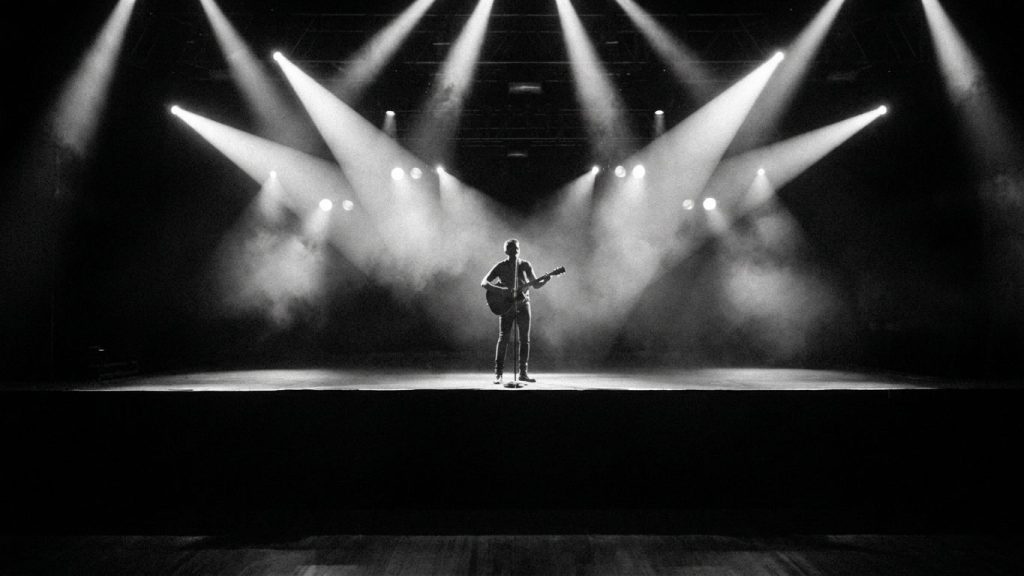
The music video, filmed entirely inside the legendary Starland Ballroom in Sayreville, New Jersey, provides the perfect visual counterpart to the song’s arena-caliber sound. Filming in a venue with such a rich rock history, one that has hosted iconic acts from the Foo Fighters to the biggest names in alternative music, added genuine energy to the project, the massive empty stage allowing George to capture the look and feel of a powerful live show. The atmospheric venue serves as the ideal visual setting for the song’s heavy, monumental sound, delivering a performance experience that is both grand and deeply personal.
Day I Died also documents a significant artistic transition for George, capturing the exact moment of stepping away from a band dynamic to claim a distinct, singular voice. Originally conceived for a band before being pulled into George’s solo catalog as a definitive centerpiece, the track embodies the very transformation it describes, the shedding of the old band identity to forge a new solo path mirroring the song’s theme of an old self perishing for a new one to emerge. This parallel between the song’s content and George’s own artistic evolution gives Day I Died an additional layer of authenticity, the rebirth it describes being one that George himself has lived.
Day I Died is the sound of a death that brought an artist back to life, a heavy alternative rock anthem that turns the moment of hitting rock bottom into a cathartic rebirth. Laji George has channeled the spirit of 90s grunge into a deeply personal anthem, the journey from dark introspection to explosive release embodying the paradox that letting go of the past can be the moment we finally start feeling alive. The old self had to die so the new one could live, and the day of that death became the day of genuine aliveness. Laji George has made a monumental and intensely personal anthem of rebirth, and its cathartic power proves that authentic guitar-driven rock can still hit with the force of a new beginning.