There is a specific exhaustion that comes from being managed through your own pain, and D.D.R. builds an entire song around that exhaustion rather than around the loss itself. Don’t Tell Me How to Grieve is not really a song about grief in the abstract, the kind that gets processed in five tidy stages and wrapped up neatly by the final verse. It is about the second wound, the one inflicted by well meaning people who show up with a script for how mourning is supposed to look. That distinction is what gives the song its actual center, and it happens to be a sharper one than most songs in this territory bother reaching for.
Stephen Paul writes under the name D.D.R. as someone who has spent a career finding the right words, both as a novelist and as a songwriter, and that background matters here in a way that is easy to miss on first listen. The song is essentially about what happens when that skill fails him. Grief does not respect vocabulary. It does not wait for the right sentence to arrive. What makes the track compelling is watching a writer who trusts language for a living admit that language has left him standing there with nothing useful to say, and instead of covering for that gap with poetic flourish, the song sits inside the silence and lets it be uncomfortable.
Musically the track earns its emotional swings honestly rather than manufacturing them. It opens on piano, restrained and a little hesitant, the sound of someone talking quietly before they trust the room enough to raise their voice. The electric guitars do not kick down the door so much as they gradually insist their way in, and by the time the saxophone appears it functions less like a solo and more like another voice in the argument, mournful in a way that avoids the smoothness saxophone often brings to rock ballads. The arrangement tracks the emotional logic of the lyrics closely, moving from something private toward something closer to a public reckoning by the final chorus.
That final chorus is where the song commits to its title, and it is worth noting how the phrase functions less as a lyric hook and more as a boundary being drawn in real time. Don’t tell me how to grieve reads on paper like it could tip into melodrama, but the vocal delivery keeps it grounded, sung with more weariness than anger. That choice says something about the song’s actual target. This is not a track written to lash out at any specific person. It is aimed at a broader pattern, the casual confidence with which people hand out grief advice as though loss follows a universal timeline that everyone secretly knows and only the mourner has forgotten.
The classic arena rock influence shows up less in bombast and more in patience, the willingness to let a song breathe before demanding a payoff from the listener. Modern melodic rock tends to rush toward its hook, but this track earns its size gradually, which makes the eventual swell feel like release rather than spectacle. There is a version of this song that leans harder into its saxophone or its guitar work purely for drama, and to its credit the production resists that temptation. Every instrumental choice seems to exist in service of the emotional arc rather than as a showcase moment for its own sake, which keeps the song feeling personal even as it grows louder.
Recording the track through Musiversal, a platform connecting musicians across different countries, adds an interesting wrinkle to a song this intimate. There is something almost fitting about a song concerned with the isolating nature of grief being assembled from pieces recorded in different places by people who may never have shared a room. The result does not sound assembled from parts, though. It sounds unified, which speaks to a clear enough vision on Paul’s part that the collaborators had something specific to serve rather than a blank canvas to fill.
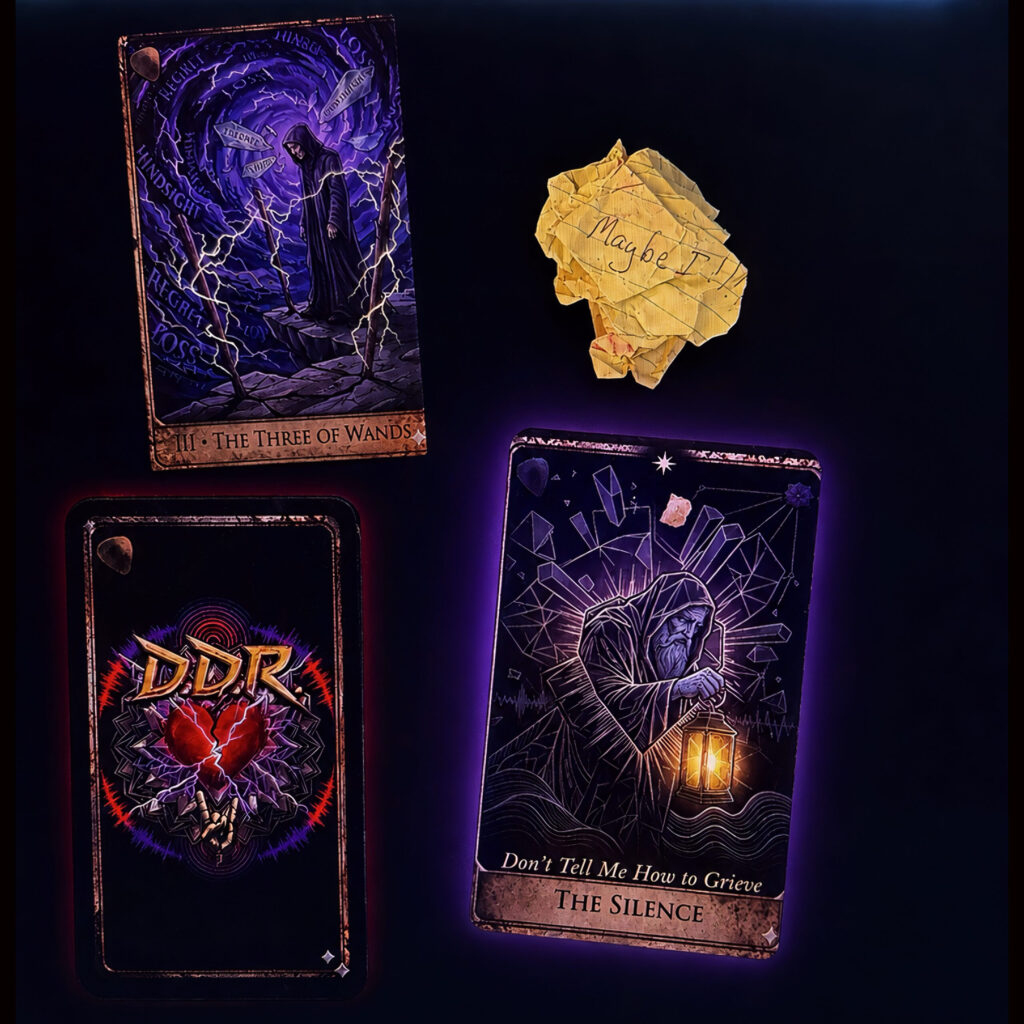
The visual side of the release, built around custom tarot imagery, extends the song’s themes without overexplaining them. Tarot as a framework fits naturally here, since the cards deal in archetypes of loss, reflection, and renewal without ever pretending to offer a fixed roadmap, which mirrors exactly what the song itself is arguing against. Nobody’s grief follows the same sequence, and tarot imagery, for all its symbolism, still leaves room for individual interpretation in a way a more literal video treatment might not have allowed.
What lingers after the song ends is not a resolution so much as a stance, a decision to stop apologizing for grieving on the wrong schedule. Stephen Paul does not offer the listener comfort in any conventional sense, and that refusal is the most honest thing about the track. Grief, the song suggests, does not owe anyone a clean ending, and neither does the person carrying it.