Some recordings only reveal their full weight after the fact, once time has done something to them that no amount of production could have planned for. The Real Yuee is exactly that kind of recording, made one week before a shooting left Yung Yuee a full C4 quadriplegic, and released years later not as a simple archival curiosity but as the deliberate opening chapter of an entire multimedia universe he built afterward using only eye gaze technology. Listening to it now means listening to something that was never supposed to become a time capsule, and that unintended weight sits over every bar without needing any additional framing to land.
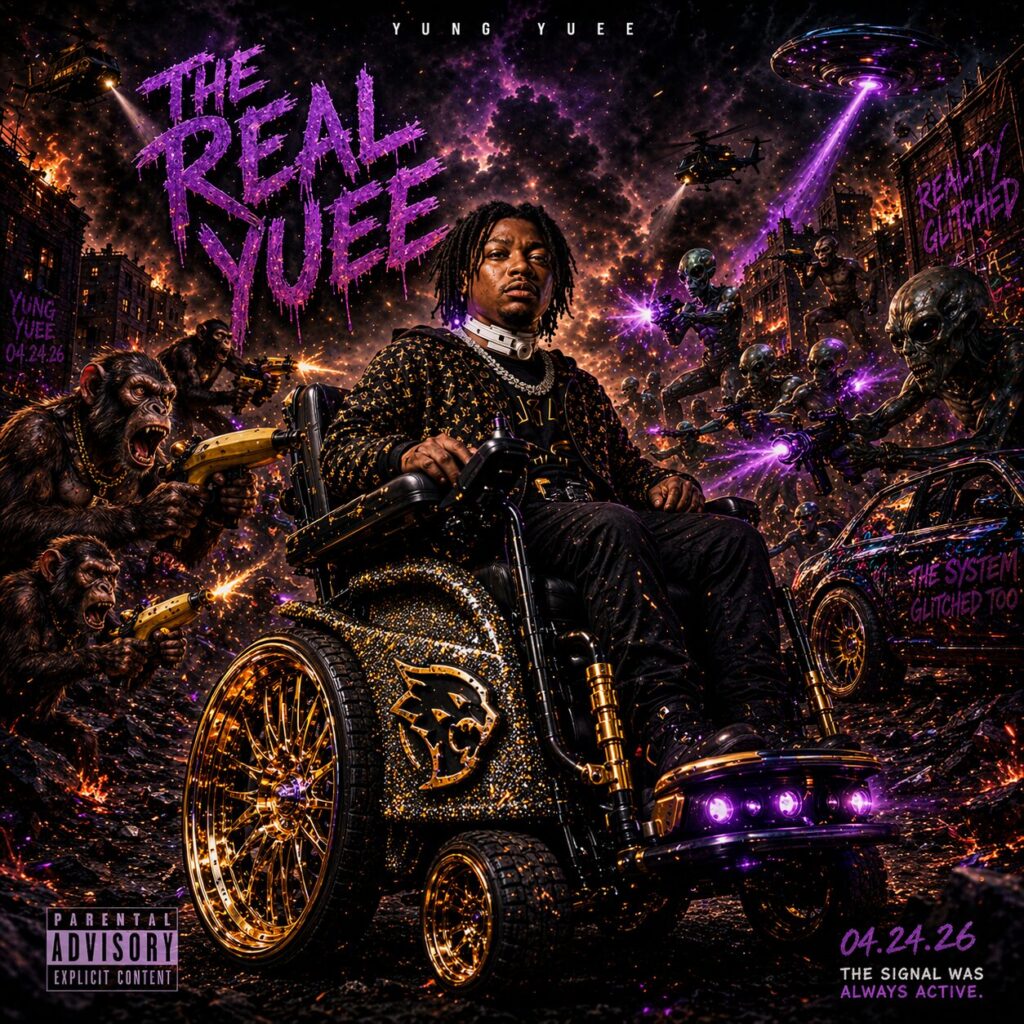
What makes the track genuinely striking rather than simply tragic by circumstance is how much raw vulnerability was already present in the recording before anyone involved knew what was coming. Yuee has been direct about the state he was in during that session, moving through a mental breakdown, fractured friendships, a chaotic love life, and a broader struggle with identity that he was only beginning to work through in real time. That context matters enormously for how the vocal performance actually sounds, since a friend named Kiera reportedly recognized something in his voice immediately upon hearing it, asking if he was okay because she could hear the pain sitting underneath the delivery. That kind of unfiltered emotional transparency is difficult to fake convincingly, and knowing it was entirely genuine changes how every line lands in retrospect.
Recorded at QVR Studio under producer Rico Got That Fye, the track carries the specific energy of hip hop made by artists like G Herbo, Trippie Redd, Bump J, and Lupe Fiasco, all names that share a certain lineage of turning genuine internal turmoil into sharp, structurally confident bars rather than diffuse emotional venting. That influence shows up clearly in how The Real Yuee balances confessional content with real technical control, never collapsing into pure catharsis at the expense of craft. Yuee handled essentially everything on the recording himself outside of the instrumental, which gives the track a singular, unfiltered quality, one artist’s specific voice captured without much outside mediation shaping how that voice ultimately got presented.
The decision to build an entire universe around this single recording rather than simply releasing it as a standalone archival piece says a great deal about how Yuee has chosen to relate to his own history since the injury that changed his life. The Trenches Universe, blending hip hop with science fiction, mystery, and dark humor, positions this song as an origin point rather than a relic, an active beginning rather than a closed chapter frozen permanently in the past. That reframing carries real significance, since it refuses to let the recording exist purely as evidence of what was lost. Instead it becomes the foundation for everything Yuee has continued building since, proof that the creative identity captured in that voice did not end when his physical circumstances changed as dramatically as they did.
Continuing to write comics, direct videos, and construct this expansive multimedia world entirely through eye gaze technology represents an extraordinary continuation of exactly the same creative impulse present in the original recording, just channeled through an entirely different physical process. There is something worth sitting with in how directly that technical adaptation connects back to the song itself, an artist whose primary instrument, his own voice, was permanently altered by his injury, finding new instruments entirely rather than abandoning the work. The AI assisted visuals accompanying the project function as tools in service of a vision that remains entirely his own, not a replacement for creative authorship but an extension of it under circumstances that would have stopped most people from continuing entirely.
Musically, the track fits comfortably within a hip hop tradition built on confessional intensity, structured with enough technical precision that the emotional content never feels like it is simply spilling out unformed. That balance between vulnerability and craft is part of what makes the song hold up as an actual piece of music rather than purely as a documentary artifact of a difficult period. Even stripped of all context surrounding what happened one week after its recording, The Real Yuee would function as a compelling, well constructed track. With that context fully understood, it becomes something considerably heavier, a young artist capturing genuine emotional chaos just before his entire relationship to his own body and voice was forced to change permanently.
What ultimately makes this release so difficult to categorize neatly is how thoroughly it resists being reduced to a single narrative frame, tragedy, triumph, or simple resilience story. It is all of those things simultaneously without fully settling into any of them, a recording born from real personal crisis that became, entirely without warning, the last document of a voice in its original form, and then, through considerable will and adaptation, the opening statement of something far larger than anyone involved could have anticipated at the time. Kiera heard the pain in that voice before any of this context existed. Listening now, that pain is still there, but it sits inside a much bigger story still actively being written, one eye movement at a time.