Some songs arrive carrying a carefully prepared explanation, eager to tell listeners exactly what they should hear and exactly how they should feel. George Styles takes the opposite approach. Better Conversation, released on July 13, 2026, offers no detailed roadmap, no elaborate mythology, and no invitation to decode a hidden message. Instead, the Boston songwriter leaves the door open, trusting the music to create its own dialogue with whoever happens to walk through it. That confidence gives the single an uncommon sense of freedom from the very beginning.
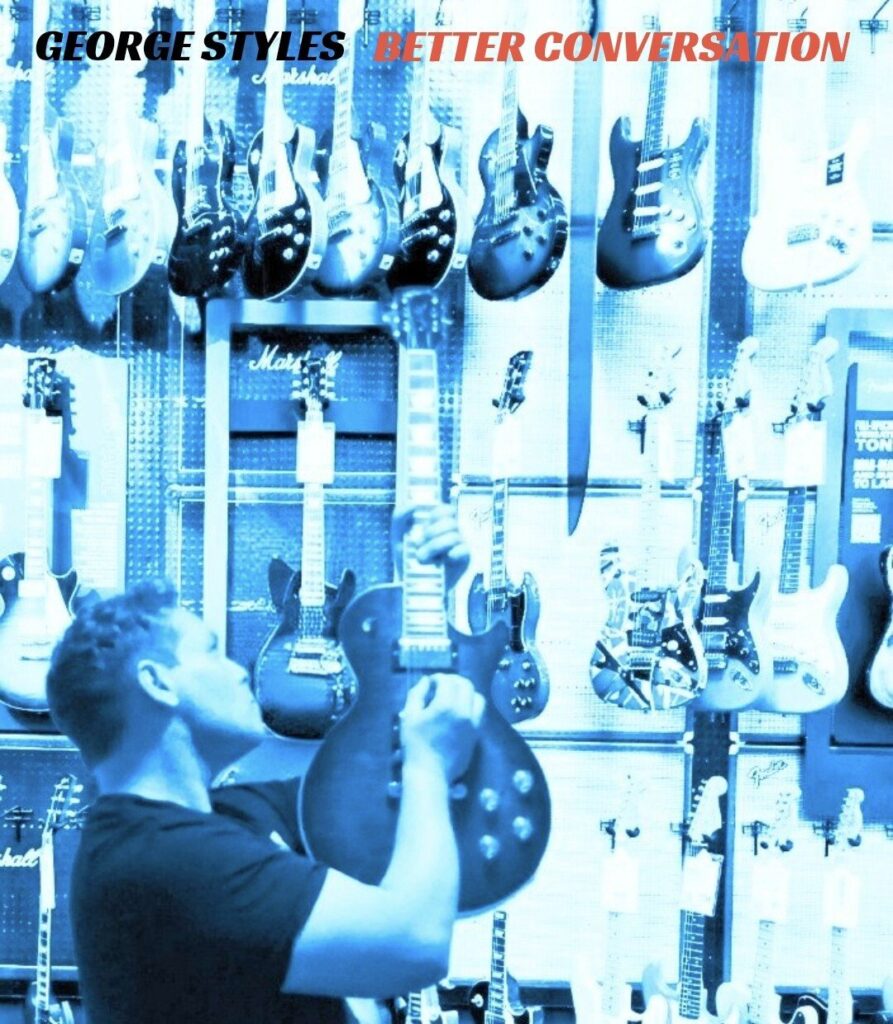
Styles has spent years creating music away from stages and touring schedules, working almost entirely alone in his Boston studio. For more than two decades he has stepped away from live performance, yet his creative momentum has refused to slow. Every new composition becomes another experiment, another chance to discover an unexpected melody or emotional connection. There is something quietly admirable about that commitment because it exists without obvious external reward. The songs continue because the need to make them appears stronger than the need for recognition itself.
That spirit shapes Better Conversation in ways that feel surprisingly refreshing. The title naturally suggests communication between people, but the song also hints at an internal exchange, the endless discussion every creative person has with doubt, curiosity, ambition, and instinct. Styles has described himself as someone compelled to keep writing despite uncertainty, comparing the process to a lottery machine filled with both possibilities and failures. That image captures the single remarkably well. Every musical decision feels like another pull of the lever, hopeful without pretending certainty exists.
Working as a complete one person operation also gives the recording a distinctive personality. Styles handles writing, performance, recording, and production himself, creating an environment where every artistic choice remains connected to one creative voice. That independence does not automatically guarantee stronger music, but in this case it produces something cohesive. There is no sense of competing artistic agendas or unnecessary embellishment. Instead, Better Conversation unfolds with the confidence of someone following personal instincts rather than attempting to satisfy changing expectations from outside collaborators or commercial trends.
Perhaps the most interesting aspect of the release is how willingly Styles embraces mystery. When asked about the story behind the song, he simply keeps it to himself. In an era where artists frequently explain every lyric before listeners have the opportunity to interpret them independently, that restraint feels almost rebellious. Better Conversation becomes an invitation rather than a lecture. The song belongs equally to the songwriter who created it and the audience discovering their own meanings within its melodies and emotional atmosphere.
That openness extends beyond the lyrics into the recording itself. Styles has admitted spending considerable time struggling to achieve the sound he wanted, refusing to settle for something unfinished simply because the process became difficult. Those invisible hours matter. Independent recordings often reveal the determination behind them more clearly than expensive productions, and Better Conversation carries that unmistakable sense of persistence. Every layer suggests careful listening, repeated revisions, and the willingness to continue adjusting details until the finished result finally matched the sound living inside the songwriter’s imagination.
Musically, the single avoids locking itself into one obvious stylistic corner. Styles openly acknowledges drawing inspiration from countless artists and genres without identifying a single defining influence. That broad listening history allows the song to feel comfortably unpredictable. Rather than announcing allegiance to one tradition, Better Conversation follows its own instincts, borrowing emotional colors wherever they prove useful. The result is music that feels guided by curiosity instead of obligation, encouraging listeners to experience the song on its own terms rather than through comparisons alone.
There is also a refreshing humility running beneath everything Styles says about his work. He readily accepts that some listeners simply may not connect with the song, and he appears completely comfortable with that possibility. Such honesty removes unnecessary pressure from the listening experience. Better Conversation is not presented as a universal statement designed to satisfy everyone equally. It exists as an honest offering, hoping to find the people who naturally respond while understanding that meaningful artistic connections rarely happen through force or broad consensus.
The absence of recent live performances also creates an interesting contrast with the music itself. Having spent roughly twenty five years away from regular concerts, Styles now communicates primarily through recordings rather than shared physical spaces. Yet the songs never feel isolated or detached. Instead, they become their own meeting place where listeners encounter an artist still actively questioning, refining, and searching. There is something deeply contemporary about that reality. Creative communities increasingly exist through recordings, conversations, and personal discoveries rather than traditional performance schedules alone.
Better Conversation ultimately succeeds because it refuses to confuse simplicity with lack of ambition. Styles is not chasing novelty for its own sake, nor is he attempting to overwhelm listeners through technical complexity or conceptual spectacle. He focuses on making the strongest song he can, accepting that meaningful music often grows from patience rather than constant reinvention. That philosophy gives the recording an approachable warmth while still rewarding repeated listening, revealing new emotional shades each time familiar melodies return.
By the closing moments, Better Conversation leaves behind an impression less concerned with providing answers than encouraging reflection. George Styles continues writing because something inside him refuses silence, pushing him back toward the guitar regardless of certainty, trends, or expectations. That persistence becomes the song’s quiet triumph. Somewhere inside a Boston studio, another melody is probably already taking shape, another possibility waiting among countless failures, another conversation beginning long before anyone else has the chance to hear the first word.