
There is a meaningful difference between anger and grief, and Michael Waters builds Requiem for Earth entirely around choosing the second option. This is not a protest song stacked with statistics or pointed accusation, the kind of environmental music that often preaches primarily to audiences already convinced of its argument. Instead Waters approaches the planet the way someone might approach a person they love who is visibly unwell, with tenderness first and urgency only implied underneath that tenderness rather than shouted over top of it. That choice reframes the entire environmental conversation the song is participating in, less about assigning blame and more about simply expressing devotion to something worth protecting.
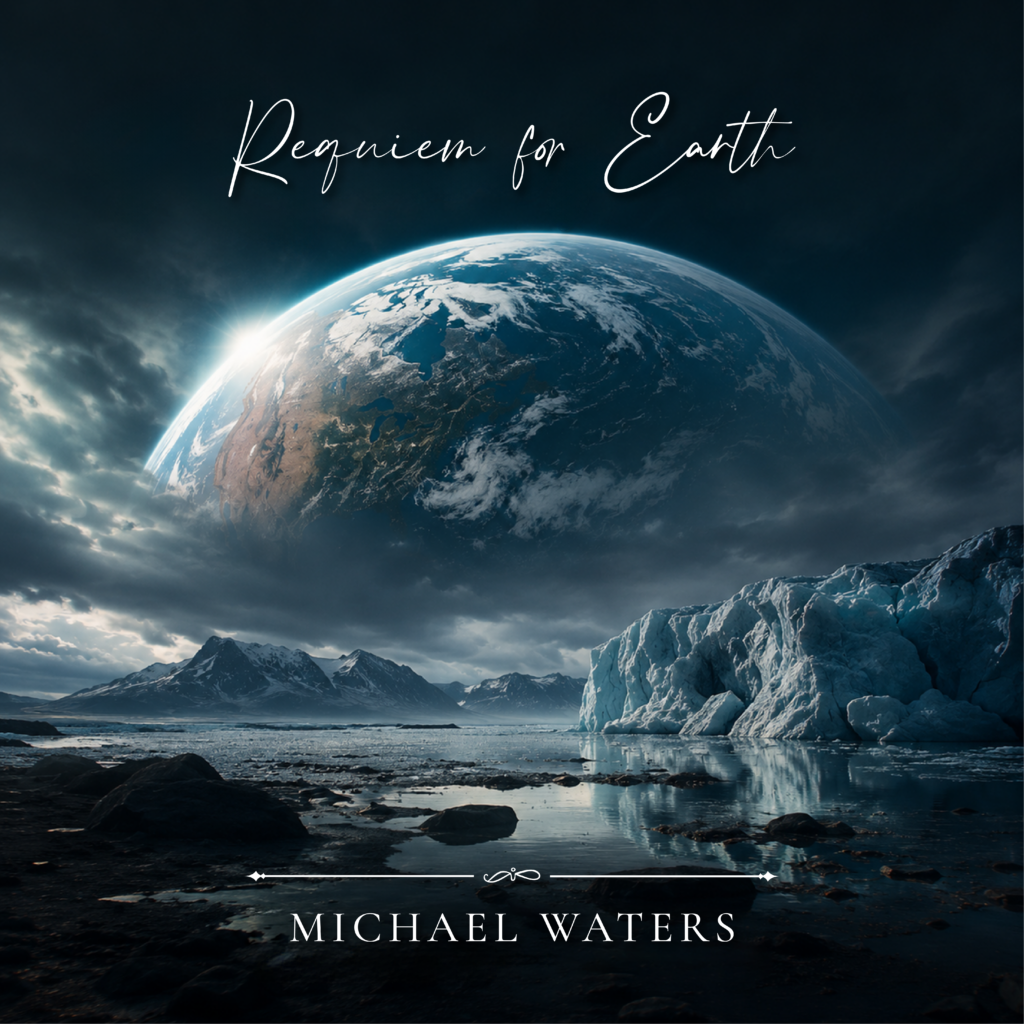
Waters has spoken directly about wanting the song to capture something closer to a relationship than a message, describing an impulse to sing to the Earth almost as one might sing to someone they love who happens to be suffering. That framing carries real emotional intelligence, since it understands something plenty of more didactic environmental art misses entirely, that people rarely change behavior purely through guilt or fear, but they do change through genuine attachment. His own explanation of the underlying philosophy, that people ultimately protect what they love, gives the song its actual thesis, treating affection itself as the more sustainable motivator rather than treating despair or blame as the primary emotional currency.
Musically, the track situates itself within singer-songwriter and acoustic territory while incorporating ambient and cinematic textures, a combination well suited to material this emotionally expansive. That genre blend allows the song room to breathe between its more intimate, personal moments and something closer to genuine sweep and scale, appropriate for a subject as vast as the entire planet’s ecological wellbeing. There is a real challenge in writing convincingly about something this enormous without either shrinking the subject down into something too small to carry its actual weight, or inflating the arrangement into something so grandiose it loses genuine emotional connection. Waters seems to understand that balance, keeping the cinematic elements in service of feeling rather than spectacle for its own sake.
What gives Requiem for Earth its particular emotional charge is its willingness to hold wonder and grief simultaneously rather than choosing one register and staying there throughout. The song reportedly moves between genuine awe at oceans, forests, and wildlife alongside real sorrow over visible damage occurring across many parts of the world, and that dual movement mirrors how people who actually love something complicated tend to experience it, admiration and worry existing together rather than as separate, sequential emotions. A love song written purely from grief would risk feeling hopeless, while one written purely from wonder might feel disconnected from present reality. Holding both simultaneously gives the track considerably more emotional honesty than either extreme could manage alone.
There is something worth noting in how the title itself signals genuine ambition, borrowing requiem’s traditional association with mourning and memorial music while applying that weight to something still very much alive rather than already lost. That choice carries real tension within it, mourning something in the present tense rather than after the fact, which mirrors exactly the kind of anticipatory grief increasingly common in how people process ongoing environmental change. The planet has not disappeared. The song’s mourning exists specifically because damage remains visible and ongoing rather than complete, giving the grief an active, unresolved quality rather than the more settled sorrow typically associated with the word requiem in its traditional usage.
Positioning the song primarily as love rather than protest also changes how listeners might actually receive its underlying message, since love songs invite emotional identification in ways that more overtly political or activist material sometimes struggles to achieve. A listener does not need to already hold strong environmental convictions to connect with a song about loving something beautiful and worrying over its wellbeing. That accessibility matters considerably for a subject this politically charged in current discourse, since music built around shared affection rather than argument has a genuine chance of reaching people who might otherwise tune out anything perceived as overtly activist in intent.
The song’s ambition toward becoming something like a defining anthem for environmental feeling more broadly is a considerable reach for any single release, and whether it achieves that particular status will depend on factors well beyond the song’s own craftsmanship. What can be said more confidently is that Waters has built something with genuine emotional coherence, a track that understands its own purpose clearly enough to stay disciplined in service of that purpose throughout, choosing intimacy and tenderness over spectacle even while working with material large enough to justify considerably more bombast than the song actually reaches for.
By the time Requiem for Earth reaches its final moments, what remains is less a call to action in any conventional sense and more an offering, a piece of music built to sit alongside genuine planetary anxiety without adding to its weight through additional guilt or urgency. Waters seems to understand that sometimes the most persuasive thing art can do is simply model the feeling it hopes to inspire in others, demonstrating love rather than demanding it. Whether or not this particular song becomes the defining environmental anthem its ambitions suggest, it succeeds at something considerably harder to fake, sounding like it was written by someone who genuinely means every word of affection directed toward a planet that, for now, can only be loved rather than thanked in return.


