There is a specific kind of relief that comes after heartbreak once someone realizes solitude does not have to feel like punishment, and My Own Company builds its entire foundation around that particular discovery. Sophia Bolinder has been direct about wanting this track to function as a genuine hear me roar anthem, and that framing matters considerably for how the song ultimately lands. This is not a quiet ballad processing loss through gentle reflection. It arrives with real assertion, built for someone standing fully upright after a relationship’s end rather than someone still working through the earlier, more fragile stages of that process.
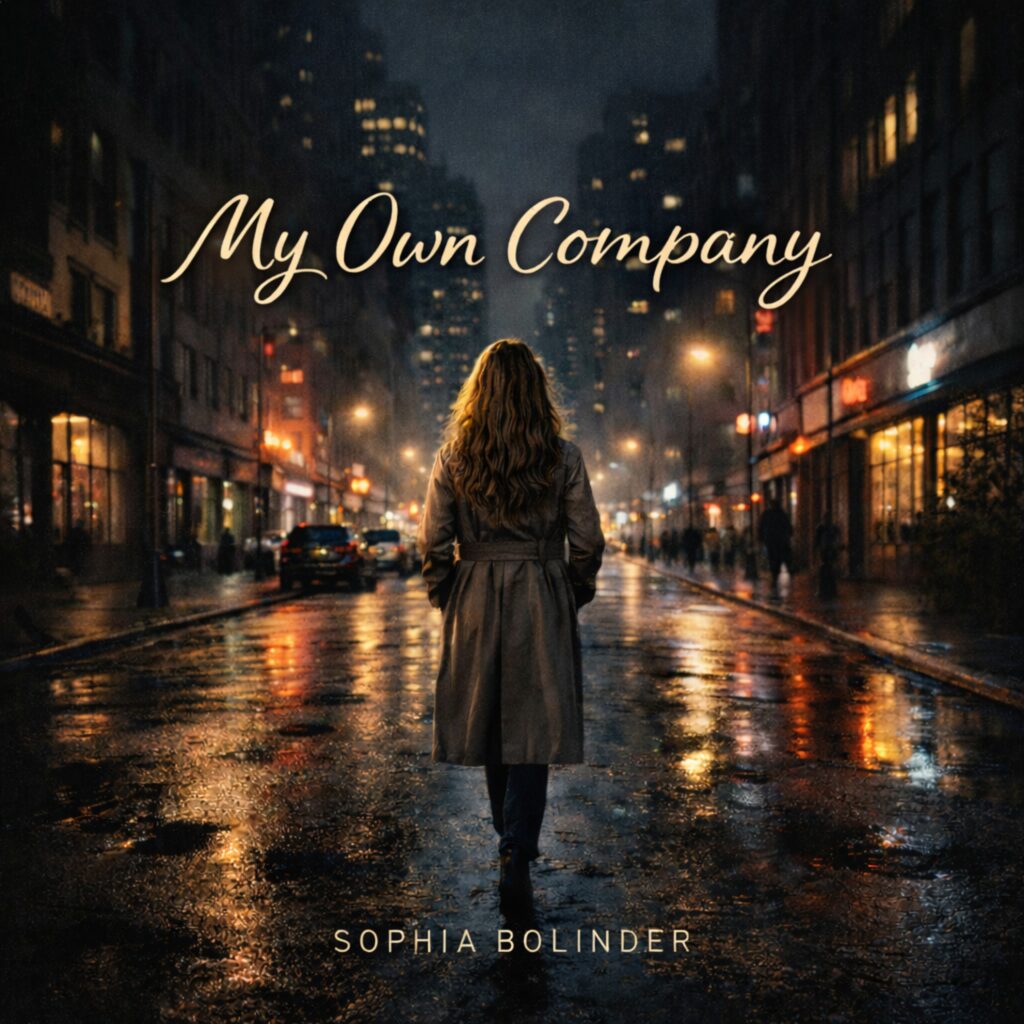
Working alongside UK producers Archie Norris and Jack Buster Weston, Bolinder brings together her own Scandinavian sensibility with a distinctly British approach to production, a combination that gives the track a genuinely international polish without sacrificing the emotional directness that has characterized her earlier singles. Following previous releases including What I Want, Under the Stars, and I Can Feel It, this collaboration continues establishing Bolinder’s consistent ability to translate personal experience into something considerably more universally accessible, a skill that separates genuinely resonant confessional songwriting from material that stays too specific to actually connect beyond its original context.
Drawing inspiration from Tevin Campbell’s Can We Talk gives the track an interesting lineage to work from, since that reference point carries considerable emotional and vocal ambition of its own. Rather than simply borrowing surface level stylistic elements, Bolinder seems to have channeled something closer to that song’s underlying emotional conviction, translating it into her own considerably different context of post breakup independence rather than direct romantic address. That kind of inspiration, drawing on emotional intensity from an established classic while building something genuinely new around it, speaks to real songwriting maturity rather than simple imitation.
What gives My Own Company its actual weight is Bolinder’s own stated philosophy connecting pain directly to growth, a sentiment she has described as the entire foundation the song was built around. That connection between difficulty and eventual strength is hardly a new theme within popular music broadly, but the specific angle Bolinder takes here, focusing not on the relationship’s end itself but on what becomes possible afterward, gives the track a slightly different emotional center of gravity than a typical breakup song. This is less about processing what was lost and more about celebrating what gets discovered once someone is finally free to exist entirely on their own terms.
The recording process itself, taking place in Bolinder’s hometown of Malmö, reportedly unfolded with genuine spontaneity, new ideas emerging naturally as the session progressed rather than following a rigidly predetermined plan. That organic development tracks well with the song’s overall thematic content, since a track about learning to trust one’s own instincts and company benefits considerably from a creative process that itself demonstrates comfort with uncertainty and improvisation rather than excessive control. There is something fitting about a song celebrating independence emerging partly through the band trusting spontaneous creative impulses rather than forcing every element into place beforehand.
Sonically, the track’s ambition toward genuine anthemic scale suggests Bolinder was reaching for something built to resonate widely rather than staying confined to purely intimate, diary style songwriting. That distinction matters for how effectively the song functions as the universal statement it clearly aims to be, since anthems require a certain amount of accessible, communal energy that more insular confessional material sometimes struggles to achieve. Balancing genuine personal specificity against that broader anthemic ambition is a difficult needle to thread, but positioning the song explicitly as a hear me roar statement suggests Bolinder understood from the outset exactly what emotional register she needed to hit for the track to succeed on those terms.
There is real value in how directly Bolinder frames this release as speaking to anyone who has experienced heartbreak and emerged from it stronger, since that framing extends the song’s usefulness well beyond her own individual narrative. Plenty of post breakup anthems risk feeling either too generic to carry genuine emotional weight or too specific to actually invite broader identification, and Bolinder’s approach seems to navigate that tension by keeping her own specific experience as the emotional engine while ensuring the language and delivery stay accessible enough for listeners bringing entirely different personal circumstances to still find genuine resonance within it.
By the time My Own Company reaches its conclusion, Bolinder has built a genuinely persuasive case for solitude as something worth actively choosing rather than simply enduring until the next relationship arrives to fill the space. That distinction, between tolerating being alone and genuinely preferring one’s own company, gives the track real thematic substance beneath its anthemic ambitions. This continues an artistic trajectory clearly built around transforming vulnerability into something considerably more empowered, and coming after a consistent run of emotionally resonant singles, My Own Company suggests Bolinder has found genuine confidence in exactly the kind of unaccompanied strength her song insists on celebrating.