There is a considerable difference between music that describes sadness from a safe emotional distance and music that actually sits inside it, refusing to reach for prettier language than the experience genuinely warrants, and No Paradise commits fully to the second, harder approach. Malkotron, working entirely alone from his Houston home studio across every stage of writing, performing, and producing, has built a nine track album explicitly organized around depression as its central subject, rejecting the more ornate metaphorical language popular music often defaults to when approaching this territory in favor of something considerably more direct. Helplessness, alienation, rage, and hope’s genuinely fleeting nature all get named plainly rather than softened through poetic distance, and that bluntness becomes the album’s defining artistic choice from its opening moments forward.
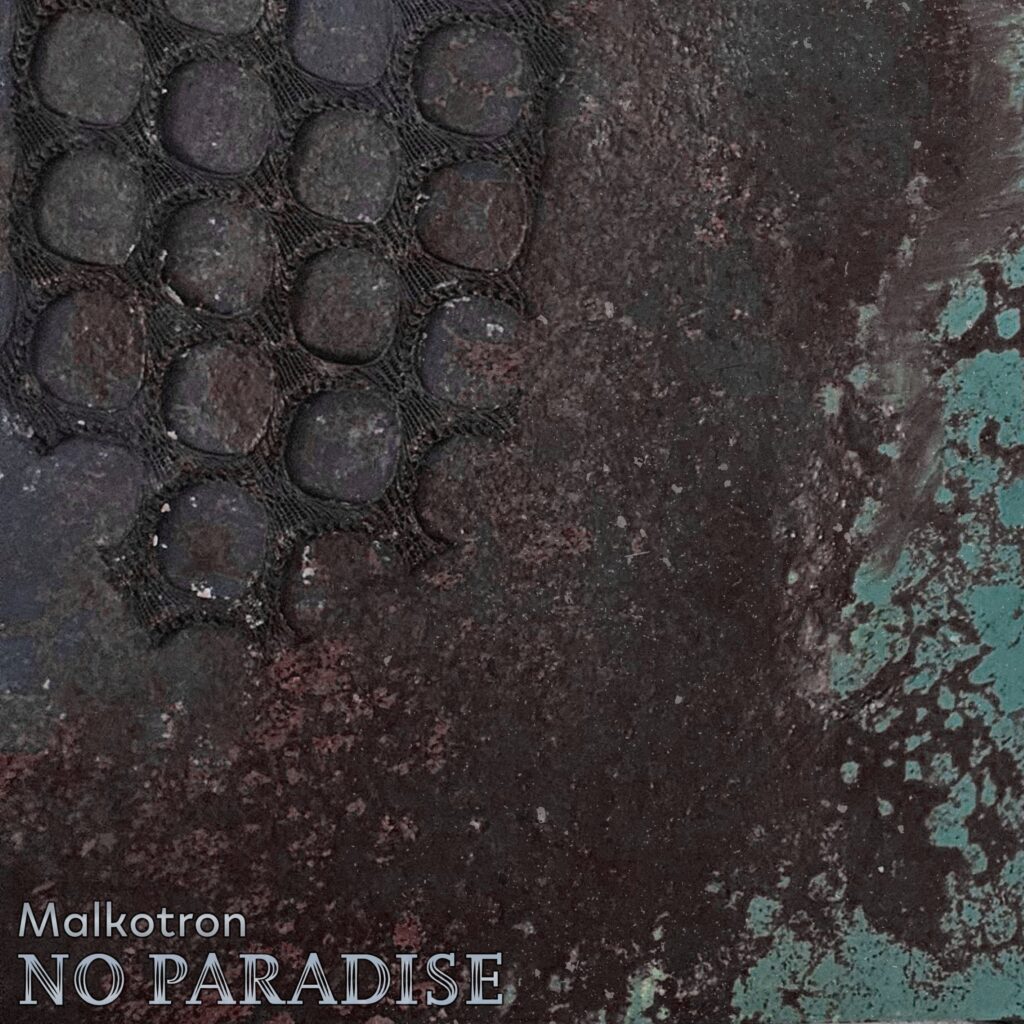
Woeful Dusk opens the record with a title that immediately signals the emotional register listeners should expect throughout, establishing atmosphere before any specific narrative content even arrives. Malkotron’s stated influences, running through Pink Floyd’s soaring guitar work and Marillion’s lush keyboard textures, shape how that atmosphere actually translates into sound, giving the album genuine progressive rock scale and ambition rather than settling for simpler, more contained arrangements that this subject matter might have tempted a less ambitious songwriter toward. Sleep Is Free follows with a title carrying real bitter irony, suggesting rest itself as one of the few remaining accessible comforts within genuine psychological struggle, freely available even when everything else feels increasingly out of reach.
Lost and Found stands as the album’s most structurally ambitious statement, an epic length composition that pulls back from purely personal territory to examine something closer to humanity’s broader failures around connection and accountability. That zoomed out perspective within an album otherwise concerned with intensely personal psychological experience represents genuine compositional risk, and the track apparently earns that ambition by moving fluidly between smooth, gliding passages, driving aggressive sections, and more ambient soundscapes, giving the composition enough dynamic range to actually sustain its considerable runtime. This is where Malkotron’s progressive rock lineage shows most clearly, trusting that a single composition can carry listeners through genuinely varied emotional and sonic territory rather than settling for a single consistent mood throughout.
Dusty Beams of Light offers welcome structural contrast as a shorter, more intimate acoustic number, and its focus on fleeting inspiration and feelings of betrayal draws clear lineage from the folk songwriting tradition Malkotron has cited among his influences, artists like Simon and Garfunkel and Jackson C. Frank whose work similarly favored intimate, direct emotional expression over elaborate arrangement. Placing this considerably more stripped down track alongside the album’s more expansive progressive rock compositions gives No Paradise real dynamic variety across its runtime, ensuring the record’s considerable emotional weight never becomes monotonous through unrelenting sonic maximalism.
One Bad Day carries a title suggesting the specific, sometimes arbitrary nature of psychological crisis, the way a single difficult day can sometimes tip an already precarious internal balance into something considerably more serious. That specificity matters for how honestly the album approaches depression as lived experience rather than abstract concept, acknowledging that genuine struggle often does not announce itself gradually but can arrive through seemingly minor triggering circumstances compounding accumulated difficulty already present beneath the surface. Slender Threads follows with a moodier examination of relationship difficulty and genuine longing for connection, extending Lost and Found’s broader concerns about disconnection into more intimate, individually scaled territory.
Maybe God Forgot carries genuine theological weight in its title, suggesting the particular despair that can accompany feeling abandoned or overlooked by whatever larger meaning or order someone might have previously trusted to exist. That kind of spiritual or existential questioning fits naturally within an album this committed to confronting depression’s harder philosophical dimensions directly, including the specific questions Malkotron has described the record grappling with, how someone recognizes actually hitting bottom, whether seemingly endless cycles can genuinely be broken, and ultimately what reason exists for continuing to hold on regardless. Cogs Grinding Bones pushes toward even more visceral, mechanical imagery, suggesting the exhausting, grinding repetition that sustained psychological struggle can impose on someone’s daily experience, a body and mind caught within processes that feel simultaneously inevitable and genuinely damaging.
Another Day closes the record, and that title’s apparent simplicity carries real weight given everything the preceding eight tracks have established. Ending an album this thematically heavy on a title as understated as another day suggests neither triumphant resolution nor complete despair, but something closer to continuation itself, the genuinely difficult, unglamorous reality of simply persisting regardless of whether clear resolution ever actually arrives. That refusal to manufacture false uplift at the album’s conclusion reflects the same commitment to direct, unadorned honesty that has apparently shaped the record throughout its entire runtime.
Recording every element of No Paradise independently within his own home studio, as he has with his previous three released projects, gives Malkotron complete creative control over material this personally weighted, ensuring no outside collaborator softened or reshaped content this direct according to different creative instincts. That independence matters considerably for an album built specifically around resisting the more ornate, softened language popular music often applies to depression, since maintaining full authorial control likely helped preserve exactly the blunt directness that apparently defines the record’s overall approach throughout its nine tracks.
Drawing from progressive rock’s tradition of albums functioning as genuinely cohesive listening journeys rather than collections of loosely related individual songs, No Paradise asks real patience and attention from its audience, patience that reflects the same sustained engagement genuine psychological struggle itself demands from anyone experiencing it. This is not an album built for easy, immediate accessibility, and that resistance to easy consumption feels entirely intentional given its subject matter. Malkotron has built something considerably more ambitious than a simple collection of sad songs, constructing instead a genuinely sustained meditation on depression’s actual texture, refusing false comfort while still, in its own difficult way, choosing to keep going long enough to reach its own quiet, understated conclusion.
If the themes explored in this album resonate with you personally, please know that support is available. In the United States, the 988 Suicide and Crisis Lifeline can be reached by calling or texting 988, any time, day or night.