
There is a particular kind of music that only becomes possible once someone has genuinely stopped trying to numb themselves, and Gemini Summer emerged directly from exactly that specific process. iLo Fields started making music while getting sober, and what began without much of an actual artistic plan, simply something to occupy an isolated mind that had always needed sound present from waking through sleep, gradually transformed into something he genuinely needed rather than something he merely tried. This five-track EP captures that particular transformation with remarkable honesty, documenting not a story of everything figured out, but rather a snapshot of the exact moment music stopped being occupation and became necessity.
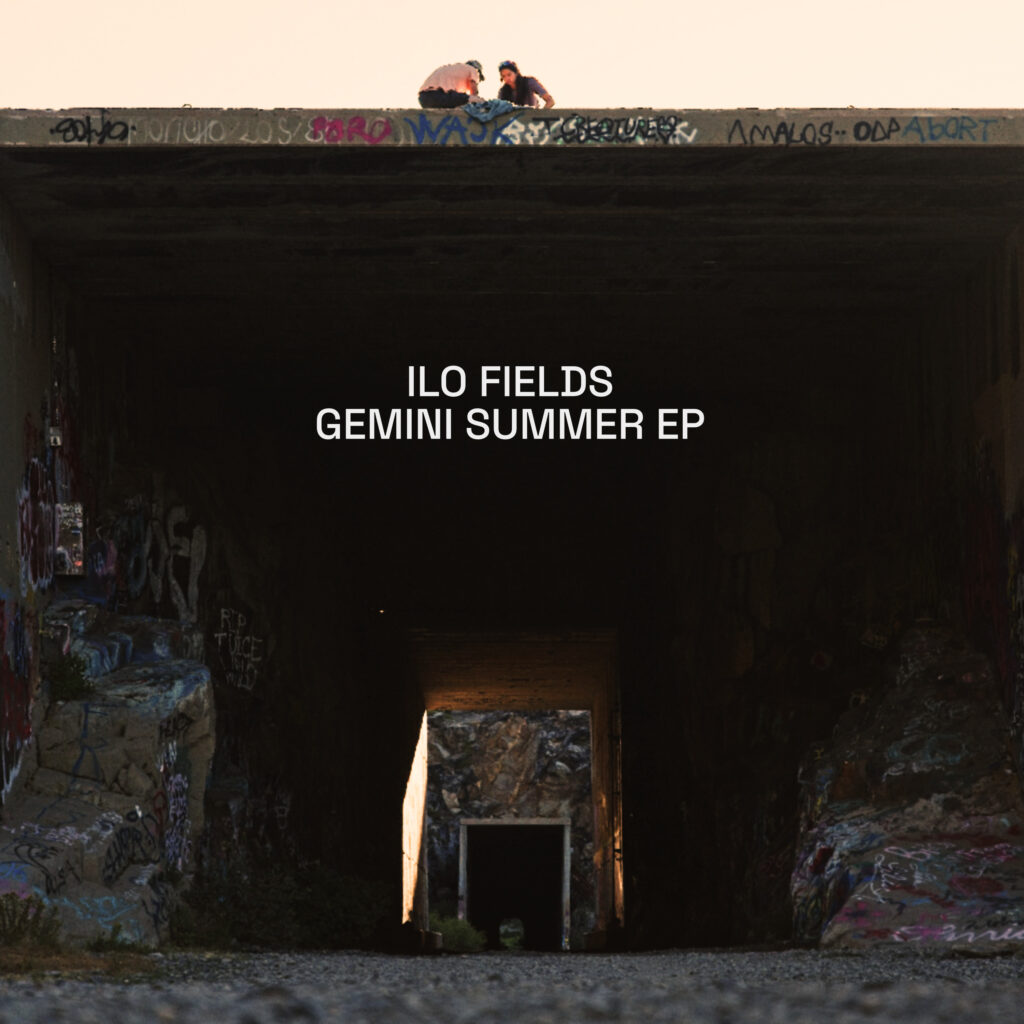
Vesper opens the collection, and understanding its actual creation matters considerably for appreciating what follows. Fields wrote this track during a roughly month-long stretch when his creative process suddenly clicked into place, and his immediate reaction upon finishing it was genuine certainty that this represented the best song he would ever write. Gemini Girl arrived the very next day, and Fields has described the startling realization that followed, discovering he had actually been wrong just twenty-four hours earlier, that this newer song had somehow surpassed what he’d believed was already his creative peak. That back-to-back breakthrough establishes the EP’s central emotional register immediately, two songs born from genuine creative momentum arriving faster than Fields could even process his own artistic growth in real time.
Here and Now follows with a title suggesting genuine presence, fitting naturally alongside an EP so thoroughly concerned with actually feeling things directly rather than continuing whatever avoidance patterns sobriety required leaving behind. Catch a Feelin extends that same thematic thread, and given Fields’ own description of these songs emerging from learning how to feel things again without immediately trying to shut them off, that particular title carries genuine weight beyond simple wordplay. Whats the Vibe closes the collection with a considerably more casual, almost conversational tone, offering a fitting exhale after the preceding four tracks’ emotional density.
What distinguishes Gemini Summer throughout its brief runtime is the specific emotional tension Fields has identified as running through the entire project, songs that feel happy and sad simultaneously, which he describes as probably the most accurate representation available of what that particular period in his life actually felt like. That duality shows up clearly in how listeners have responded to the music, describing it as warm and melodic while also strangely melancholy, interested specifically in the sensation of remembering something even before that something has actually finished happening. That’s a genuinely difficult emotional target to hit convincingly, capturing nostalgia’s peculiar quality of arriving prematurely, before an experience has even completed itself.
Musically, the EP’s actual construction process explains considerable amounts of why it achieves that particular emotional quality. Rather than beginning tracks with drums or conventional song structure, Fields builds many of these compositions starting from pure texture, a warm emotional bed of sound that sometimes barely changes throughout an entire song’s runtime, occasionally not even shifting notes. That texture functions as the genuine heart of each composition, with drums and additional elements added only afterward specifically to give the already-established emotion something resembling a heartbeat. That sequencing, emotion first, movement second, inverts how considerably more conventional song construction typically operates, and it explains why Gemini Summer feels less like assembled pop composition and more like something closer to genuine emotional atmosphere given just enough structure to remain listenable.
That approach has drawn comparisons toward early Four Tet and Bonobo, along with the edges of IDM and experimental electronic territory, though Fields himself never actually started this project with any particular genre destination in mind. His actual listening background runs considerably broader and more emotionally driven than genre categorization alone might suggest, spanning the quiet intimacy of Sufjan Stevens, Bon Iver, and Iron and Wine, the textural experimentation of Radiohead and Broken Social Scene, and more recently, the spacious electronic production found across ford.’s albums The Evening and The Color of Nothing. What actually connects those considerably disparate artists isn’t shared genre at all, but rather a shared capacity for building genuine emotional environment using relatively minimal material, leaving sufficient space for listeners to bring their own experience directly into that constructed space.
That philosophy shaped one of the EP’s most significant creative decisions specifically, Fields’ choice to stop at five tracks rather than continuing to expand the project simply because additional material remained possible. He has described realizing that some of his favorite songs aren’t actually better because they contain more, but rather because they contain less, and these five particular tracks felt complete together as a specific, bite-sized piece of his emotional space rather than requiring further expansion to justify their existence. That restraint reflects genuine artistic confidence, trusting that five carefully considered tracks can accomplish considerably more than a padded full-length collection assembled purely to meet album-length convention.
That same instinct toward intimacy is apparently shaping where Fields takes this project next. Rather than immediately pursuing conventional live performance, he has been exploring small silent-disco style shows specifically, where audiences experience the music entirely through headphones. That format makes genuine sense given the EP’s actual construction, since the tiny sonic details, long reverb tails, and negative space defining Fields’ approach would likely disappear entirely within a louder, more conventional room, while headphones place listeners directly inside those carefully constructed textures instead.
Given that Gemini Summer began largely as a way of surviving considerable stretches of time alone with his own thoughts, that intimate, headphone-focused performance approach feels genuinely appropriate rather than merely stylistically interesting. This remains fundamentally music built for close, private listening, exactly the kind of environment where it originally took shape in the first place.
By translating genuine recovery and the difficult, gradual process of relearning how to feel without immediately shutting emotion down into five carefully restrained tracks, iLo Fields has built Gemini Summer into something that succeeds specifically through what it withholds as much as what it actually includes. This EP offers listeners a genuine snapshot of transformation still actively in progress, five songs proving that capturing an entire emotional period accurately sometimes requires considerably less material than might initially seem necessary, provided every single element included genuinely earns its place within that carefully constructed space.


