
Growing up has a habit of continuing long after you thought you had finished. A decision that once felt sensible starts looking timid, familiar ambitions lose their appeal, and confidence gives way to questions you had managed to avoid. Jayne Pomplas places that uncomfortable reassessment at the centre of This is How The World Ends, her eleven-track album released on September 11, 2026. The Dublin-based fiddle player, vocalist and composer approaches adulthood as a series of revisions. The title’s apparent catastrophe becomes something more recognisable: discovering that the life you understood needs to change.
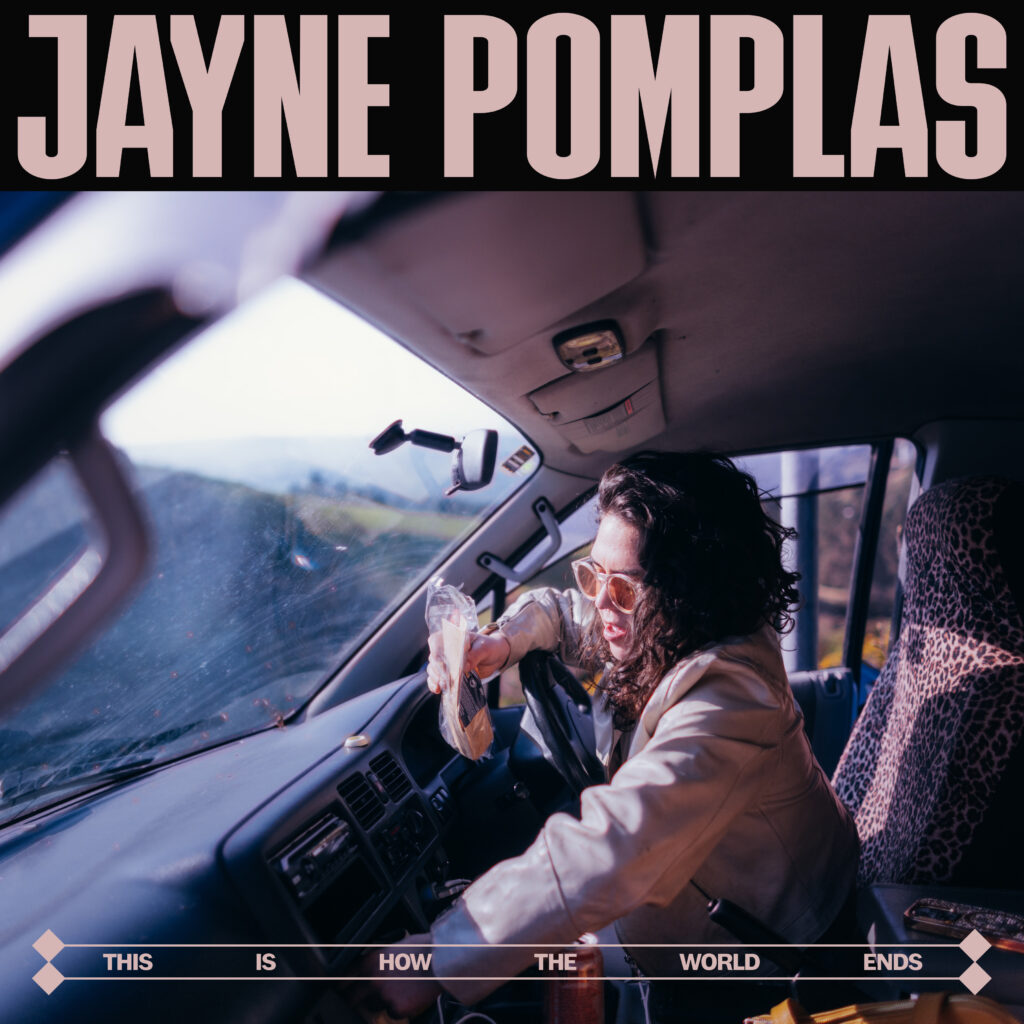
Pomplas connects the record to turning twenty-seven and recognising how often she had chosen safety over possibility. Her response was a burst of activity, followed by the less reassuring discovery that doing more does not necessarily make everything clearer. That is a compelling foundation for an album because it complicates the familiar story of an artist finally finding herself. There is creative momentum here, accompanied by uncertainty about where it leads. The record’s premise allows growth to remain awkward and unfinished, giving its themes of identity and self-doubt a convincing reason to share space.
This release also marks a change in the kind of work Pomplas places under her own name. Following instrumental traditional releases and numerous appearances as a session musician, the album introduces a substantial body of original writing alongside interpretations. That distinction matters because it brings her own concerns into the foreground without requiring a departure from the musical background that shaped her. Her experience as a fiddle player remains part of the picture, now accompanied by a broader range of expressive choices. The project’s appeal rests partly on that willingness to expand what an established skill can make possible.
Mother Superior offers the clearest example in the supplied account of how those ambitions take musical form. Released as a single on August 21, it combines traditional Irish motifs with orchestral drums, experimental samples and choral arrangements supported by backing vocals. Its subject is the human inner monologue, an especially suitable concern for a collection rooted in reassessment. The arrangement brings several kinds of musical expression to that private activity, making a conversation with oneself the basis for a more expansive piece. It is a distinctive choice, giving internal uncertainty a setting with room for intensity and contradiction.
The interest in inner speech also provides a useful way to approach the album’s larger coming-of-age arc. Much of growing older happens through small changes in what people tell themselves, including the excuses they stop accepting and the expectations they finally question. Pomplas’ framework accommodates those adjustments without needing every revelation to become a triumphant moment. Reflection and restlessness sit beside transformation, suggesting that movement can precede understanding. That makes the album’s central idea appealingly practical: change may begin because the old arrangement has become uncomfortable, even when a better one has yet to take shape.
The tracklist gives that broad emotional territory several different points of entry, though its titles should not be mistaken for complete accounts of the songs. Sweeter than Honey, Hit Single and Whiskey Sours sit alongside Bending the Curtains and Ninety Nine, creating a varied set of associations. There is room within that presentation for sweetness, performance, everyday detail and something less easily pinned down. It suits a record whose stated concerns include humour as well as emotional dislocation. Adulthood would be poorly represented by uninterrupted solemnity, and the project wisely allows its premise to accommodate more than one mood.
Traditional material helps place this personal writing within a musical history larger than the circumstances that prompted it. Pomplas includes Blackwater Side and an interpretation of Finbar Furey’s The Lonesome Boatman, giving inherited and existing work a place beside her own compositions. Their inclusion prevents the album’s account of change from becoming entirely self-contained. The artist can examine a new stage of life while continuing a relationship with music that already has its own history. That connection gives the project a firmer foundation, allowing personal reinvention to happen through an ongoing conversation with tradition.
The recording process extends that openness through a range of environments and methods. Live-room recordings, sessions on a houseboat on the Thames, field recordings and layered studio experimentation all form part of the album’s creation. Those details matter because they establish a project willing to gather material in different circumstances, rather than impose one uniform method on every piece. No individual track needs to be assigned an unconfirmed location for that variety to be meaningful. The broader decision is enough: Pomplas makes room for the conditions of recording to contribute to a collection already concerned with instability and change.
Her acceptance of imperfection is particularly relevant to that approach, although imperfection alone is never a substitute for an engaging musical idea. Here, it belongs to a record whose subjects include self-doubt and the limits of personal certainty, giving the choice a clear relationship with the writing. Distortion, abstraction and atmosphere sit within the album’s stated creative language alongside traditional performance and intimate folk expression. That breadth offers several ways of approaching a difficult feeling, from direct confession to something less explicit. It gives the project permission to explore experience without making every part of it tidy or immediately explainable.
A substantial group of collaborators also contributes to the release, including John Francis Flynn, Patrick Stefan, Luke Coffey, Jaz Delorean, Adrian Crowley, Lunatraktors and Méabh McKenna, among others. Their presence places Pomplas’ personal reassessment within a shared musical undertaking, which is an appealing feature of the album’s identity. A record can begin with private questions and still find its expression through working with other people. The central challenge is maintaining a clear perspective across that breadth of involvement and approach. Pomplas’ recurring concern with collapse and renewal supplies the connecting idea, giving the different methods a common emotional reference.
The strength of This is How The World Ends as an artistic statement lies in the modest scale of the ending it describes. A person loses an assumption, abandons a protective habit, or realises that experience has not delivered the certainty they expected. Pomplas gives those changes enough importance to build an album around them, drawing on original writing, traditional interpretations and a willingness to experiment. Her title makes the disruption sound immense, while the record’s premise keeps it close to ordinary life. A world can end when an old understanding becomes unusable, and growing up involves learning how to continue from there.


