Thirty-three minutes is a promising length for a psychedelic rock record. It allows time to wander while keeping the destination within reach, offering the possibility of strange encounters without requiring an entire afternoon to recover your bearings. SnakeOil’s debut LP, The Wild Side, released independently on September 18, 2026, occupies that compact space. Across nine songs, musician Nick Cutrer and his collaborators bring classic rock, garage, alternative and folk influences into a project concerned with truth and perception. The question hanging over the record is an inviting one: how much confidence should we place in what seems immediately apparent?
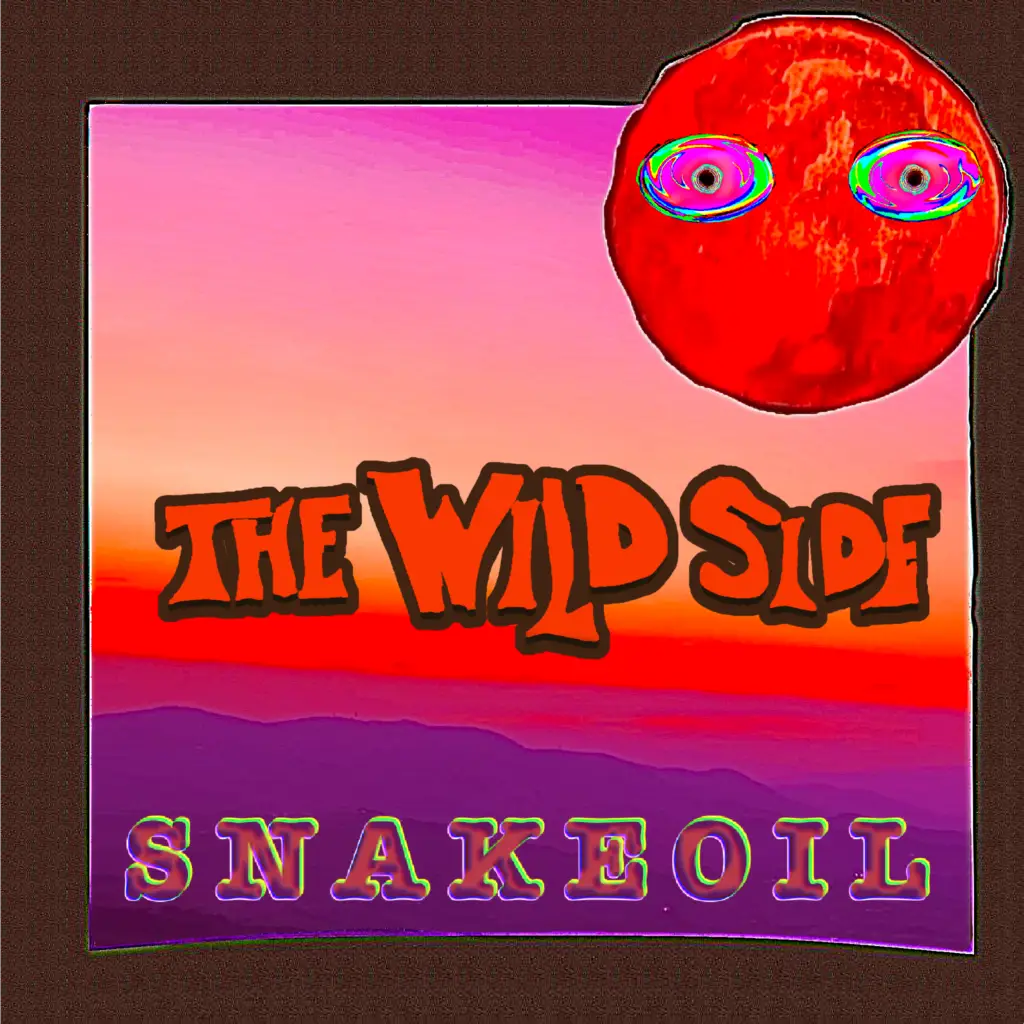
Cutrer draws inspiration from the kaleidoscopic rock of the sixties and seventies, a useful starting point for music interested in changing the listener’s perspective. Those influences offer more than a collection of familiar textures. They provide a tradition in which a song can remain approachable while its language, atmosphere or arrangement introduces something peculiar. SnakeOil’s surrealist songwriting belongs within that possibility. An image does not always need to settle into a single explanation to become memorable. Sometimes its value lies in how it unsettles an ordinary association, encouraging the listener to reconsider something they thought they understood.
The album was recorded to analog tape at Tiny Telephone in Oakland, giving its psychedelic intentions a specific working environment. Warmth, colour, grit and immediacy are identified as priorities in the production, establishing an appealing relationship between atmosphere and physical presence. Tape is part of that process, although the more consequential decision is what the musicians want to preserve through it. Here, the aim is to let the songs remain vivid. The recording approach supports a project whose imaginative reach still needs contact with musicians playing, with the grain of the performance allowed to remain inside the finished sound.
That combination of warmth and grit offers a useful framework for the record’s mixture of influences. Garage rock brings an appetite for directness, while folk can make room for narrative and intimate observation. Classic and alternative rock widen the available approaches to melody, rhythm and weight. Psychedelia gives those elements permission to meet in unfamiliar ways. The appeal of SnakeOil’s concept lies in that flexibility, with different traditions available according to what a particular song requires. A concise running time also gives the mixture a practical boundary, encouraging the band to make its departures count within a relatively economical sequence.
Would You Believe Me If I Told Ya? opens the tracklist with an act of address. Before any account has been established, the title asks whether the person speaking will be trusted. It is an effective introduction to an album concerned with perception, placing uncertainty inside the relationship between narrator and listener. The conversational phrasing gives that uncertainty a sociable quality. Somebody seems ready to tell a story, but their opening question suggests that the story may stretch credibility. As a title, it offers a small invitation to participate in the album’s premise: listen, consider the account, then decide how much to accept.
Sleeping & Nothingness follows, moving the vocabulary towards less tangible territory. Sleep is familiar, but its relationship with absence opens onto questions about consciousness and what remains beyond our awareness. The title leaves those associations available without determining the song’s exact meaning. Matchstick, arriving third, brings the sequence back to something small enough to hold. That change of scale is interesting in itself. An abstract pairing gives way to an ordinary object carrying the potential for ignition, demonstrating how the tracklist moves between ideas and concrete images. The names begin creating a world before a listener has assigned each one a place.
Babylon and Dripping At The Door extend that world through contrasting kinds of imagery. One carries a substantial history of cultural associations; the other presents an unresolved scene at a threshold. Neither title needs a definitive interpretation to provoke curiosity. Their placement keeps the album’s presentation shifting between the expansive and the immediate, a quality well suited to surrealist writing. A door is recognisable, but the action surrounding it introduces unease. Those small dislocations can be productive in psychedelic music, where the familiar setting often matters because it gives the strange detail something stable to disturb.
At the sixth position, Amber & Hazel supplies a pairing that can suggest colours, names or both. It is followed by Marbles Of Haze, another phrase combining something apparently solid with something difficult to grasp. Read together, the titles show an attraction to sensory language whose meaning remains mobile. That is especially relevant to the album’s stated interest in truth and perception. Colour changes with light; a name changes an image into a possible person; haze interferes with certainty. These are associations offered by the wording, rather than claims about lyrical narratives, and they give the record’s identity an intriguing visual character.
The last two titles, Fate Twister and Acid Rain, leave the sequence with suggestions of interference and altered conditions. Fate implies an expected course, while twisting introduces a force capable of changing it. Rain is ordinary weather until the additional word changes what its arrival means. The tracklist repeatedly makes use of that kind of tension, putting recognisable language into combinations that invite another look. Across nine entries, it supplies a coherent imaginative vocabulary without demanding that every song belong to one literal story. The listener has a collection of signposts, each pointing towards something slightly less settled than it first appears.
Cutrer’s collaborators are important within this picture, even though the project centres on his musical identity. A psychedelic concept needs practical decisions from the people performing it: how much to emphasise, where to leave space, and which ideas make the song more compelling. SnakeOil’s combination of analog atmosphere and immediacy suggests an interest in keeping that human activity close. The record’s brevity reinforces the emphasis on songs rather than unlimited exploration. Nine pieces in thirty-three minutes make an approachable proposition, giving listeners room to encounter the project as a complete sequence and then return to whichever corners remain most puzzling.
The Wild Side offers SnakeOil a distinctive point of introduction through its economy, tactile recording approach and appetite for uncertain images. Cutrer’s affection for older psychedelic sounds provides context, while the concern with perception gives the project something to investigate within those influences. The most inviting detail is the balance between a recognisable musical foundation and language that keeps slipping beyond easy explanation. A matchstick, a doorway, a change in the rain: ordinary things acquire another possibility. The opening title asks whether we would believe the story. The album’s premise makes room for the pleasure of remaining undecided.