There are songs that stick in your head for their catchy hooks, and then there are songs that invite you into a world—haunting, layered, and alive with detail. Matt Tarka’s latest single Salem, released on September 19, 2025, belongs firmly to the latter category. A native of Lancaster, Pennsylvania, Tarka has long been known for his ability to marry vivid storytelling with inventive sonic textures. But with Salem, he’s delivered something even more ambitious: a hypnotic, genre-fluid track that draws equally on personal history, playful instrumentation, and decades of musical influence.
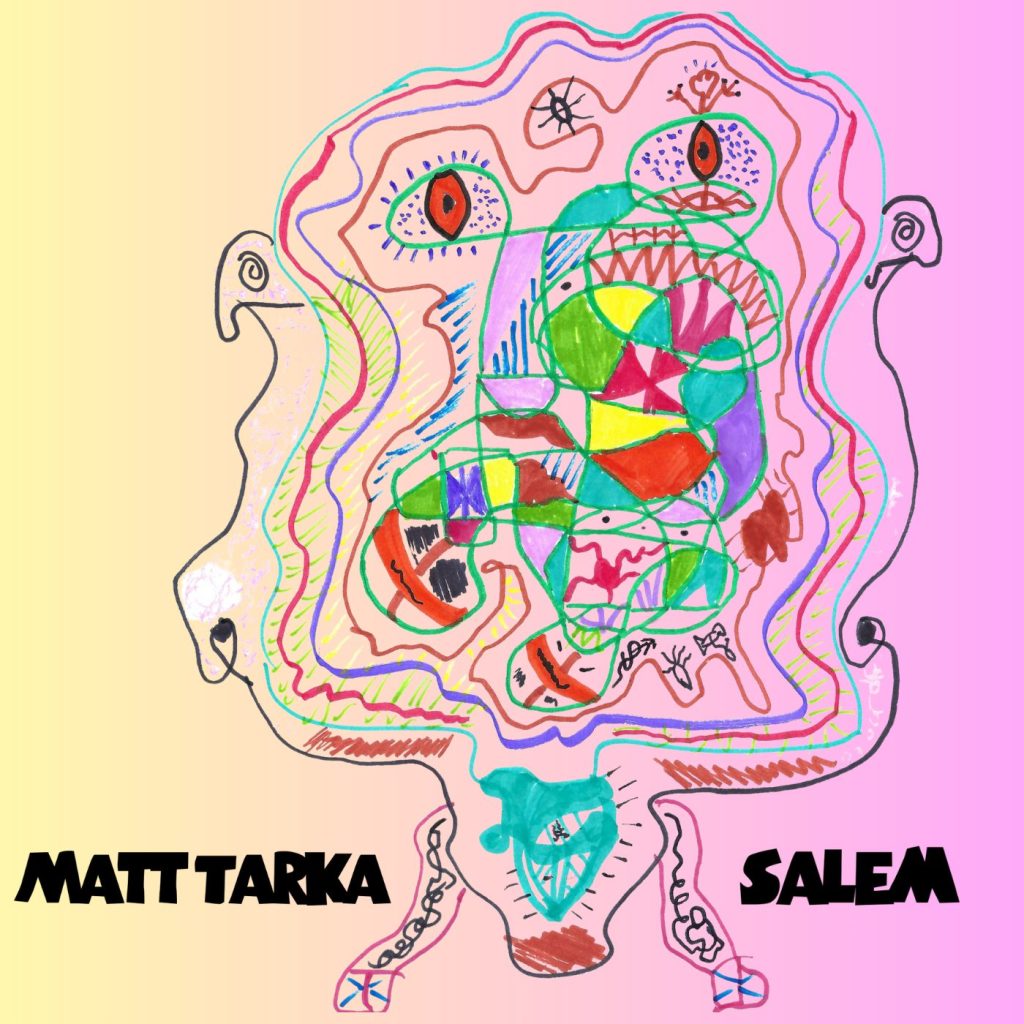
The track was produced, mixed, and mastered by the ever-resourceful Jarrett Nicolay at Mixtape Studios in Alexandria, Virginia. It’s clear from the very first listen that this partnership has brought out something special. Nicolay’s fingerprints are everywhere, from the elastic electric guitar lines to the grounding pulse of the bass. Yet the track’s heart remains with Tarka himself, who plays acoustic guitar, drums, omnichord, cowbell, handclaps, and provides the vocal performance that ties it all together. The result is a sonic tapestry that feels spontaneous yet carefully constructed, intimate yet expansive.
One of the most striking qualities of Salem is its refusal to stay tethered to a single genre. It has the hypnotic drive of Wilco’s Spiders (Kidsmoke), blended with the gritty, minimalist spirit of The Velvet Underground’s Run Run Run. Yet even these comparisons only scratch the surface. There’s something decidedly timeless about the track, something that nods to the past while refusing to be pinned down by it. In an era where genre labels often feel limiting, Salem instead positions itself as a musical experience—an invitation to wander through sound.
The inspiration behind the song makes its restless energy even more compelling. Tarka wrote Salem in the aftermath of a soccer-related concussion, during a period when recovery forced him to slow down and reexamine his relationship to creativity, memory, and resilience. The track channels that strange liminal space of healing—where the world feels both familiar and distorted—into a work of art. The layered instrumentation becomes a metaphor for the mind in recovery: fragmented yet searching for wholeness, fragile yet surprisingly resilient.
That metaphor comes to life through the track’s unusual recording process. Inspired by the “Jeff Lynne style” approach to layering, Tarka and Nicolay stacked sounds in unconventional ways, allowing textures to bleed into each other in surprising and sometimes uncanny fashion. The omnichord hums like a ghost under the acoustic guitar, while cowbells and handclaps inject bursts of joy into the haze. It’s experimental, yes, but it never feels alienating. Instead, it creates a soundscape that is deeply immersive, pulling the listener into the strange, beautiful interior of Tarka’s journey.
The lyrics of Salem match the complexity of its music. They are introspective, rich with imagery, and tinged with both vulnerability and resilience. Tarka doesn’t offer easy answers or polished platitudes; instead, he embraces the messiness of experience. The city of Salem becomes less a physical location than a symbolic space—a place where memory, healing, and confrontation with the self collide. The chorus feels like a mantra, an incantation to keep moving forward, even when the path isn’t clear.
And yet, despite the weight of its themes, Salem never collapses under its own seriousness. There’s a playfulness woven throughout, most obviously in the instrumentation. Who else but Tarka would layer handclaps and cowbell into a song grappling with the lingering effects of injury and recovery? These touches prevent the track from ever becoming dour, reminding listeners that resilience often comes packaged with humor, lightness, and a refusal to let struggle erase joy.
In the larger arc of Tarka’s discography, Salem feels like both a continuation and a leap forward. It carries the lyrical honesty and melodic sensibility that have always defined his work, but it pushes them into new territory with bolder production choices and a more adventurous sonic palette. If earlier songs painted in careful brushstrokes, Salem feels more like a sprawling mural, alive with detail and impossible to take in all at once.
The release also underscores Tarka’s growing confidence as an artist unafraid to share his full self. By channeling a personal health challenge into a track of such scope and depth, he demonstrates how vulnerability can be transformed into power. It’s this quality—his willingness to bare both his struggles and his joy—that makes him such a compelling voice in today’s indie landscape.
As Salem finds its way into the world, it’s easy to imagine it resonating across a wide spectrum of listeners. For some, it will be the hypnotic rhythm and lush instrumentation that captivate. For others, it will be the lyrical honesty and emotional depth. For many, it will be both. What’s undeniable is that Salem is more than just another single—it’s a fully realized statement from an artist at the height of his creative powers.
In the end, Matt Tarka’s Salem lingers not just because of its hooks or its production but because it feels lived in. It’s the sound of someone processing, healing, and finding beauty in the in-between. It’s the sound of an artist who knows that music can capture not just stories, but the very texture of experience itself.
With Salem, Matt Tarka hasn’t just given us a song. He’s given us a journey—and it’s one worth taking again and again.