
There is a category of pianist-composer whose work resists the standard vocabulary of music criticism because the music itself operates more like painting or poetry than like the structured argument that analytical language is built to describe. Tomasz Kowalczyk belongs to this category, and Romanticism of Psychedelic Customs, released as an audio recording on March 20, 2026 and followed by a music video on April 10, 2026, is a work that asks to be experienced through the senses and the emotions before it asks to be understood through the intellect. This is piano music as a prism, the sound refracting into shades and gradations of feeling that the conventional descriptors of major and minor and fast and slow cannot adequately capture.
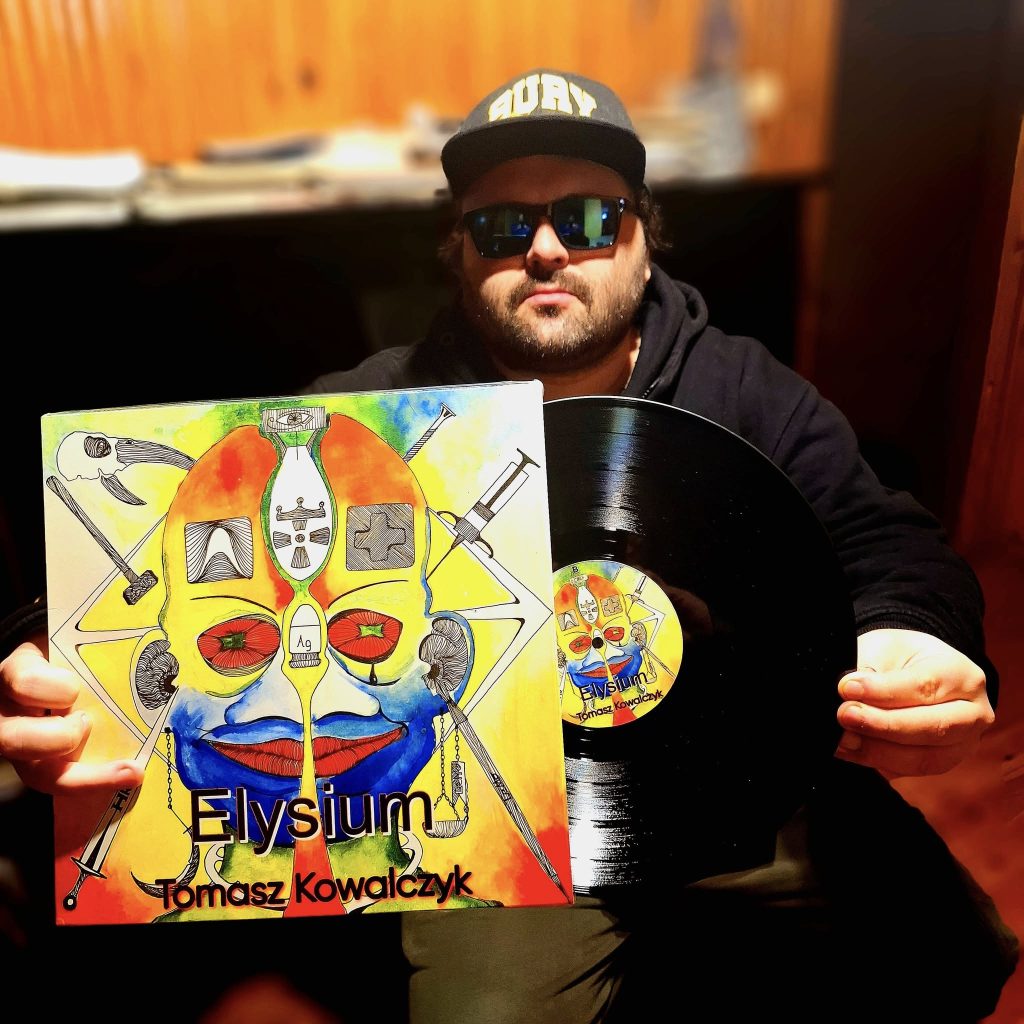
The title itself signals the territory the work inhabits, the romanticism connecting Kowalczyk to the great tradition of piano music that prioritized emotional expression and the individual soul’s encounter with beauty and suffering, and the psychedelic customs suggesting something more contemporary and more consciousness-altering, the music intended not simply to be heard but to shift the listener’s interior state, to function as the kind of experience that changes how you perceive while you are inside it. The combination of these two concepts in a single title is the key to what Kowalczyk is attempting, the marriage of the historical romantic tradition’s emotional depth with a more contemporary understanding of music as a tool for altering and expanding consciousness.
The understanding of polyphony as intrinsic to piano music that informs Kowalczyk’s compositional approach is one of the deepest truths about the instrument, the recognition that the piano is never truly a single voice but always a conversation between multiple voices, the hands and the registers and the individual melodic lines existing in dialogue with each other rather than in unison. The best piano music has always understood this self-dialogue, the way that a single performer at a single instrument produces what amounts to chamber music, multiple independent voices intertwining and balancing and responding to each other. Kowalczyk’s awareness of this principle is what gives his music its dimensional quality, each voice contoured and responsive to the voices around it like planets maintaining their orbits in an integrated solar system, the gravitational relationships between the parts producing the coherence of the whole.
The work has been championed by the pianist Benita Rose, whose album Pure Magic: Benita Rose Plays Tomasz Kowalczyk represents the kind of interpreter-composer relationship that has historically been essential to the piano repertoire’s development, the composer’s vision realized through a performer who understands it deeply enough to bring out dimensions that the score alone cannot fully specify. The Piano Pictures compilation that corresponds to that album frames Kowalczyk’s work as expressing that which has never been expressed before, the darkest crevices of life sprinkled with the light of angels, the gold dust and shamanic panaceas that lift tormented souls from the swamps they find themselves in. This is grand and almost mystical language, but it accurately reflects the ambition of music that is reaching for the territory where beauty and darkness coexist, where the lurid and the luminous occupy the same emotional space.
The pianissimos that populate Kowalczyk’s music, the quietest passages where the sound becomes barely present, are described through the image of a field of dandelions swaying in a Latvian summer breeze or snowflakes in a Minnesotan winter, each individually distinct yet categorically the same. This image captures something essential about how the quiet passages function in this music, the multiplicity of subtly different soft sounds creating a texture that rewards close attention, the listener invited to notice the individual character of each near-silent moment rather than experiencing the quiet as undifferentiated absence of volume. This is music that lives in its details, the field of soft sounds being as rich and as varied as the louder passages, the snowflakes and the dandelions each carrying their own specific character within the larger pattern.
The invitation that surrounds Kowalczyk’s work is genuinely demanding of the listener, the suggestion that making music means indulging fully in the sensory experience, tasting it and savoring it and experiencing the aftertaste, leaving the listener exhausted while desiring more. This is not background music or pleasant accompaniment but music that asks for total engagement, that wants to occupy the listener’s full attention and emotional capacity rather than sitting politely at the edge of awareness. The reference to Arthur Rubinstein’s famous distinction about what playing the piano meant to him, the difference between making love and merely having sex, between full emotional and spiritual presence and mere physical execution, is the frame through which Kowalczyk’s work asks to be received. The music is offered as an act of complete presence, and it asks the listener to meet it with the same completeness.
He bares his soul, the description insists, and you must bare yours. This is the contract that Romanticism of Psychedelic Customs proposes, a mutual vulnerability between the composer and the listener that most music does not dare to request. The work is not interested in being liked in the casual sense but in being genuinely encountered, in producing the kind of experience that changes the person who has it. The addition of the music video to the audio recording extends this invitation into the visual dimension, the work becoming a more complete sensory experience that engages the eye alongside the ear in Kowalczyk’s project of total artistic communication.
Do make love, the master says of the music, not merely have sex with it. Know the difference, and Romanticism of Psychedelic Customs becomes unforgettable. Bring your full self. He has brought his.


