There is a particular kind of album that could only come from total obsession, the kind of work where an artist pours everything into the pursuit of a vision until the making of it nearly breaks them, and where the resulting record carries the unmistakable weight of that complete investment. Terry Dammit‘s Evening Powerlines, released May 31, 2026, is exactly this kind of album, thirteen tracks that the artist describes as the hardest thing he has ever done artistically, a work made through years of obsessive labor and genuine personal struggle. What emerges from that struggle is something genuinely ambitious, a rock album built around the incorporation of classical counterpoint theory, an attempt to marry the rigor of Bach to the energy of rock music, and the result is a deeply personal and conceptually serious record that bears the marks of everything that went into it.
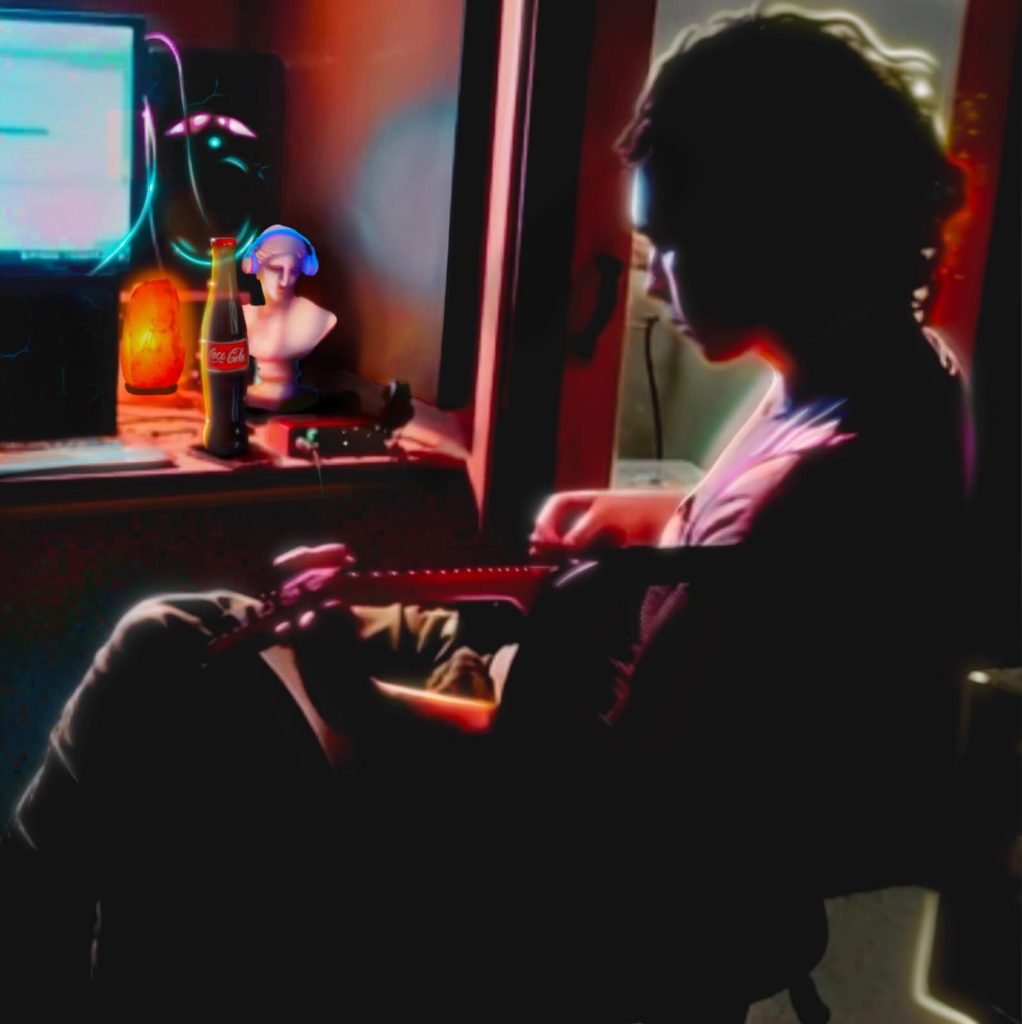
The conceptual heart of Evening Powerlines is its ambitious attempt to incorporate classical counterpoint into rock music, and the inspiration behind this concept reveals the seriousness of Dammit’s artistic vision. The album owes a debt to Wendy Carlos and her landmark Switched-On Bach, the pioneering 1968 record that rendered Bach’s compositions on the Moog synthesizer and demonstrated that classical rigor and electronic and popular forms could meet. When recording moved to a strange room in Burbank, Dammit blared Switched-On Bach all the way there, the album putting him in a mood to pursue perfection and to attempt the incorporation of classical counterpoint theory into rock music. This was, as he puts it, the whole concept, the marriage of the contrapuntal discipline of the classical tradition with the energy and emotion of rock.
The album also draws on an even older source, Dammit having read Johann Joseph Fux’s Gradus ad Parnassum during the recording process, working from his elementary understanding of that foundational counterpoint treatise as a loose guide for counterpoint ideas throughout the album. Gradus ad Parnassum, published in 1725, is one of the most influential pedagogical works on counterpoint ever written, a text that taught generations of composers including Mozart and Beethoven the discipline of independent melodic lines working in harmony. For a rock musician to work from this text, even from an elementary understanding of it, reflects a genuine ambition to bring compositional sophistication to rock music, the counterpoint ideas threading through the album as an organizing principle. This intellectual seriousness distinguishes Evening Powerlines from the vast majority of rock records, the album reaching for a level of compositional craft that few in the genre attempt.
The personal cost of making the album was substantial, and Dammit has been candid about the genuine struggle that the obsessive creation involved. The focus and obsession he brought to the work took a real toll, an addiction keeping him awake for extended periods during recording, sometimes leading him to record the same part hundreds of times in pursuit of a perfection that obsession demanded. This is the difficult reality behind the album, the genuine personal struggle that the creative obsession both fed on and worsened, and it is to Dammit’s credit that he has been honest about it rather than romanticizing the difficulty. The recordings then lay dormant for almost two years before he returned to them, beginning a year-long process of making a thousand decisions about the final versions, redoing vocals and guitars and synths and bass and arrangements as the obsession returned.
The structuring of the tracklist into a narrative was a crucial part of this final process, Dammit structuring and restructuring until the sequence became a story, knowing the album was done only when he could find nothing else he wanted to change. This attention to the album as a narrative whole reflects the same compositional seriousness that the counterpoint concept embodies, the record being conceived as a unified work rather than a collection of songs. The album opens with Dear Bunny, an intimate address that establishes the personal and confessional nature of the work, before moving through Pills and Sweet Girl, the latter featuring vocals from Dammit’s girlfriend Jen Kiddo, who also provided the garage where most of the album was recorded along with endless love and support.
The emotional terrain of Evening Powerlines is unflinchingly honest, and several of the track titles signal the genuine difficulty that the album confronts. It Ends Today and the title track Evening Powerlines anchor the album’s middle, the powerlines of the title connecting to Dammit’s simple observation that he has always liked how powerlines look against the evening sky, the everyday image becoming the album’s central visual and emotional motif. Watch As Green Leaves Fall brings the imagery of change and loss, the falling leaves suggesting the passage of time and the inevitability of decline, while Station Babe and the strikingly titled Am I Humble Now, Jesus Christ continue the album’s exploration of identity and struggle and the search for meaning.
The later tracks engage with some of the darkest emotional territory on the album, and Dammit confronts difficult feelings with genuine honesty. You Know I’m Sick and Everyone Is Better Than Me give voice to the kind of painful self-doubt and negative self-perception that many people experience but few articulate so directly, the album examining these difficult feelings rather than hiding from them. Everyone Is Going To Die Anyway confronts mortality with a stark directness, while Only A Broken Bone and the closing When I Drove Away offer their own reckonings with pain and departure. These titles reflect an album willing to engage with genuine darkness and difficulty, the emotional honesty being part of what makes the record so personal and so affecting, though the weight of these themes is considerable.
The collaborators who helped bring Evening Powerlines to life deserve recognition for their contributions to its realization. Brooks Farris provided all the drums remotely, and Dammit praises him as brilliant and creative and precise, able to play in any style required, the drums providing the rhythmic foundation for the album’s contrapuntal ambitions. Jen Kiddo provided not only the recording space and her vocals on Sweet Girl but the love and support that sustained Dammit through the difficult process. And the final piece was Ivan, who goes by Blindsight Mix, mixing and mastering everything and putting up with Dammit’s furious perfectionism, giving full effort to every song. The credit Dammit gives to these collaborators reflects an understanding that even the most personal and obsessive artistic vision requires the support and skill of others to be fully realized.
What makes Evening Powerlines genuinely compelling is the combination of its conceptual ambition and its emotional honesty. The attempt to incorporate classical counterpoint into rock music gives the album an intellectual seriousness rare in the genre, while the unflinching personal honesty gives it an emotional weight that the conceptual framework supports rather than obscures. The two dimensions work together, the compositional rigor providing the structure within which the raw emotional content can be expressed, the counterpoint discipline lending form to the genuine personal struggle that the album documents.
Terry Dammit has made an album that nearly broke him to create, a work of genuine ambition and genuine difficulty that bears the marks of everything that went into it. The powerlines stand against the evening sky, the counterpoint threads through the rock arrangements, and the personal struggle finds its form in thirteen tracks of obsessive craft and unflinching honesty. Evening Powerlines is the sound of an artist who gave everything to his vision and emerged with something lasting.
The powerlines look beautiful against the evening sky, and Terry Dammit has built an album as striking and as carefully constructed as that image. It cost him a great deal, and the result carries the full weight of everything it took to make.
This album draws openly on the artist’s experiences with addiction and difficult mental health struggles. If any of these themes resonate with your own experience, please know that support is available, and reaching out to a trusted person or a professional can make a real difference.