
Nordstahl doesn’t just make music—they forge manifestos. And with their 7-track album Ragnarök in Berlin, released on July 13, 2025, they’ve delivered a scorched-earth industrial metal opus that refuses to let listeners sit comfortably in the ruins. This is not an album that plays in the background. It crashes through the speakers with thunderous fury, dragging myth and modernity into one raw, unrelenting collision. With Norse legends as its skeleton and contemporary societal decay as its lifeblood, Ragnarök in Berlin is both a warning and a weapon—a primal scream aimed squarely at the soul of our times.
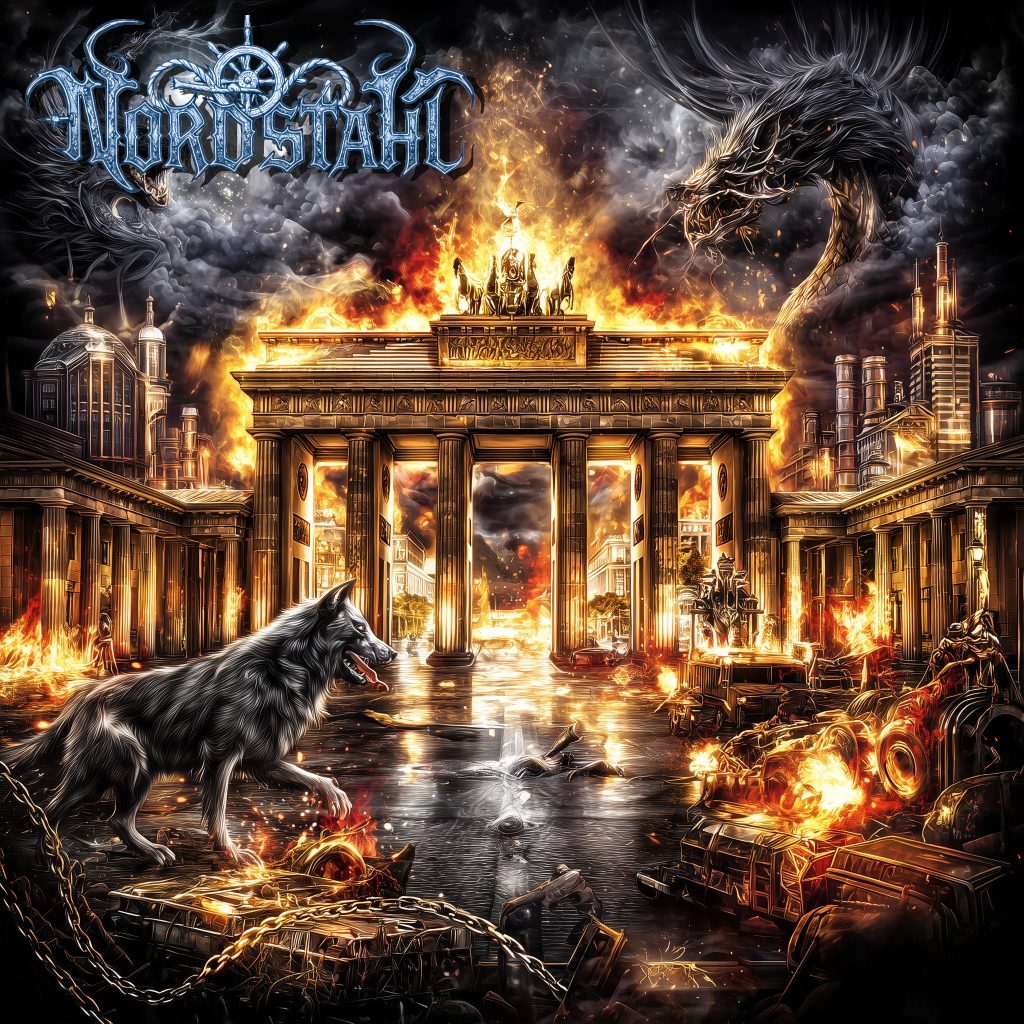
From the opening track “Midgards Schlaf,” the listener is plunged into a shadowy world of uneasy quiet—a world that should be awake but slumbers instead. It’s a stark portrayal of the collective denial that defines our moment in history. A brooding, ambient start gives way to hammering percussion and growling vocals, awakening the beast of realization that too many would rather leave dormant. Here, Midgard—the realm of humanity—is not the battleground, but the battlefield, scarred by ignorance and inertia.
The title track “Ragnarök in Berlin” explodes like a prophecy fulfilled. It is not just the centerpiece but the crucible where the album’s themes burn brightest. The mythic end-times of Norse lore—Ragnarök—aren’t some distant fantasy. Nordstahl reimagines it unfolding amidst the cold streets and fading grandeur of Berlin. The pounding industrial beats mimic the march of inevitable collapse, while guttural vocals demand accountability. Berlin, in this vision, is every city—every place where truth is traded for convenience and decadence is mistaken for progress.
“Bifröst brennt” conjures the image of the mythical rainbow bridge in flames—once a path between worlds, now consumed by chaos. Sonically, it’s one of the most expansive tracks on the album, fusing grandiose orchestral swells with razor-sharp metal riffs. It sounds like a civilization watching its own funeral pyre, unsure whether to mourn or dance. The symbolism is powerful: the bridges we once trusted—between facts and belief, people and empathy, power and responsibility—are crumbling under fire, and we are the ones holding the match.
With “Mjölnir,” Nordstahl hones in on the paralysis of strength. Thor’s mighty hammer, a symbol of justice and protection, lies unused. The track pulses with brute force and mechanical aggression, but it’s deliberately restrained—as if the muscles are flexing but never swinging. It becomes a metaphor for courage unspent, a warning against the seductive comfort of silence when action is needed most.
“Jörmungands Kreis” coils tightly, both musically and thematically. The World Serpent, forever biting its tail, represents the loops we trap ourselves in—arguments that go nowhere, cycles of blame, and the endless stalling that allows injustice to fester. There’s a cold, mathematical rhythm to this track, like a machine running in place. It’s one of the more hypnotic entries on the album, luring you in with repetition until the realization hits: we’ve heard this before. And we’re still doing nothing.
“Lokis Lügen” is the snarl of the trickster. This isn’t the mischievous Loki of pop culture; this is the embodiment of moral relativism, deception, and convenient truth. The track is volatile and unpredictable, shifting time signatures and textures with reckless abandon. It mirrors the chaos bred by unchecked lies—the kind that don’t just fool others, but help us fool ourselves. Nordstahl’s performance here borders on theatrical, weaving menace and mockery into every line.
The album’s closer, “Friggs Falscher Trost,” is perhaps its most haunting chapter. There is no triumphant ending, no cathartic explosion—just the quiet horror of false comfort. Frigg, the goddess of foresight, is reimagined as the modern voice of empty reassurance: the belief that everything will be fine if we just wait. The track unfolds slowly, mournfully, with icy synths and a ghostly vocal delivery that chills more than it soothes. It leaves you suspended, breathless, and profoundly unsettled.
What makes Ragnarök in Berlin so unforgettable is not just its musical ferocity, but its unwavering sense of purpose. It is industrial metal with a soul, mythology with fangs, and art that dares to confront rather than coddle. Sung entirely in German, the language choice only sharpens its edge—there’s something brutally elegant in how the syllables strike, like stone against steel. You don’t need to understand every word to feel the gravity behind them. The sound speaks the universal language of reckoning.
In a landscape flooded with performative outrage and hollow rebellion, Nordstahl stands apart. They don’t scream just for effect—they scream because they mean it. Ragnarök in Berlin isn’t trying to go viral or chase trends. It’s trying to shake the listener awake, to rip away the veil of modern illusions and demand a reckoning with reality. It is a call not just to listen, but to act. Because if the end is already here, then what we do now—today—matters more than ever.
With this release, Nordstahl has carved out something timeless: a brutal, beautiful reminder that even amid collapse, there is still the choice to rise, to resist, to remember what matters. Ragnarök in Berlin is more than an album. It’s a reckoning wrapped in reverb, a mythology made modern, and a musical confrontation with the truth we fear most: that the gods are not coming to save us—and maybe they never were.


