There is a particular songwriting skill required to make heartbreak sound deceptively bright, letting melody disguise devastation until a listener catches themselves humming along without fully registering what the actual lyrics describe. Naran Rathod, releasing under the name Ed Sykes and Friends, commits fully to exactly that specific effect on Always Be Mine, his debut single following what he has described as a lifetime spent writing before finally releasing anything publicly. That considerable gap between accumulated craft and public debut gives this particular release weight, an artist arriving with real songwriting maturity already fully formed rather than developing that skill visibly across early public output.
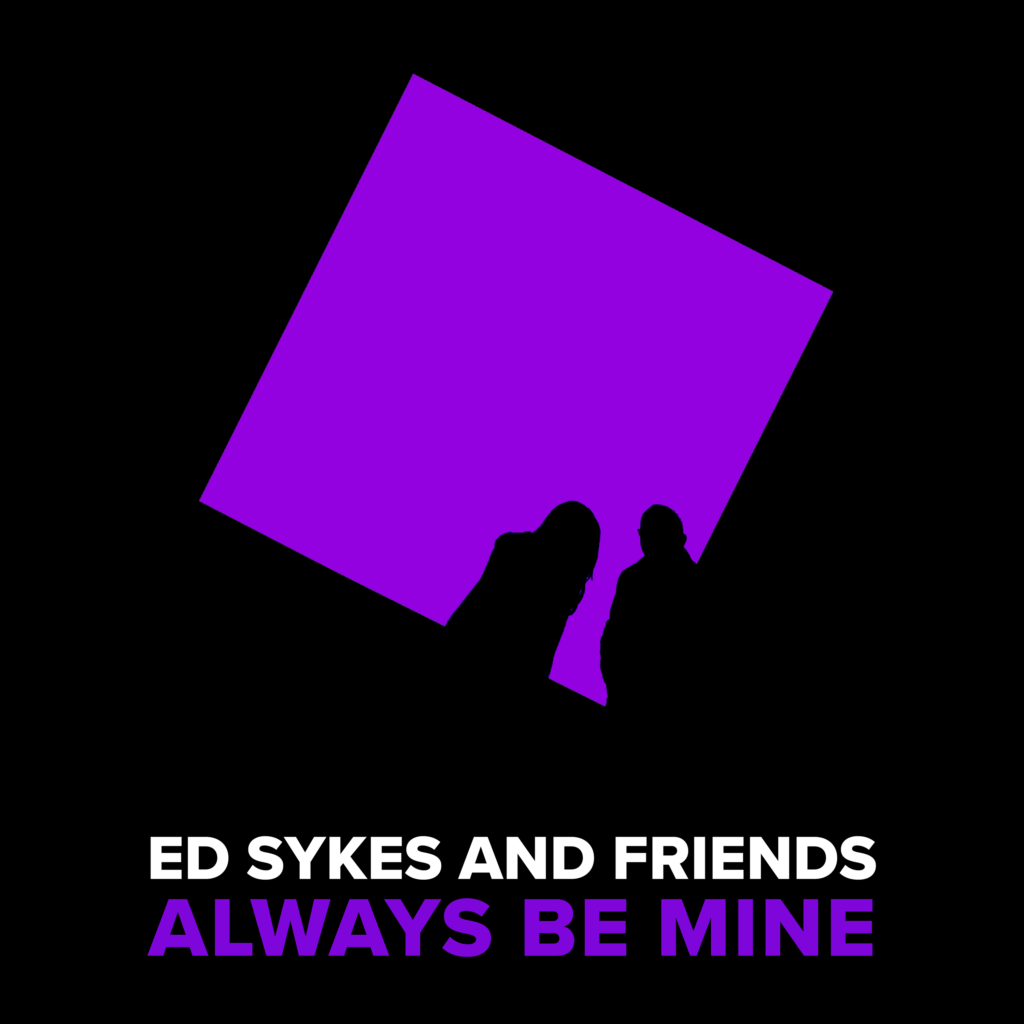
The song’s central subject matter, capturing that precise moment before a relationship actually ends, when one person continues reaching desperately while the other has already begun quietly pulling away, requires psychological precision to render convincingly. Rathod’s professional background as an educational psychologist gives him considerable relevant expertise here, having spent decades professionally listening closely to people navigating emotional complexity. That accumulated listening experience apparently shaped his songwriting ear directly, informing lyrics built from concrete, observed images of ordinary life rather than more abstract or generalized emotional statements.
Musically, the track builds around a bright, saxophone-led groove, and that particular instrumental choice carries real significance given the song’s underlying emotional content. Saxophone has historically carried associations with both warmth and considerable melancholy simultaneously, depending on how a specific arrangement deploys it, and building this track’s central instrumental voice around that particular instrument gives Always Be Mine access to exactly the kind of tonal ambiguity its lyrical content requires. The comparison to Sade’s established smooth, sax-led atmospheric approach makes considerable sense here, since Sade’s own catalog has long demonstrated mastery at pairing accessible, sophisticated musical surface alongside lyrics carrying real emotional complexity underneath.
That combination extends further through comparison to Tracy Chapman’s characteristically plain-spoken emotional directness, suggesting Rathod’s lyrical approach favors clarity and observed specificity over more elaborate poetic abstraction. Blending Sade’s polished sonic sophistication alongside Chapman’s unadorned lyrical honesty gives Always Be Mine stylistic coherence, positioning the track within adult-contemporary territory that prioritizes both musical craft and emotional substance simultaneously rather than sacrificing one quality in service of the other.
Rathod’s broader biographical background, born in India before relocating to the UK at age five, gives his overall musical sensibility a cross-cultural foundation, growing up specifically between weekend Bollywood film screenings and considerable exposure to British radio programming throughout his formative years. That dual cultural immersion likely informs his broader stated influences, spanning Chris Rea, Steely Dan, and Van Morrison, artists whose collective work has historically balanced musical sophistication alongside considerable soulful, groove-driven accessibility. Building his own sound from folk, soul, and blues foundations with a jazz-tinged edge suggests real comfort moving across these related but distinct musical traditions simultaneously.
What distinguishes Rathod’s overall creative approach is his stated preference toward self-production specifically, allowing each track to develop naturally over extended time rather than rushing toward premature completion. That patience extends toward his working relationships as well, apparently giving his small circle of trusted collaborators creative freedom to interpret his original material and bring each song to life according to their own individual artistic instincts rather than demanding rigid adherence to any single predetermined vision. That collaborative philosophy suggests confidence in his own songwriting foundation, trusting skilled collaborators to find their own authentic contribution rather than requiring exhaustive creative control across every single production element.
The moniker itself, Ed Sykes and Friends, reveals wit underneath its surface simplicity, functioning as gentle wordplay connecting directly to his professional identity as an educational psychologist, Ed Psych compressed into something resembling an actual name. That particular naming choice reflects real thoughtfulness regarding how Rathod wants to present his combined professional and artistic identity, acknowledging rather than hiding the connection between his psychological training and his songwriting sensibility, treating that dual identity as a source of creative strength rather than something requiring separation or concealment.
There is something worth noting in how directly Rathod has articulated his specific songwriting intention regarding this particular track, wanting listeners to hum along without immediately registering the considerable emotional weight actually embedded within the lyrics themselves. That stated goal, allowing surface pleasantness to gradually give way to deeper emotional recognition rather than announcing the song’s subject matter immediately and directly, reflects a sophisticated understanding of how music can function on multiple simultaneous levels, offering immediate accessible pleasure while still rewarding considerably closer, more attentive listening for audiences willing to pursue that deeper engagement.
Positioned specifically as an opening entry within a planned series of singles building toward an eventual debut album, Always Be Mine functions as an introduction to Rathod’s broader artistic sensibility and songwriting approach rather than existing as an isolated standalone statement. That structural framing gives this particular single context within his larger creative trajectory, suggesting listeners can expect continued exploration of similarly observed, psychologically precise territory across whatever additional material eventually follows toward that planned full-length release.
By combining psychological insight drawn from decades of professional listening experience alongside considerable musical sophistication spanning soul, jazz, and adult-contemporary traditions, Naran Rathod has built Always Be Mine into a debut single that succeeds specifically through its careful balance between accessible surface pleasure and underlying emotional substance. This track captures something authentically difficult to articulate: the specific asymmetry of a relationship’s final moments, one person still reaching while another has already begun letting go, using saxophone-led warmth and observed lyrical clarity to let that particular ache arrive gradually rather than announcing itself immediately, exactly as its creator apparently intended all along.