Confronting the lingering aftermath of historic conflict and examining how ordinary people carry unseen trauma requires a songwriter who treats the recording studio as an intensive creative laboratory. When a project explores the quiet struggles left behind long after battlefields fall silent, the resulting music becomes far more than a simple period piece, turning into an essential reflection on human resilience. Project creator Foxy Leopard achieves that exact powerful milestone on the early September single titled Children of the War. Released on September 5, 2026, as the flagship track of the forthcoming album After, the song offers a deeply moving, beautifully stripped-back acoustic exploration of survival, inheritance, and empathy.
The broader artistic vision behind After begins precisely where most traditional civil war narratives conclude. While history books focus on folded flags, signed treaties, and formal speeches made by leaders, ordinary individuals are left behind to shoulder consequences that never disappear simply because a government declares fighting finished. The central concept of Children of the War grew from a simple yet profound question: who are the children of a war? While the phrase initially suggests the young generation growing up in a conflict zone, the songwriting expands that definition to encompass anyone whose life has been shaped by a struggle they did not start, could not control, or perhaps never fully understood.
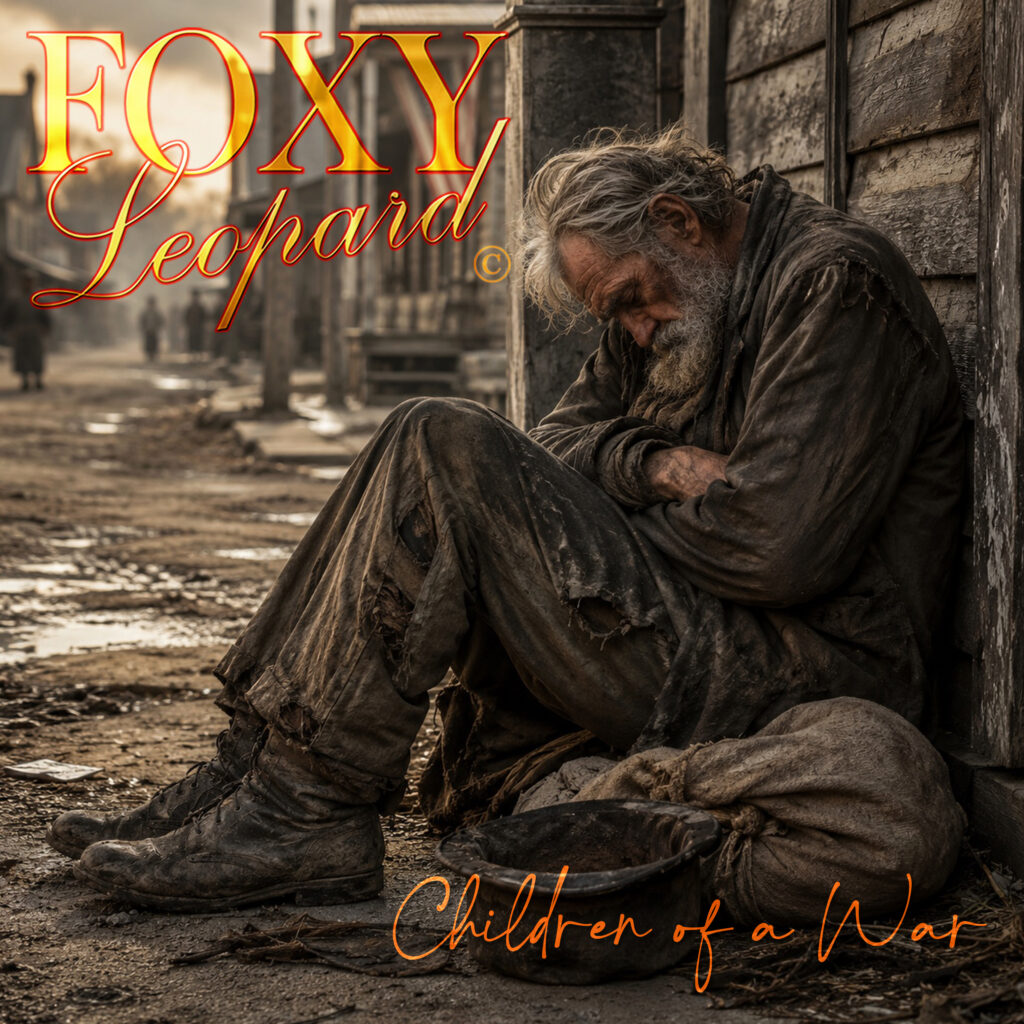
That expansive perspective is embodied in the opening verse through the poignant image of an old man sleeping by the roadside, unable to articulate what he is still fighting for. His struggle is intentionally left undefined, representing everything from physical poverty and chronic trauma to fading memory, age, or a personal battle entirely his own. The narrative highlights the daily moral choice faced by passersby: whether to truly see him or simply walk past without a second glance. The second verse approaches the same human cost from a different direction, depicting a woman waiting in vain for someone who will never return, left to raise a family with one less set of helping hands. That character serves as an emotional bridge to another album track titled The Outlaws of Peace, drawing inspiration from Zee Mimms and the uneasy years following the American Civil War when women carried the burden of domestic survival after violence took their partners.
Instead of relying on a polished, conventional cinematic choir, the recording gives its simplest and most profound observations to a small, imperfect group of children. While adults complicate the world with different roads, competing minds, and conflicting goals, the children reduce existence down to something painfully direct. Names, causes, uniforms, and generations may change across time, but people continue inheriting the unaddressed wounds of what came before them. That timeless realization crystallizes in the core refrain, reminding listeners that we are all ultimately the children of a war.
Achieving the deceptive simplicity of the finished master required an unusually grueling, meticulous development process. During the creation of the track, more than forty thousand words were exchanged, and over twelve hundred iterations, extensions, edits, and remixes were explored. Words were swapped by single syllables, breathing spaces were measured against individual guitar notes, and entire sections were built, disassembled, and discarded. Versions failed because vocal characters shifted unexpectedly near the end, because a single child’s voice sounded where a larger group was required, or because a few seconds of unwanted silence altered the emotional momentum of the arrangement.
Throughout this massive undertaking, artificial intelligence was utilized as part of an iterative production workflow involving writing, listening, rejecting, directing, and rebuilding until the recording authentically captured its intended message. Ironically, after more than a thousand attempts, the final solution was not to make the production larger or more complex, but to strip it down to its barest essentials. The final mix centers around a worn, raspy male vocal performance accompanied by sparse, single-note playing on a steel-body resonator guitar, restrained percussion, and subtle harmonica accents.
To preserve maximum emotional impact, the children’s choir was kept natural rather than pristine, allowing loose timing, metallic resonance, stray breaths, string squeaks, and minor acoustic imperfections to remain untouched. The final master recording preserves a wide, three-dimensional acoustic soundstage where the lead vocal sits forward in the mix, giving physical weight to the percussion while surgically repairing unwanted digital artifacts without sacrificing the roughness of the performance. Eschewing a conventional grand finale or a Hollywood victory scene, the song returns in its final verse to the same old man by the store. Yet this time, something fundamental has shifted; the narrator’s earlier passive question about helping him win his war transforms into a hopeful declaration from the children, offering a conscious choice not to walk away.
As momentum continues to build around this landmark September release across independent music blogs and folk-Americana playlists, Children of the War establishes an elevated benchmark for the After project. It highlights a visionary creator operating with complete dedication to narrative depth, laying down a solid foundation for an album that proves wars may end on scheduled calendar dates, but their human consequences rarely do.