There is a particular kind of cleverness required to write a song about mob accusation that somehow manages to sound catchy enough to sing along to, and Burn the Witch pulls off exactly that trick, delivering something the artist himself describes as a catchy shrug that turns out to have teeth. herbie the rabbit, the new solo project stepping out from behind the band Ubiquity Machine, built this debut single around genuine fury dressed up in sardonic, dissociative calm, examining how readily a crowd decides who’s guilty without ever really questioning the story they’ve been handed.
That central move, turning the accusation back on the accuser rather than the accused, gives the song its actual sting. Rather than writing from the perspective of someone being blamed, herbie the rabbit interrogates the people doing the blaming, asking directly whether hearing a false version of events and simply failing to look closer makes someone complicit in whatever damage follows. That question sits at the heart of the track’s lyrical approach, needling at how easily people fall for a convenient story rather than doing the harder work of actually finding out what’s true.
The song draws its conceptual backbone from Lilith, frequently regarded as the first witch within considerable mythological and religious tradition. According to that mythology, Lilith was made from the same earth as Adam, claimed genuine equality alongside him, and when that equality was refused, spoke the secret name of God specifically to take flight and escape into the night rather than accept subjugation. That single act of defiance became, according to the song’s own framing, the actual template for the witch archetype more broadly, forbidden knowledge, word-magic, and an untamed female will that ends up unfairly hunted and destroyed regardless of what it actually did wrong.
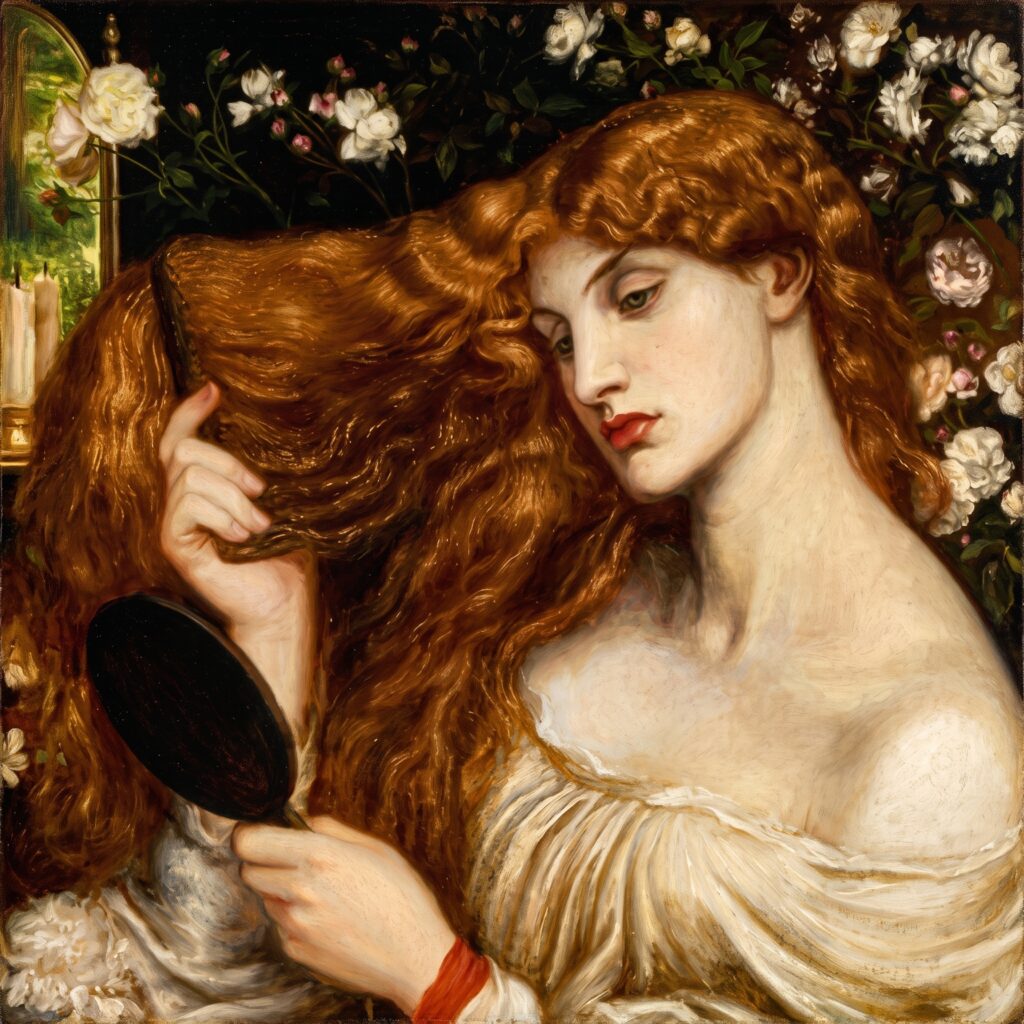
That mythological foundation gives Burn the Witch genuine intellectual weight beneath its catchy surface. Rather than simply gesturing toward witch imagery for aesthetic effect, the song builds its entire argument around Lilith’s specific story, using her defiance and subsequent persecution as a lens for examining how communities still decide who deserves blame today, often based on convenient narrative rather than genuine investigation. The single’s cover art extends that connection directly, drawing on Dante Gabriel Rossetti’s Lady Lilith, the oil painting completed between 1866 and 1868 and later revised in the early 1870s, now held at the Delaware Art Museum.
Working alongside producer Jordan Lawlor of M83, herbie the rabbit built a sound specifically designed to let that quiet menace breathe throughout the track’s actual construction. That collaboration matters considerably for understanding the song’s sonic identity, since M83’s own established catalogue carries genuine atmospheric ambition and emotional scope, qualities that apparently transfer directly into how Burn the Witch balances its unsettled lyrical point of view against genuinely compelling, hook-driven production.
What distinguishes herbie the rabbit within considerable contemporary singer-songwriter and alternative territory is the explicit connection between this project’s broader thematic interests and lived neurological and psychological experience. Across the wider record this single introduces, herbie the rabbit explores themes drawn directly from lived experience with ADHD, autism, and C-PTSD, specifically examining the dissociation, hypervigilance, and skewed sense of blame that frequently accompany those particular conditions. That framing gives Burn the Witch genuine additional depth, since the song’s central preoccupation with unfair accusation and complicity connects directly toward the skewed sense of blame the artist has described as running through his own actual lived experience.
That connection between personal psychological terrain and folk-tale imagery reflects real artistic ambition, transforming inner experience into something considerably more universal through character study and mythological framing rather than purely confessional, direct autobiography alone. Building songs this way requires genuine skill, translating something as specific as hypervigilance or dissociation into a story about witches and mob justice without losing the emotional truth underneath that metaphorical layer.
This single marks a genuine departure from herbie the rabbit’s previous work fronting Ubiquity Machine, a band that built a considerable following exceeding ten thousand Spotify followers. That established audience gives this solo pivot real context, an artist with genuine prior experience and demonstrated ability to connect with listeners now choosing to explore this new, more personally rooted creative direction under an entirely different project name.
Burn the Witch arrives as the first entry within a planned string of releases and an eventual full album rolling out across the coming year, positioning this single as genuine introduction toward a considerably larger artistic statement still taking shape. That structural patience suggests real intentionality regarding how herbie the rabbit wants audiences to encounter this new project, building gradual familiarity through sequential singles before whatever complete album eventually arrives.
By combining genuinely catchy, hook-driven songwriting alongside considered mythological framing and honest engagement with lived neurological experience, herbie the rabbit has built Burn the Witch into a debut single that succeeds specifically through its combination of dark wit and genuine emotional substance. This track sets real tone for the wider project ahead, using Lilith’s ancient defiance as a mirror for contemporary mob judgment, and asking listeners to sit with an uncomfortable question long after the song’s deceptively catchy chorus has already lodged itself firmly in their heads.