There are years that refuse to stay in the past. Their hospital appointments, difficult conversations and sleepless nights continue shaping ordinary days long after the immediate crisis has eased. Jack Biilmann brings one such period into Move The Mountains, his sixth studio album, released on September 25, 2026. Across ten tracks, the Australian songwriter gathers blues, rock, country and Americana around experiences that have changed his understanding of love, loyalty and gratitude. The personal circumstances are substantial, but the record’s premise reaches beyond hardship towards the unfamiliar business of feeling steady again after life has repeatedly shifted beneath you.
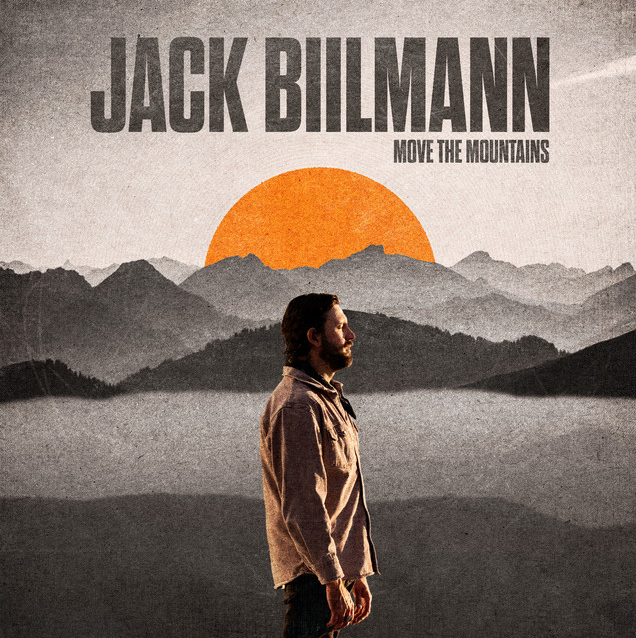
Biilmann approaches this chapter with five albums and years of touring behind him. That experience gives his confidence in the new material a particular context: he regards these songs as the strongest he has written, following a sustained effort to develop his craft. His stated priorities remain direct. Write about something that produced a feeling, choose language carefully and use voice and guitar to expose what matters within the story. The band then helps determine how fully each song can develop. It is a working method grounded in attention, with musical decisions following the emotional demands of the material.
Dark Days provides the clearest example. Biilmann wrote it after a twelve-month stretch that included two miscarriages experienced with his wife, her cancer procedure during pregnancy, his father’s motor neuron disease diagnosis and a close friend’s cancer diagnosis. A friendship also ended painfully following betrayal. These experiences should not be treated as dramatic decoration around a release. They establish the circumstances from which the song emerged, and explain why its subject carries weight. Several kinds of uncertainty arrived together, affecting family, friendship and the assumptions that usually make the future feel manageable.
The present described around the record is different. Biilmann and his wife now have a baby boy, she is healthy, and his father’s condition is stable. That perspective gives Dark Days a relationship with survival that remains specific rather than sweeping. Some circumstances have improved; others require continuing care and attention. The song’s musical movement reflects the difficult period through sparse, vulnerable passages and surges of intense energy, with layered instrumentation and raw vocals contributing to its expression. Those shifts offer an appropriate framework for emotions that rarely arrive at a consistent volume or in a convenient order.
Its place as the sixth track puts that account within a wider portrait. The album opens with Outlaw, followed by Forbidden Fruit, Never Have It All, (Not) Easy To Love and Feelin’ The Burn. The titles establish an intriguing vocabulary of independence, attraction, limitation and friction, though they cannot substitute for the individual stories inside the songs. What they do suggest is an album with several emotional positions available. Biilmann describes this collection as a snapshot of his thirties, and that breadth suits a decade when relationships, ambitions and responsibilities can become harder to keep neatly separated.
His independent spirit belongs within those complications. An outlaw identity can sound uncomplicated when presented purely as freedom, but adulthood often means deciding which obligations are worth accepting and which loyalties deserve protecting. Biilmann’s broader account of the album includes appreciation alongside disappointment and helplessness, giving independence a more human setting. There is room for conviction without pretending conviction prevents hurt. That makes the project’s personal approach promising: the songwriter has experiences to examine, and his musical background gives him several ways to approach their different emotional textures without requiring every song to deliver the same response.
The second half moves from Dark Days into Slithered, the title track, Haze On The Highway and These Are The Days. As a sequence of titles, it closes with language that turns attention towards the present after an image of obscured travel. That is an evocative destination for a record shaped by changing circumstances. Move The Mountains itself carries a familiar suggestion of impossible effort, which gains significance beside the experiences Biilmann describes. Sometimes the enormous task is simply continuing with everyday life, making room for fear while remaining available to the people who depend on you.
His guitar playing and raspy vocal identity provide continuity across the blues, country and rock influences gathered here. Those styles offer space for force, restraint and storytelling, making Americana a useful setting for this collection. The career surrounding it includes major festival appearances, national chart success, endorsements from Fender and Maton, and praise from Joe Bonamassa. Yet the more revealing detail is Biilmann’s insistence that he begins with stories rather than a plan to manufacture a hit. That gives the songs a clear standard to meet: they must communicate the experiences that made him want to write them.
Move The Mountains documents a life whose difficulties and pleasures now sit close together. Biilmann’s nationwide Australian touring brings the material towards audiences, with a US tour planned for 2027, but the record begins in circumstances far more private than a stage. Its most compelling invitation is to hear an experienced songwriter finding musical form for a period he can now view from firmer ground. Gratitude has acquired particulars: a healthy partner, a son, a father whose condition is stable. After everything that preceded them, those ordinary words carry extraordinary significance, giving the album’s present tense something worth holding onto.