There is a particular kind of rock song that hits hardest specifically because it refuses to hit hard at all, and Sittin Here Thinkin builds its entire power around exactly that quiet contradiction. Laji George constructed this pivotal single from his forthcoming album Out of Line around introspective lyricism and raw honesty rather than the sheer volume typically associated with grunge-influenced rock, proving that a song can carry considerable weight without ever needing to overwhelm the senses to actually earn it.
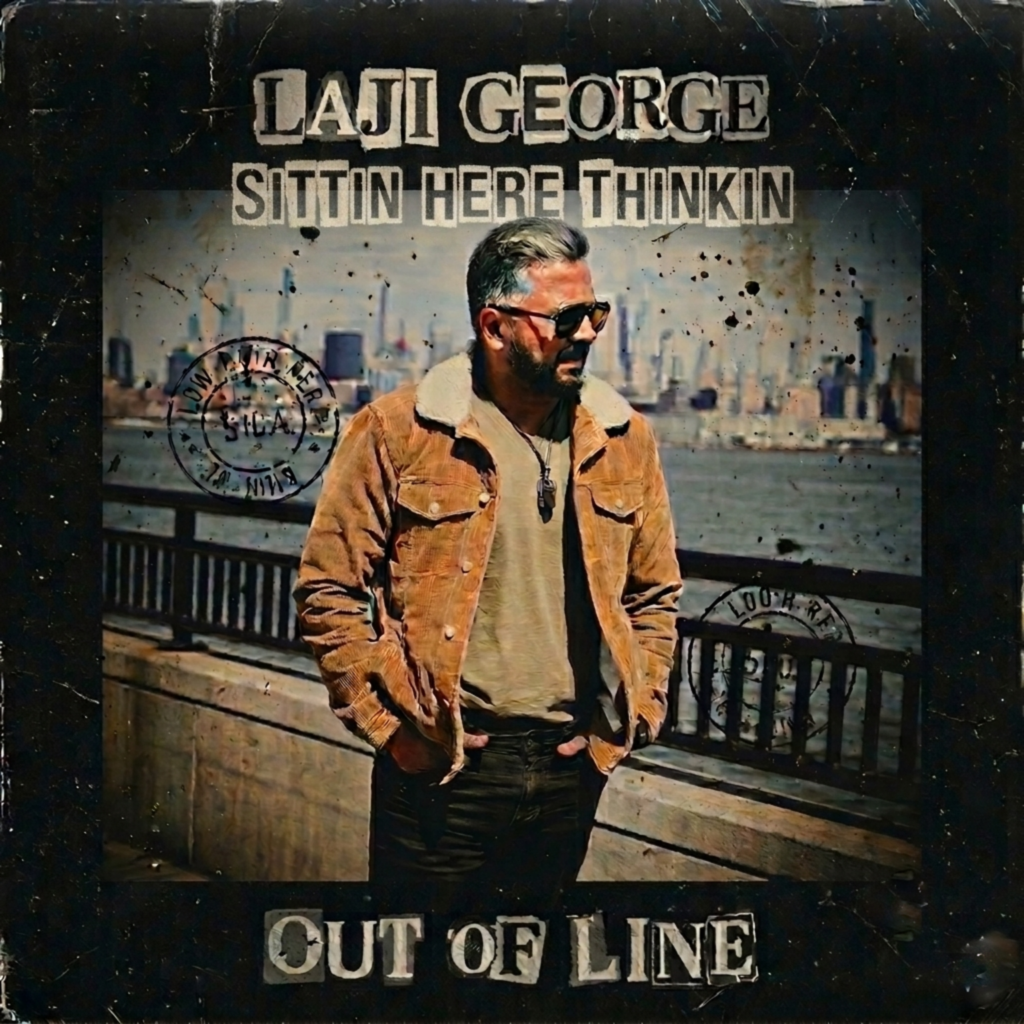
The track traces its origins directly back to a genuine friendship, one George formed with a Navy veteran and union pipefitter, someone whose considerable grit, work ethic, and accumulated life experience left a lasting impression on him. That real relationship shapes the song’s entire emotional core, capturing something specific about the quiet moments following a hard day’s physical labor, that particular space where genuine reflection meets hard-won resilience. Rather than romanticizing working-class experience from a comfortable outside distance, George builds the song from actual proximity to that particular life, watching someone he genuinely respected process their own day in real time.
Musically, the track represents genuine ambition in how thoroughly it blends seemingly disparate influences. George’s established grunge foundation, drawing directly from Eddie Vedder and Chris Cornell as his permanent artistic touchstones, gets woven together with considerable blues and soul undertones traceable to Otis Redding, Etta James, and Chuck Berry. That combination alone would represent notable stylistic reach, but the track pushes further still by incorporating accordion into the arrangement, an instrument choice George describes as genuinely off the beaten path within rock production more broadly. Getting that particular element to sit correctly within the mix, adding earthy folk-rock texture without overwhelming the track’s grunge-tinged guitar work and soulful vocal delivery, apparently represented the single biggest challenge throughout the entire recording process.
What distinguishes this release within George’s broader artistic approach is his explicit rejection of raw volume as the primary vehicle for emotional impact. He has described wanting the song to hit listeners directly in the chest through genuine storytelling and soulful melody rather than through sheer sonic force, trusting that the bluesy undertones and Seattle-inspired textures could breathe properly while the actual narrative content remained centered throughout the arrangement. That patience reflects real confidence in the underlying songwriting, since stripping away the volume that typically defines grunge-adjacent rock leaves the material with genuinely nowhere to hide.
Working alongside producer Jonah Brockman across sessions split between George’s home studio and Brockman’s own space, the two collaborators prioritized capturing authentic energy over polished perfection throughout the recording process. George has described tracking a rough home demo before Brockman helped blend those distinct stylistic elements together, balancing earthy acoustic foundations against grittier alt-rock energy while keeping the track’s raw emotional heart genuinely intact throughout that balancing process. That collaborative dynamic, working in intimate, focused spaces specifically to keep ego out of the room, reflects a shared commitment toward authenticity extending beyond just the finished song’s actual sound.
The accompanying music video extends that authenticity directly into its visual presentation, shot specifically around the NY and NJ port area, surrounded by genuine industrial steel and dockside grit. George has been direct that this particular setting was chosen deliberately, honoring the actual working-class world his pipefitter friend inhabits daily rather than opting for a more conventionally polished or metaphorical location. That choice grounds the entire release in tangible, lived reality, reflecting the same soul and honesty that originally inspired the song’s creation.
There is something worth noting in how directly George connects this particular song toward his broader artistic philosophy regarding music’s genuine potential for building connection rather than reinforcing division. He has stated plainly that he has no interest in preaching or lecturing anyone, choosing instead to write something grounded in real-world grit specifically capable of giving people a reason to pause, reflect, and feel more genuinely united through honest, soulful alt-rock. That stated mission matters considerably for understanding Sittin Here Thinkin’s actual purpose within George’s larger body of work, positioning it less as a single standalone statement and more as a pivotal entry point establishing the authentic, uncompromising tone the rest of Out of Line will presumably continue carrying forward.
Since his last live appearance alongside his band Pseutopia at Summerfest, George has stepped back entirely from performing, choosing instead to channel his complete focus into finishing this album before returning to the stage. That decision reflects genuine patience regarding his own artistic development, holding off on live dates specifically until the record reaches full completion, ensuring that whenever he does eventually return to performing, he arrives with an entirely finished body of raw new material rather than partial or still-developing work.
By combining genuine working-class storytelling alongside a fearless blending of grunge, blues, folk, and soul influences, Laji George has built Sittin Here Thinkin into a single that succeeds specifically through its willingness to trade heaviness for depth. This track demonstrates that rock music can achieve genuine emotional impact through patient, deliberate craftsmanship rather than relying purely on volume or intensity, honoring both the specific friendship that inspired it and the broader working-class world it represents. As the tone-setting entry point for Out of Line, this single suggests George is building toward an album genuinely committed to using honest storytelling as a bridge between listeners rather than another voice adding to whatever noise already divides them.