There is genuine vulnerability required to build an entire debut EP around the premise of saying things you’d rather have kept quiet, and Lottie Gray commits fully toward exactly that kind of exposed honesty across The Big Idea. Following considerable momentum from three previous singles, this Manchester-based artist introduces her debut collection weaving between Americana and folk storytelling, driving acoustic-led rock, and classic pop songwriting, establishing herself firmly as a songwriter defined by emotional directness rather than any single fixed genre identity.
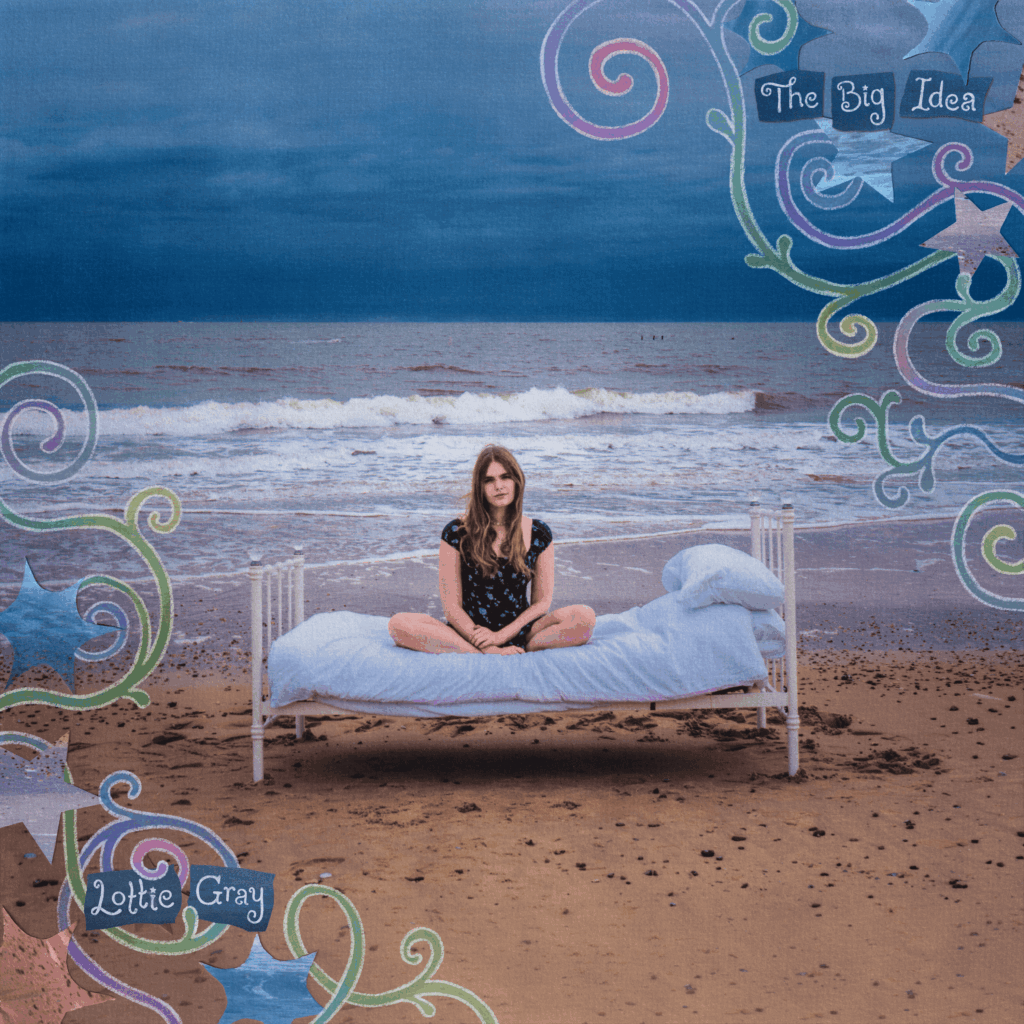
Head Down/Hands Up opens the EP with genuine quirkiness immediately apparent, featuring jangly guitars alongside a deliberately wonky groove and punchy, quick-witted lyricism throughout. That opening choice establishes real personality before the collection moves into considerably heavier emotional territory, giving listeners a genuinely playful entry point that still hints at the sharp lyrical intelligence carrying through the remaining five tracks. Green follows with something considerably more urgent and rock-edged, showcasing Gray’s powerful, emotive vocal delivery in a way that immediately signals genuine range extending beyond whatever initial impression the opener might have suggested alone.
Teeth digs directly into breakup aftermath specifically, and Gray draws considerable inspiration from her actual coastal hometown, submerging the track within shimmering, fluid sonic textures that mirror that particular seaside environment directly. That geographic specificity gives the song genuine grounding, connecting personal heartbreak toward a physical landscape Gray clearly carries with her regardless of her current Manchester base. Worst Punchline pushes toward genuinely vulnerable territory, exploring guilt and honest self-reflection while backed by what has been described as the band’s signature dynamic performance, suggesting a track where considerable emotional rawness meets equally considerable musical intensity.
Bed and Breakfast shifts toward something haunting and considerably slower, examining feelings of being unwanted and inadequate through primarily acoustic instrumentation. That stripped-back approach fits the song’s genuinely difficult subject matter well, letting Gray’s lyrics carry weight without competing production elements diluting the track’s considerable emotional impact. Keep Me Sane closes the collection with genuine boldness, building through toward its bridge with sweeping melodies and cinematic arrangement, offering a considered, expansive conclusion that establishes Gray as a genuinely distinctive new voice defined specifically by her writing’s honesty.
Gray has been direct regarding her actual creative process throughout this project, describing her attempt toward remaining as honest with herself as genuinely possible while creating the collection. Each song apparently functioned as a way of releasing something she felt compelled toward saying, even in moments when she would have genuinely preferred keeping quiet instead. That stated approach gives The Big Idea real coherence as a complete artistic statement, six tracks united not necessarily through consistent genre or sound but through that shared underlying commitment toward emotional transparency regardless of however uncomfortable that transparency occasionally felt during the actual writing process.
Recording took place across two considerably different locations, split between Ember Productions’ home studio in Manchester, run by Matt Brown and Matt Campbell, and Giant Wafer Studios in mid-Wales, where Gray and her collaborators spent four dedicated days working together. That combination of familiar home territory alongside a more removed, focused recording environment likely gave the project genuine room toward develop properly, balancing comfortable, established creative relationships against the kind of concentrated attention a dedicated studio retreat can provide.
The EP’s actual realization depended considerably on Gray’s backing band, featuring Seb Murphy, George Fisher-Edwards, Ryan Bee, and Ozzi Hunt, whose collective musicianship apparently brought genuine dynamic range into these six tracks. That ensemble support matters significantly for how effectively The Big Idea moves between its considerably varied stylistic territory, since successfully executing genuine shifts between jangly indie pop, driving rock, and haunting acoustic balladry within a single cohesive project requires real instrumental versatility from every contributing musician involved.
Additional support came through Youth For Music’s Next Gen Fund, giving Gray practical infrastructure toward actually realizing this considerable creative vision. That kind of institutional backing for emerging artists reflects genuine industry recognition regarding Gray’s particular talent and potential, providing resources that considerably help independent artists actually complete ambitious projects like a full debut EP rather than remaining constrained purely toward isolated single releases.
Gray’s own background adds real context toward understanding her particular songwriting sensibility. Having developed her voice through storytelling and songwriting from a young age while growing up along the south Norfolk coastline, she brings genuine narrative instinct into her music, evident throughout tracks like Teeth that draw directly from that specific coastal upbringing. Now based in Manchester, she has built considerable reputation as a compelling live performer, appearing at venues including The Troubadour in London, Gullivers in Manchester, and Voodoo Daddy’s in Norwich.
Her considerable recent momentum extends well beyond regional UK performance alone, including a mini tour through Munich and Vienna, a Britten-Pears Arts residency featuring performances at the respected Aldeburgh Festival, and festival appearances at Latitude and First Light, where her set received broadcast specifically through BBC Introducing. That combination of considerable touring experience and meaningful festival recognition speaks toward genuine, sustained career development extending well beyond any single breakthrough moment. In June, that momentum culminated in Gray receiving the prestigious Artist of the Year Award 2026 at The Royal Northern College of Music in Manchester, considerable institutional recognition for an artist still relatively early within her broader public career.
By combining genuine stylistic range across Americana, folk, rock, and pop sensibility alongside consistently honest, emotionally direct songwriting throughout, Lottie Gray has built The Big Idea into a debut EP that succeeds specifically through its willingness toward saying difficult things regardless of comfort. This collection demonstrates real artistic confidence for a still-emerging songwriter, using six considerably varied tracks toward exploring self-realisation, emotional clarity, and the particular vulnerability required whenever someone chooses honesty over easier silence, establishing Gray as a genuinely compelling new voice whose considerable recent recognition suggests this debut represents merely the opening chapter within what promises to be a substantial ongoing artistic career.