
Before a love story becomes a story, it is often a collection of guesses. A look lasts slightly longer than expected, a conversation leaves something unresolved, and curiosity begins filling the gaps. Monolyth enter at that uncertain stage with Those Habesha Eyes, their debut single, released on September 24, 2026. The Belgian duo of Théo Roland and Gaëtan Heymans approach attraction through patience, a slow bass figure and vocals held close to the microphone. Their subject is someone difficult to read, which gives this opening encounter a tension that immediate declarations would probably spoil.
The title names its subject while preserving their anonymity. That is a thoughtful starting point for a song concerned with the distance between looking at someone and understanding them. Eyes can seem revealing, especially when attraction encourages us to treat every glance as evidence, yet another person remains capable of surprising us. Monolyth make that uncertainty central to their introduction. The appeal lies in a familiar imbalance: feeling powerfully drawn towards somebody while having very little certainty about what they feel in return. Desire has already arrived; understanding is taking considerably longer to catch up.
The musical framework suits that imbalance. A slow bass figure gives the song a steady point of movement, while the intimate vocal placement keeps attention on the person attempting to make sense of the encounter. There is room in this kind of arrangement for hesitation to become expressive. An attraction that resists explanation benefits from music willing to stay with it, allowing anticipation to accumulate without demanding constant developments. Monolyth work between trip-hop, cinematic alternative and pop, and this debut establishes why those territories might meet naturally around a story of fascination and emotional uncertainty.
Massive Attack and Portishead are acknowledged influences, providing a useful context for the duo’s interest in atmosphere and proximity. Those references suggest an appetite for music in which tension can inhabit the spaces surrounding a voice. Monolyth also embrace a pop instinct, an important part of the equation. It gives their cinematic ambitions a connection to the pleasures of a song: recognisable feeling, an inviting musical idea and a reason to return. The combination holds promise because a mysterious subject still needs an accessible point of entry. Here, the recognisable confusion of attraction supplies one.
Roland and Heymans are filmmakers as well as musicians, with filmmaking coming first in their creative background. Their releases arrive with accompanying films, placing moving images within the conception of the work from the outset. That approach changes the expectations surrounding a debut. The single introduces a relationship that can develop through sound and through what the camera chooses to reveal. For a song about an unreadable person, that creates interesting possibilities. A face can be visible without becoming understandable, and an image can intensify a question just as readily as it can answer one.
Those Habesha Eyes opens HABESHA, their debut EP, due on October 23, 2026. Across six chapters, the project follows a love story through encounter, discovery, attachment, disillusionment, fracture and acceptance. That sequence lends this first release a particular poignancy. The listener knows that the initial fascination belongs to a relationship with difficult turns ahead, even while the opening song remains occupied by the pull of meeting someone. Such knowledge can sharpen the smallest beginnings. What feels intriguing at first may eventually become frustrating, although the attraction itself remains real enough to explain why anyone ventured further.
There is a useful distinction between that larger narrative and what this single needs to accomplish. An opening chapter earns attention by making the encounter matter, giving the eventual relationship something worth losing. Monolyth begin with curiosity and the difficulty of interpretation, rather than rushing towards the later emotional damage. It is an effective premise because uncertainty often contributes to attraction. We revisit conversations, assign significance to details and build an impression from incomplete information. The six-part structure offers space to examine what happens when that impression gradually meets the less manageable reality of another person.
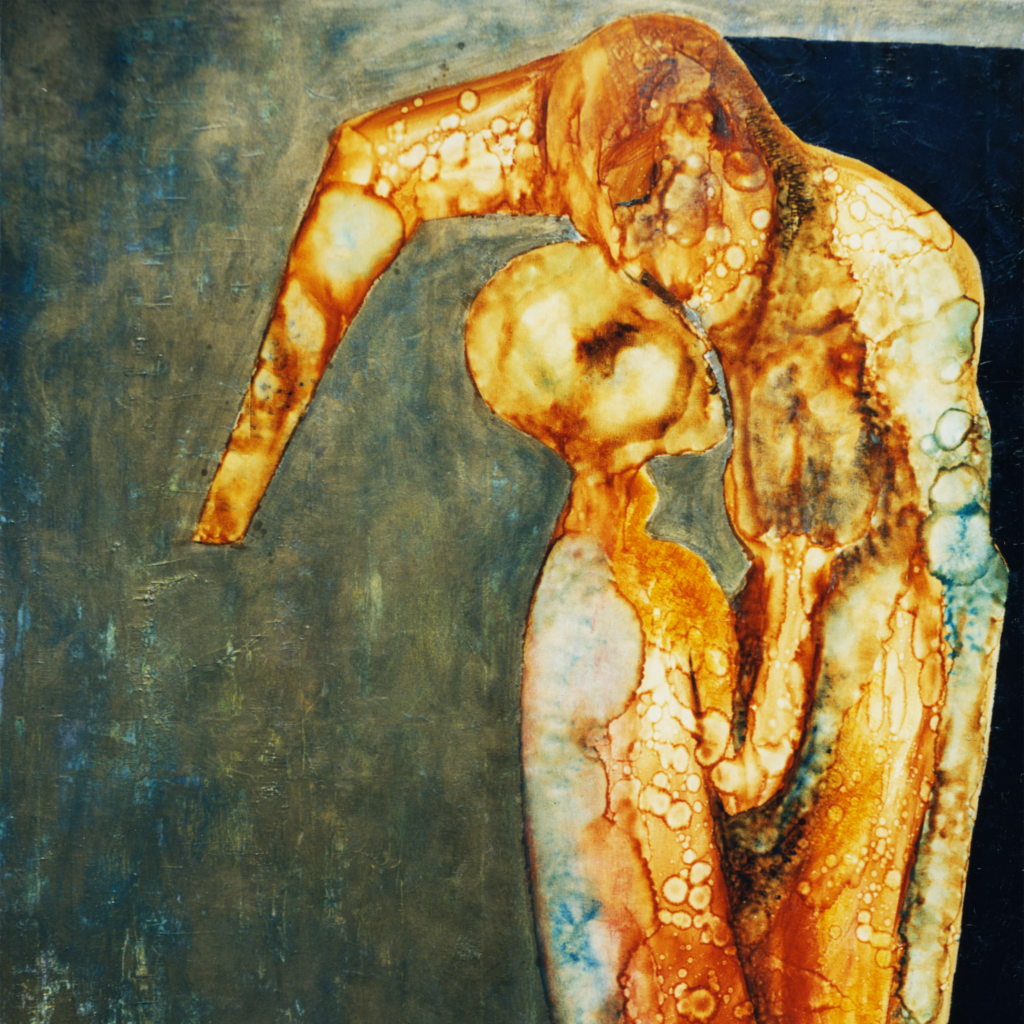
The visual identity extends to artwork drawn from a 1996 painting by Belgian painter Julie Ghenet. Its inclusion gives the project another artistic connection, bringing an existing painted image into a contemporary musical and film narrative. Without reducing the artwork to a simple explanation of the songs, that choice helps establish the care being given to the whole release. Monolyth are assembling several forms around one relationship. The challenge will be allowing each to contribute something particular, and the intimate premise of this debut provides a clear subject around which those contributions can gather.
The next glimpse comes with the cinematic clip for Twisted Fate, scheduled for October 13, ahead of the EP. For now, Those Habesha Eyes offers a restrained first encounter with a duo interested in making attraction linger. Its slow foundation and close vocals give the story an intimate scale, while the surrounding project leaves room for that intimacy to become complicated. Monolyth have chosen a compelling place to begin: beside someone whose presence feels magnetic and whose thoughts remain inaccessible. The gaze holds, the questions multiply, and a love story starts taking shape before either person can know its full consequences.


