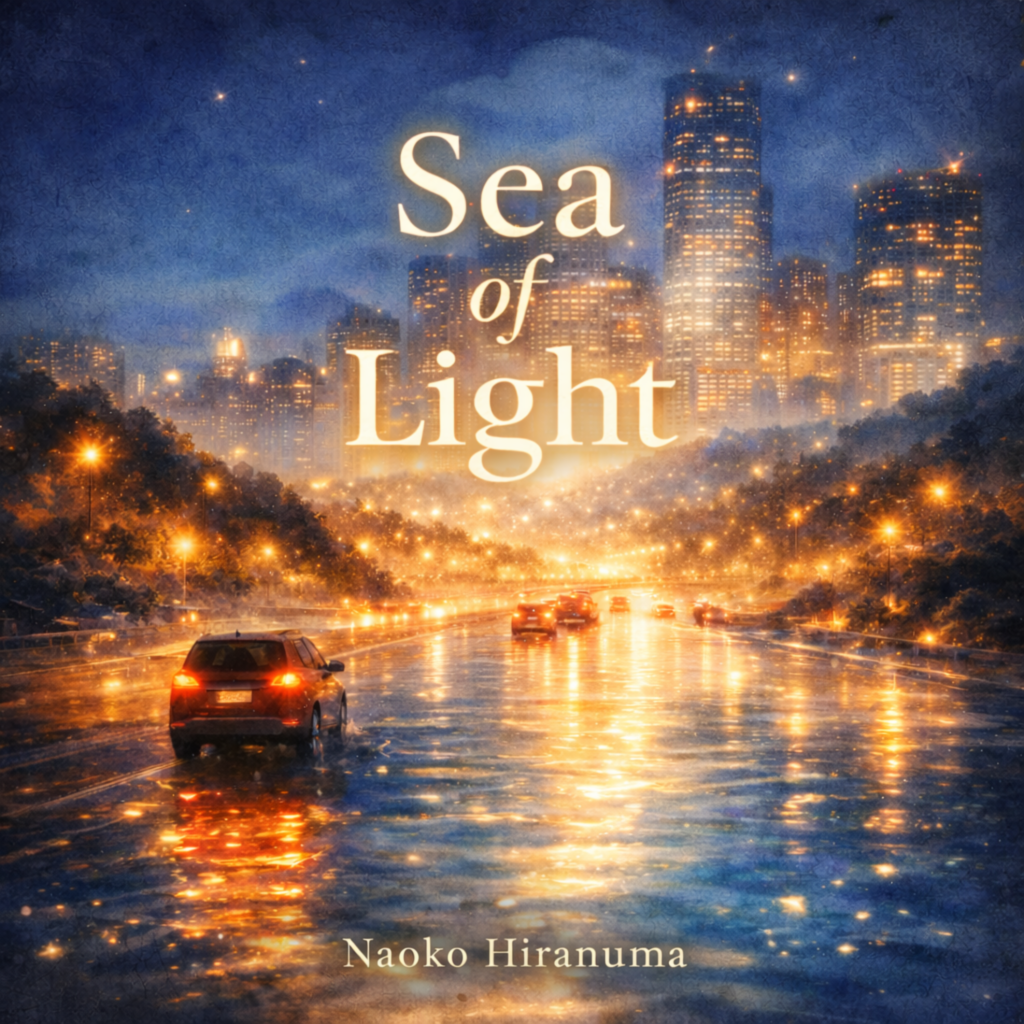
There is a particular quality of light unique to summer nights near water, city glow bouncing off dark ocean surface until the two become genuinely difficult to distinguish from each other, and Naoko Hiranuma builds Sea of Light around exactly that visual blurring as central metaphor for how memory itself actually works. This is a song about a fleeting summer romance, but its real subject matter reaches beyond any single relationship toward something considerably more universal, the way loss and time gradually merge distinct memories together into something closer to atmosphere than precise recollection, a diffuse glow rather than any single sharp image.
Hiranuma’s own biography gives this particular thematic territory genuine authority beyond simple songwriting concept. Having spent more than half her life living overseas, with deep, sustained connection to ocean environments running through work as a diving instructor across the Maldives and Fiji before eventually managing a surf camp in Fiji as well, she brings genuinely lived experience to material this consistently oceanic in its imagery and metaphorical language. That background matters considerably for understanding why water specifically functions as such a persistent, recurring theme throughout her broader catalog, since someone who has spent this much actual professional time immersed in ocean environments naturally develops a different, more intimate relationship to that imagery than someone reaching for water metaphors purely as convenient poetic device.
The song’s central narrative follows two people driving together from quiet countryside toward city lights on a summer night, and that specific journey, moving from darkness and stillness toward increasing illumination, gives the track genuine visual and emotional structure. As those city lights blur together with ocean reflection throughout the journey, shared memories between the two people apparently undergo similar transformation, becoming something the song describes as a genuine sea of light, a place where love, loss, and time itself quietly merge together rather than remaining cleanly separated. That image gives the song’s title real conceptual weight beyond simple pretty phrase, suggesting memory itself functions less like a photograph album with distinct separate images and more like this kind of continuous, merged luminous expanse.
Musically, the track blends indie pop accessibility with indie folk’s more intimate storytelling instincts, wrapped in what has been described as genuinely cinematic atmospheric production. That combination allows Hiranuma to build toward genuine emotional climax gradually rather than rushing toward immediate impact, letting warm vocal performance and patient storytelling accumulate real weight across the song’s runtime before arriving at whatever specific moment functions as its emotional peak. This patient structural approach mirrors the song’s own thematic content directly, since genuine nostalgic reflection rarely arrives suddenly. It builds gradually, layer by layer, much like the actual light blending the song describes visually throughout its central journey.
What distinguishes Sea of Light within Hiranuma’s broader catalog is how directly it connects to her sustained ongoing exploration of ocean adjacent themes across multiple releases, including companion pieces like Surfing Is a Waiting Game and The Ocean Decides. That sustained thematic focus across multiple songs suggests genuine, ongoing artistic preoccupation rather than a single isolated exploration, an artist returning repeatedly to water as consistent metaphorical framework for examining different specific aspects of human connection and experience. Each individual song within that broader collection apparently approaches the ocean from a slightly different angle, and Sea of Light’s specific contribution involves examining how romantic memory itself gradually transforms through time’s passage, using literal coastal imagery as vehicle for that particular meditation.
There is something worth noting in how the song’s quiet, understated emotional register avoids reaching for dramatic catharsis in favor of something considerably gentler and more contemplative throughout. Building gently toward emotional climax, as the song’s own framing suggests, indicates real restraint in how Hiranuma approaches material this potentially heavy, choosing patient accumulation over sudden dramatic release. That gentleness fits naturally with the song’s overall thematic content, since the specific kind of loss being explored here, the quiet ache of a summer romance that has simply ended rather than collapsed dramatically, generally calls for exactly this kind of measured, understated musical treatment rather than more theatrical or aggressive emotional expression.
Hiranuma’s stated interest in exploring nostalgia, quiet emotion, and resilience through her broader songwriting reflects real consistency of artistic vision across her catalog, and Sea of Light fits comfortably within that established thematic territory while still functioning as a genuinely distinct individual statement. The song’s ultimate concern with fleeting beauty specifically, capturing moments that continue shining in memory well after their actual passage, gives the track genuine philosophical depth beyond simple romantic reminiscence, suggesting something more universal about how humans generally process and retain meaningful experience long after the actual circumstances generating that experience have already ended.
By grounding genuinely universal themes of memory, loss, and time’s passage within such specific, vivid coastal imagery, drawn directly from her own considerable lived experience near and within ocean environments, Hiranuma has built something that functions simultaneously as deeply personal artistic statement and broadly accessible meditation on how anyone processes meaningful loss over time. Sea of Light invites listeners to pause and genuinely reconnect with whatever specific moments have quietly shaped their own lives, using the specific physical sensation of watching light blur and merge along a nighttime coastline as entry point toward that considerably larger, more universal reflection. Sometimes the most effective way to examine something as abstract as memory is through exactly this kind of concrete, sensory image, trusting listeners to find their own version of that same blurred, luminous recollection somewhere within their own experience.