
There is a particular honesty available only to songs actually written inside the exact chaos they describe, rather than reconstructed afterward from safer emotional distance, and FMU carries that specific rawness throughout its entire creation. Ohnoah wrote this track literally during a three-day party bender, beginning the verse and pre-chorus on an acoustic guitar while spending an entire Saturday recovering in bed from a genuinely brutal hangover, before choosing to return directly back into nightlife that same evening rather than breaking the destructive cycle the song itself examines. That decision, continuing the exact pattern being documented rather than stepping outside it toward complete the composition, gives FMU genuine authenticity no amount of subsequent studio polish could ever manufacture artificially.
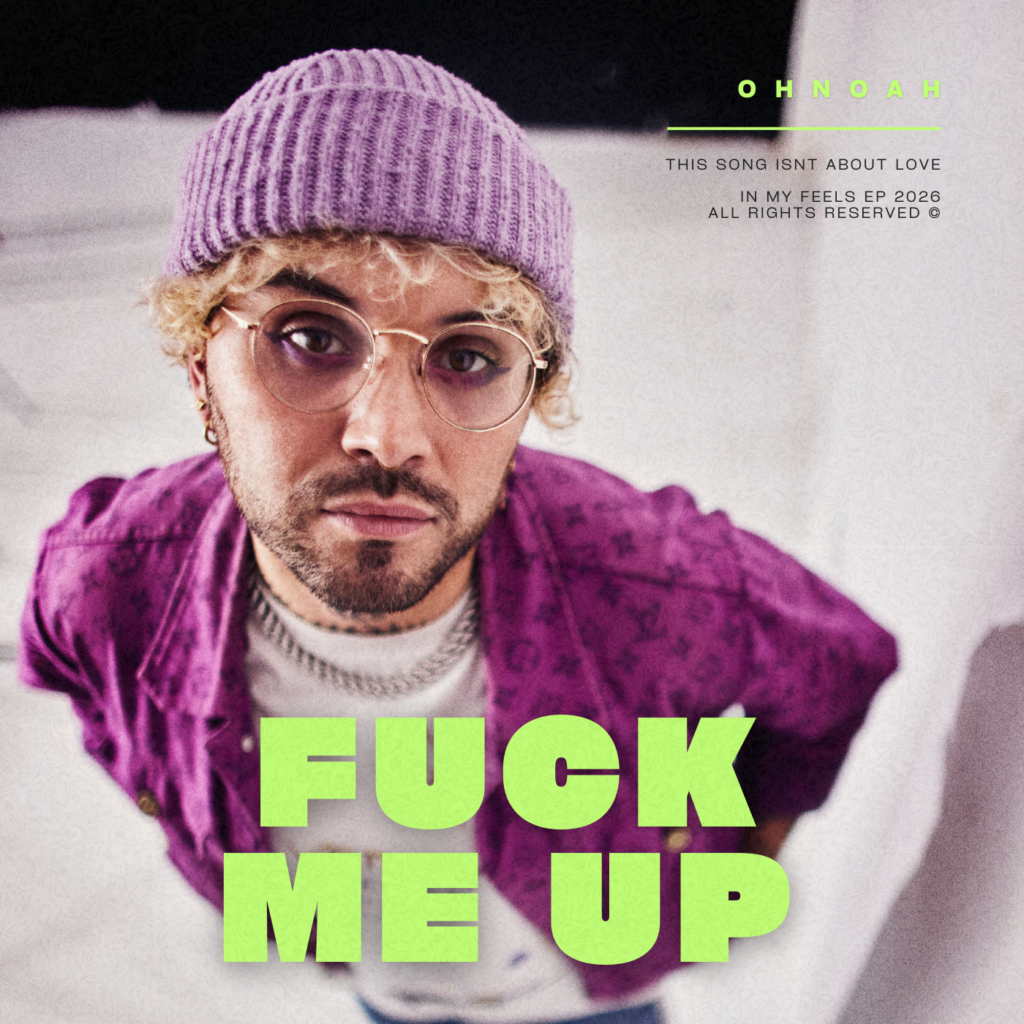
The song’s actual completion happened only after Ohnoah returned home during gray morning hours following an afterparty spent surrounded entirely by strangers who neither knew nor particularly liked them. That specific creative process, writing directly through genuine crisis rather than reflecting backward on it from comfortable emotional safety, produces exactly what Ohnoah has described wanting to capture, a feelable representation of a high that inevitably crashes, structured around the same chaotic rhythm as the actual lived experience generating it.
Musically and lyrically, FMU examines genuinely dark territory specifically at the intersection where toxic relationship dynamics and substance abuse become impossible to fully separate from each other. Ohnoah has been direct regarding wanting to capture that exact moment of recognition, understanding clearly that a particular habit or person is genuinely suffocating you while simultaneously still reaching out to pull that same destructive force closer rather than pushing it away. That psychological precision, refusing to simplify addiction and codependency into either purely victim narrative or straightforward personal failure, gives the track genuine emotional sophistication beyond typical songs addressing similar difficult subject matter.
Following their debut single Student Loans, which apparently established genuine raw vulnerability as central artistic approach, FMU continues that commitment toward unflinching honesty rather than softening or sanitizing genuinely uncomfortable personal material. That consistency across Ohnoah’s still-developing solo catalog suggests real artistic conviction, an artist genuinely committed toward using their platform specifically toward documenting difficult truth rather than pursuing safer, more commercially conventional subject matter that might generate broader immediate appeal while sacrificing genuine substance.
What gives FMU particular weight is understanding Ohnoah’s considerable prior professional history, having built genuine success as what industry terminology describes as ghost producer, writing gold record and chart hit material for international artists spanning Steve Aoki, Miss Montreal, and Wulf, all while remaining entirely anonymous behind those considerable commercial achievements. That decade spent writing exceptional songs specifically for other artists, by Ohnoah’s own direct admission, functioned partly as avoidance mechanism, allowing them toward escape confronting their own genuine reality rather than actually processing it directly through their own artistic voice.
The considerable contrast between that professional success and Ohnoah’s actual lived circumstances during that same period deserves genuine attention. While their collaborative track alongside Steve Aoki was actually being released commercially, Ohnoah remained living in a van, having faced an impossible choice between paying rent or maintaining their beloved music studio space, ultimately choosing the studio despite that considerable personal sacrifice. That specific detail illuminates something genuinely important regarding the actual human cost frequently hidden behind polished commercial music industry success stories.
Ohnoah’s broader personal history adds additional weight toward understanding why authentic artistic expression apparently functions as genuine survival necessity rather than simple creative preference. Fleeing a violent home situation at just seventeen years old, navigating life as non-binary and queer within a strict North African and Italian cultural background that offered no acceptance either at home or within school, Ohnoah found in music something considerably more essential than typical creative outlet, describing it directly as finding home when no physical roof otherwise existed.
There is something worth noting in how FMU’s title itself, a blunt profanity-based acronym, reflects the track’s overall commitment toward genuine directness rather than more comfortable euphemism regarding difficult subject matter. That linguistic bluntness matches the song’s broader thematic content precisely, refusing to dress up genuine self-destruction and addiction within more palatable or softened language that might otherwise minimize the actual severity of what the track directly examines.
Having already built an international track record spanning more than one hundred prior releases through their considerable ghost producing career, Ohnoah possesses genuine technical songwriting mastery extending well beyond typical emerging solo artist experience. That established skill set gives FMU genuine musical sophistication beneath its raw emotional content, an artist fully capable of crafting genuinely polished pop composition choosing instead toward prioritizing authentic emotional truth over conventional commercial perfection specifically because their own actual life circumstances have never been particularly polished either.
By channeling considerable personal survival history alongside genuine technical songwriting mastery into material this unflinchingly honest regarding addiction and codependency, Ohnoah has built FMU into something considerably more significant than typical sophomore single release. This track functions as genuine testament toward lived truth rather than manufactured corporate product, offering listeners navigating their own difficult struggles genuine recognition that they remain fundamentally not alone within their darkest moments. Stepping fully out from behind a decade spent writing hits for other artists, Ohnoah appears positioned toward becoming genuine voice for a considerably more authentic, unfiltered movement within alternative pop, one built specifically on refusing to sugarcoat exactly how destructive certain habits and relationships genuinely become.


