
There is a specific kind of ambition required to release three singles over six months and trust that listeners will eventually understand they were never really singles at all, just chapters waiting for their book. R. Nelson pulls that trick off with Grown Man Energy, a fourteen track concept album built around the complete emotional trajectory of a relationship, from the first cautious optimism of noticing someone through the eventual reckoning with what remains after everything falls apart. Structured deliberately across four acts, complete with spoken interludes marking each transition, this is a project clearly built to be experienced start to finish rather than shuffled through, and the patience required of the listener mirrors the patience the record itself asks its narrator to develop.
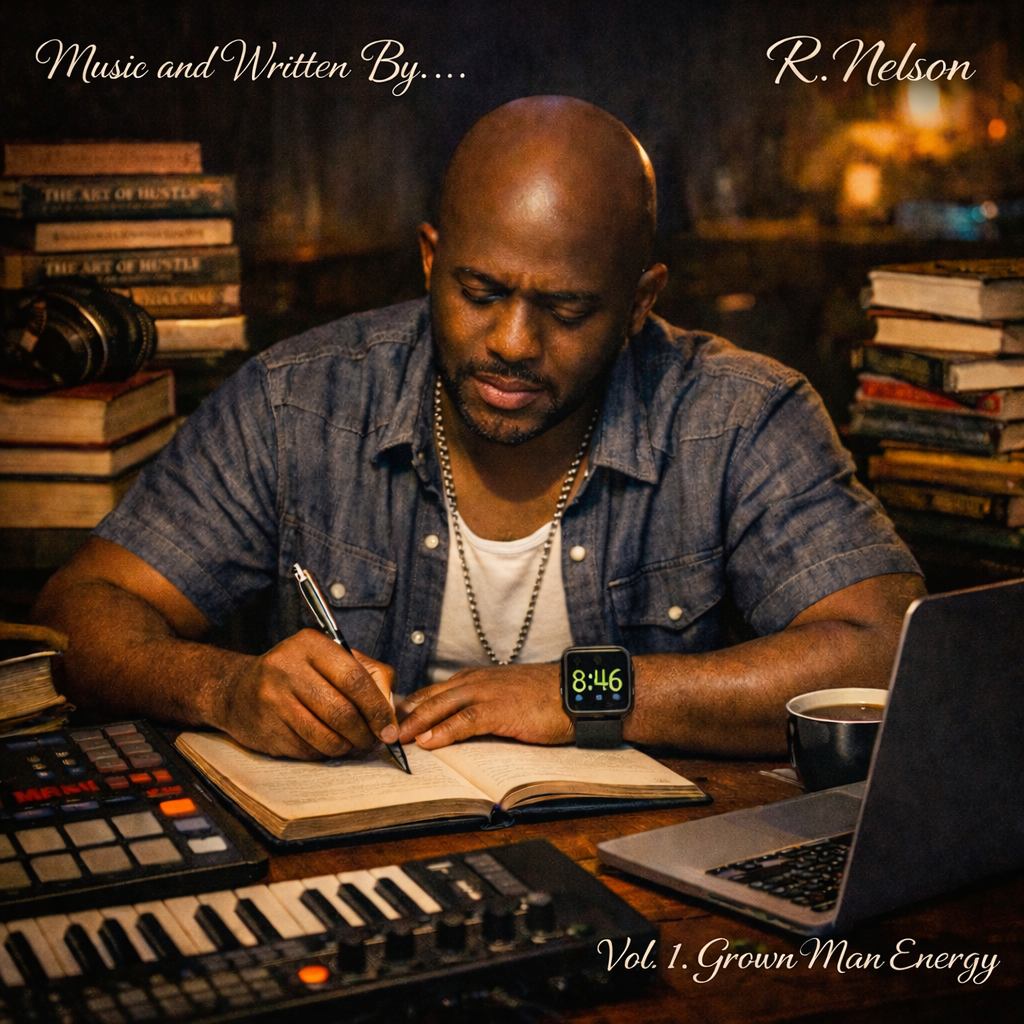
Good Morning Beautiful opens the album with exactly the kind of unguarded warmth its title promises, establishing the record’s early emotional register before anything complicated has entered the picture. This is a smart entry point precisely because of how simple it allows itself to be, giving the album room to develop complexity gradually rather than front loading tension too early. Is It Still Cool follows with something slightly more searching, an early note of self awareness creeping into what had been pure optimism, the first hint that this narrator is going to be honest about doubt even during the relationship’s better moments.
Cup of Tea and You Deserve My Best continue building out this first act’s foundation of genuine care and early commitment, and there is real craft in how these songs establish stakes before the album’s structure introduces its first formal interlude. Act 2 arrives as a deliberate pause, a spoken transition that signals the story is about to deepen rather than simply continue along its established path. That kind of formal patience, actually stopping to mark a narrative shift rather than trusting listeners to intuit it purely through musical tone, gives the album real structural confidence, treating its concept seriously enough to build genuine architecture around it.
Gravity, one of the three singles released ahead of the full album, arrives at exactly the right moment to anchor the record’s second act, and its title alone suggests the specific quality R. Nelson seems most interested in throughout this stretch, the pull toward someone that exists somewhat outside rational control. Following six months of gradual release, hearing Gravity now within its intended context reveals how much its individual impact depended on knowing what came before and what would eventually follow, information a first time listener encountering the single in isolation simply could not have had access to.
Hold You Anyway pushes further into vulnerability, and by this point in the tracklist the album has fully committed to its central emotional project, tracking exactly how someone continues choosing connection even while carrying real uncertainty about whether that connection deserves the investment being made. Do I Deserve Love, the second advance single, functions as one of the record’s most direct emotional statements, a title posed as genuine open question rather than rhetorical device. R. Nelson has spoken about grown man energy meaning emotional maturity and accountability rather than simple confidence, and a song willing to sit inside real self doubt without resolving it too quickly embodies that stated philosophy directly.
Act 3 marks the album’s turn toward its most difficult territory, and Unable to Love, the third and final advance single, delivers exactly the kind of emotional reckoning that title suggests, confronting whatever damage or fear has accumulated across the story’s earlier acts. There is real courage in building an entire album around a narrator willing to admit incapacity rather than simply blaming circumstance or another person for a relationship’s eventual difficulties. That willingness to look inward rather than outward for explanation runs consistently through the three singles that anchored this rollout, and it gives the eventual album considerably more emotional credibility than a project built purely around external heartbreak narrative would have carried.
Well Damn arrives with a title that reads almost conversational after the heavier weight of Unable to Love, suggesting a moment of genuine, unguarded reaction rather than composed reflection, the sound of someone processing something in real time rather than after careful consideration. Pullin Away continues that downward emotional momentum, tracking the actual mechanics of a relationship coming apart rather than simply announcing that it has ended, before the album’s final formal interlude, the Epilogue, prepares listeners for the record’s genuine closing statement.
Or Maybe closes the album on a piano driven note of open ended uncertainty rather than resolution, and that choice represents the record’s smartest structural decision. R. Nelson has described wanting albums to actually take listeners somewhere, and ending on a question rather than a tidy conclusion respects the genuine messiness of how relationships and personal growth actually work in real life, rarely wrapping into clean lessons learned. That refusal to manufacture false closure gives Grown Man Energy real integrity as a complete artistic statement, trusting its audience to sit with ambiguity rather than needing everything resolved before the final track fades.
Written and produced entirely by R. Nelson through his own Nelson Creative Group and its Ashy Knuckle Productions music division, the album carries the specific coherence that comes from total creative control resting with a single artist across every stage of its construction. Blending contemporary R&B, neo soul, and alternative influences throughout, the project never loses its grounding in honest, closely observed songwriting regardless of which genre textures a particular chapter leans into. Building genuine anticipation across six months of strategically sequenced singles before finally revealing the complete architecture connecting them all, R. Nelson has constructed something considerably more ambitious than a typical album release, a genuine narrative work that rewards exactly the kind of patient, complete listening experience it was always designed to require.


