Trauma does not enter like a memory politely asking to be heard. It arrives as residue, lodged beneath ordinary conversation, sleep, breathing, and the routines people use to appear functional. On the debut single released July 3, 2026, Ravens Beats treats trauma as a permanent pressure rather than a dramatic event with a clean ending. The song’s darkness is not decorative; it comes from understanding that survival can continue long after the body and mind have stopped feeling safe or uncomplicated again inside their own history.
That perspective gives the track a difficult kind of honesty. Ravens Beats does not present healing as erasure, nor does the song promise that pain disappears once it has been named aloud. Instead, Trauma examines what remains after crisis, the hidden weight carried into new rooms and new relationships. The production supports that idea by refusing easy uplift, allowing shadow and hope to exist together without pretending they are equal forces. Hope appears here as persistence, fragile but present, rather than as a triumphant chorus designed to solve the listener.
The vocal contribution from Viii Dorsey brings human immediacy to a production rooted in deeply personal experience. Recorded during a visit to the United Kingdom, the performance was captured in roughly an hour inside Ravens Beats’ home studio. That speed does not make the result feel casual. It suggests that the emotional direction had already been clarified through months of thought, conversation, and collaboration, leaving the session free to concentrate on presence rather than elaborate studio correction. Dorsey’s voice becomes the point where private composition turns outward and begins addressing another person.
Their partnership began through Music Production for Women, a program that connected technical learning with creative community. That origin matters because Trauma is partly about the consequences of isolation, while the song itself emerged through connection. Ravens Beats’ first production was not built alone behind a closed door, even though its subject is painfully intimate. The collaboration offers a counterargument to the song’s darkness: difficult experiences may remain embedded, but making art around them can involve trust, exchange, and another person willing to help carry the emotional weight.
The personal history behind Trauma is severe, and it would be easy for that history to overshadow the music. Ravens Beats lost a partner to mental health struggles in 2015, a loss that shaped the artist’s commitment to awareness and accessible support. That same partner had recognized signs of sleep apnoea, leading to medical intervention that helped save Ravens Beats’ life. Grief and survival are therefore entangled here, with the person who was lost also remaining present through an act of attention that changed the future with painful, lasting clarity.
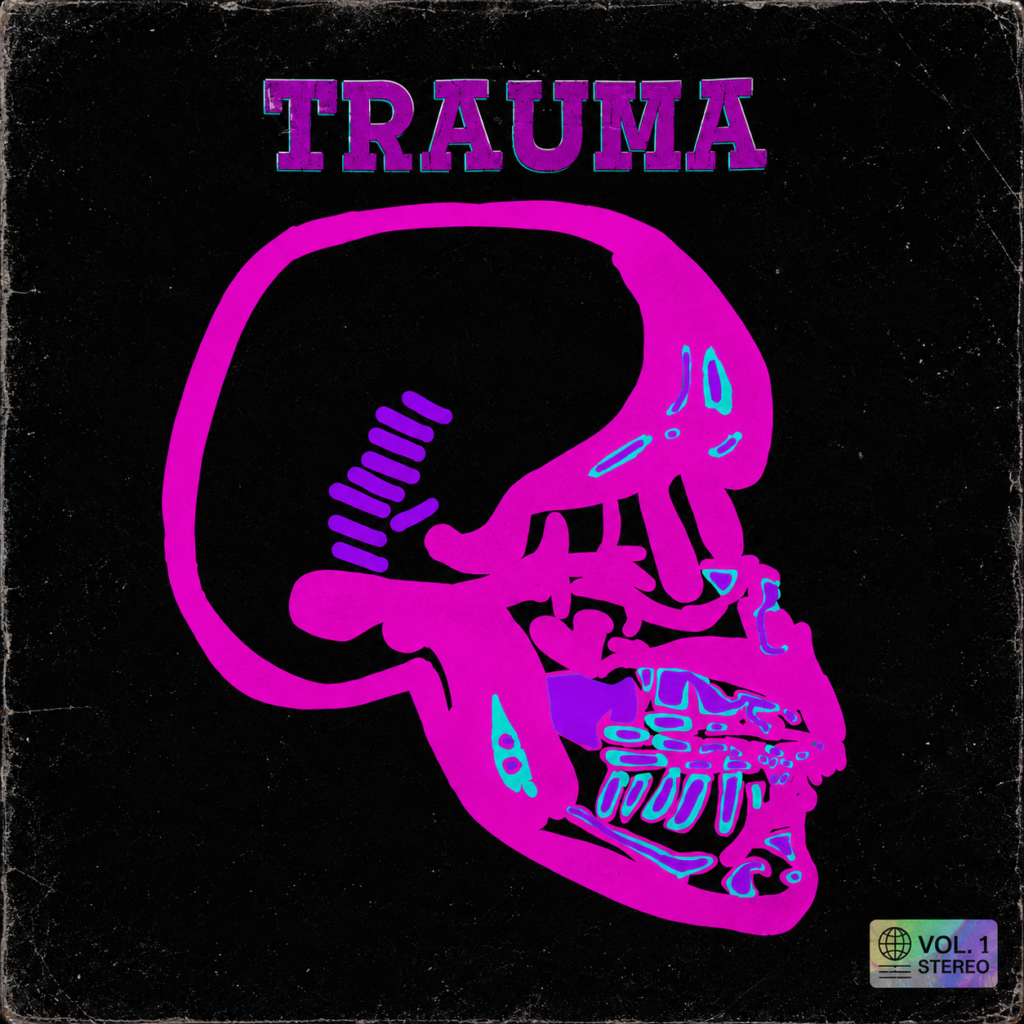
That entanglement appears most starkly in the cover artwork, which uses an actual image of Ravens Beats’ skull following major operations. Metal plates, altered bone, and the evidence of life saving treatment turn the body into a document. The image avoids metaphor because the facts are already more unsettling than invention. It places physical survival beside psychological injury, reminding listeners that trauma can leave visible and invisible records at once. The skull is not used for shock alone; it becomes proof that staying alive may involve carrying permanent evidence of what threatened you.
Musically, the song’s dark character is important because awareness campaigns often soften their message until urgency becomes polite. Trauma does not seem interested in making suffering easy to consume. Its atmosphere acknowledges fear, grief, and the exhaustion of searching for help while already overwhelmed. Yet the track also avoids hopelessness, because its very existence is an act of communication. Ravens Beats transforms an experience that could remain sealed inside personal history into a shared statement, asking listeners to recognize pain before it becomes another story noticed too late.
The artist’s guiding belief is that people should not have to battle institutions simply to receive mental health care. That principle gives Trauma a political edge without turning the single into a slogan. The song begins with individual experience, then points toward the systems that leave distressed people negotiating waiting lists, disbelief, shame, and exhaustion. Personal resilience is often praised because it allows society to avoid discussing failed support. Ravens Beats challenges that habit, suggesting that survival should never depend solely on how long one person can endure being unheard.
As a first production, Trauma carries the uneven courage of someone stepping into a new role with more purpose than polish. Ravens Beats has not arrived merely to display technical skill or establish an aesthetic brand. The track is an attempt to make usefulness and artistry occupy the same space, to create something emotionally credible that might also begin a necessary conversation. Influences from artists who have addressed vulnerability openly can be felt in the mission, but the song’s identity comes from Ravens Beats’ own history, not borrowed confession.
Trauma finally leaves the listener with no comforting image of pain being defeated. It remains deep in the body, attached to memory, love, medical survival, and the absence of someone who once noticed danger. Yet the song refuses silence, and that refusal becomes its form of movement. Ravens Beats opens a door from a Stevenage home studio into a much wider room where grief, fear, and support can be discussed without disguise. The last impression is not closure, but a voice continuing after loss, asking who might still be saved if people listen sooner.