There is a version of this album that plays purely for shock value, thirteen tracks of double entendre stacked one after another until the joke wears itself out somewhere around track four. A Baker’s Dirty Dozen mostly avoids that fate, and the reason comes down to something Remik Erikson already proved with Nacho, his basement recorded ode to watching his wife cook. He understands that innuendo only works when there is genuine affection underneath it, and this album, stretching that same domestic, culinary obsession across a full thirteen songs, functions less as a novelty record and more as an entire concept album built around the overlapping pleasures of food, marriage, and not taking either one too seriously.
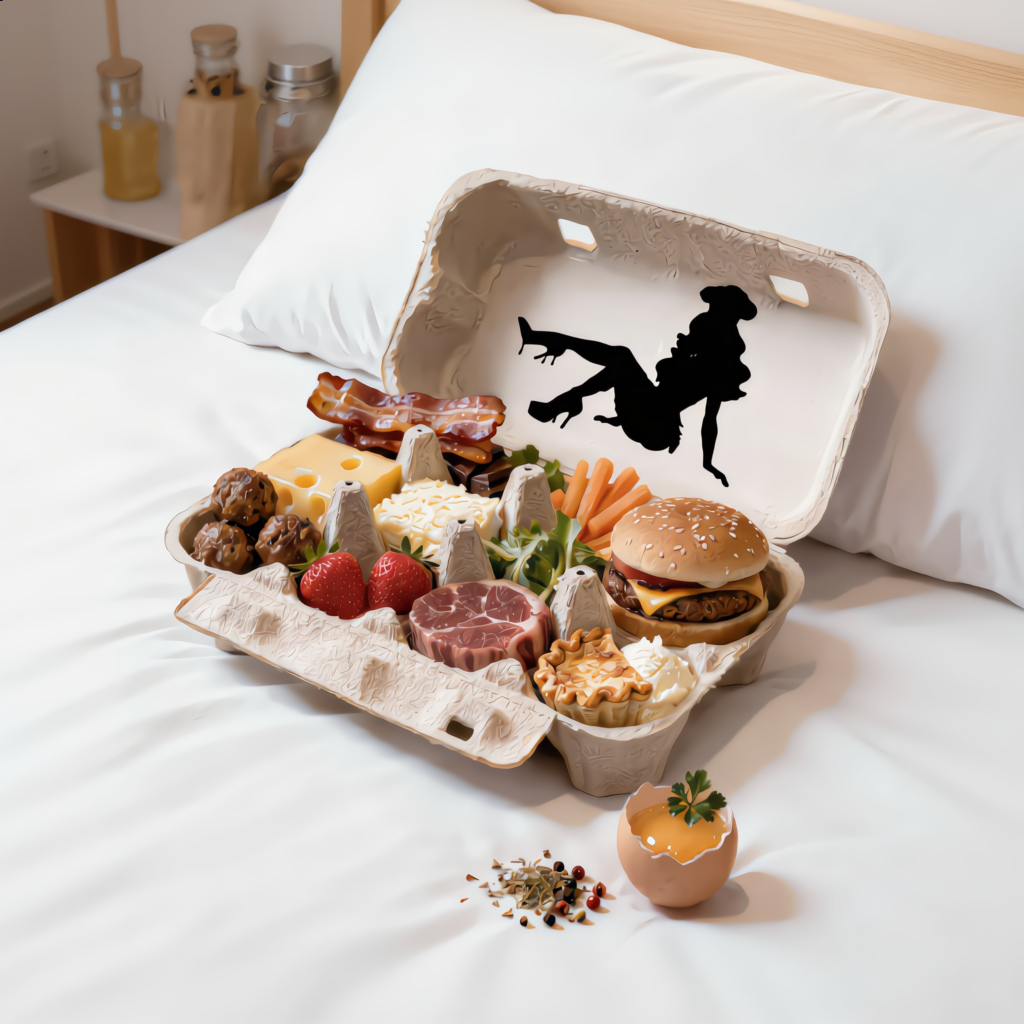
BBC AirBNB opens the record with a title that announces exactly the register listeners should expect for the next forty minutes, playful, a little chaotic, and entirely unconcerned with subtlety. That opening choice matters, since an album built this heavily around wordplay needs to establish its terms immediately rather than easing listeners in gradually. Bitchetarian follows with a title suggesting genuine comedic ambition beyond simple pun construction, likely poking at dietary identity and personality with the same straight faced commitment that made Nacho work as well as it did. There is real skill in committing fully to a joke rather than winking at the audience throughout, and these opening tracks suggest Erikson understands that distinction clearly.
Toss Your Salad and Balls O Meat continue mining culinary language for maximum comedic mileage, and the sequencing here reveals something about how deliberately this album has been assembled. Rather than saving the most obvious innuendo for a single centerpiece track, Erikson spreads that energy consistently throughout the tracklist, treating the entire album as one continuous bit rather than building toward a single crescendo moment. That approach carries real risk, since sustained comedic commitment across thirteen tracks demands genuine stamina from both artist and listener, but it also gives the record a certain manic completeness, a menu rather than a single dish.
Kreames and Fondue You shift the wordplay toward slightly different comedic textures, and there is something worth noting in how varied the actual food references remain across the tracklist rather than repeating the same handful of ingredients for cheap consistency. AllSpice continues that culinary specificity, and Deviled Egg leans into imagery that practically writes its own joke, precisely the kind of low hanging comedic fruit that a lesser record might have avoided out of self consciousness. Erikson shows no such hesitation, and that fearlessness ends up being one of the album’s more endearing qualities, an artist genuinely unbothered by whether individual jokes read as too easy.
Nacho arrives here as the album’s most well established entry, already documented as a genuine domestic love song disguised in comedic clothing, and its placement within this larger tracklist recontextualizes it slightly. Where it once stood alone as a singular culinary confession, hearing it surrounded by a dozen similarly minded tracks reveals it less as a novelty outlier and more as the thesis statement for an entire artistic project Erikson has apparently been building toward all along. That context matters considerably, since a single strange song about nachos reads very differently than an entire album confirming that domestic culinary obsession as a genuine, sustained creative lane.
Taste Bud King pushes the album’s comedic ambition toward something approaching self mythology, an artist positioning himself as genuine authority within this specific, self created universe of food and affection. Pound Caker follows with perhaps the most transparently constructed pun on the entire tracklist, and there is something almost admirable about how unashamed Erikson remains throughout about reaching for the most obvious wordplay available rather than searching for something more subtle. Subtlety was clearly never the goal here, and pretending otherwise would undermine exactly what makes this project work as well as it does within its own chosen terms.
Smashburgah closes in on the album’s final stretch with continued commitment to its established formula, before Pie Me Down ends the record on a note that, fittingly, sounds simultaneously like a culinary reference and something closer to genuine romantic vulnerability, echoing the same trick that made Nacho land as sincerely as it did. Ending the album on that particular dual register feels intentional, reminding listeners one final time that underneath thirteen tracks of relentless food based wordplay sits a genuinely sincere artist still writing, in his own particular idiom, about desire and devotion within his own domestic life.
What ultimately makes A Baker’s Dirty Dozen work as a complete project rather than a single joke stretched thin is Erikson’s evident willingness to fully commit to a bit that could have easily worn out its welcome much earlier. Thirteen tracks is a considerable amount of real estate to fill with variations on the same essential comedic premise, and the fact that the tracklist maintains genuine variety across its individual song concepts, even while staying tethered to food and relationship humor throughout, speaks to more sustained creative effort than a quick novelty release would typically require. This is an artist who found something genuinely his own in Nacho and decided, rather than treating that song as a one time curiosity, to build an entire menu around it. Whether or not every individual track lands equally, the sheer commitment to the bit across a full album length gives A Baker’s Dirty Dozen a certain conviction that pure novelty records typically lack.