Transforming centuries-old folk humor into a dazzling display of classical virtuosity requires an artist who possesses complete command over four strings and a horsehair bow. When traditional regional folklore meets the rigorous demands of concert-level violin technique, the resulting music bridges generations, culture, and geographic boundaries. Ukrainian concert violinist Sergiy Bolotny achieves that exact brilliant fusion on his late July solo release titled Little Dutch Rhapsody No 1. Living in the Netherlands and performing regularly with the prestigious Noord Nederlands Orkest, the accomplished virtuoso delivers a dynamic solo violin masterpiece that breathes fresh concert hall energy into historic Dutch storytelling.
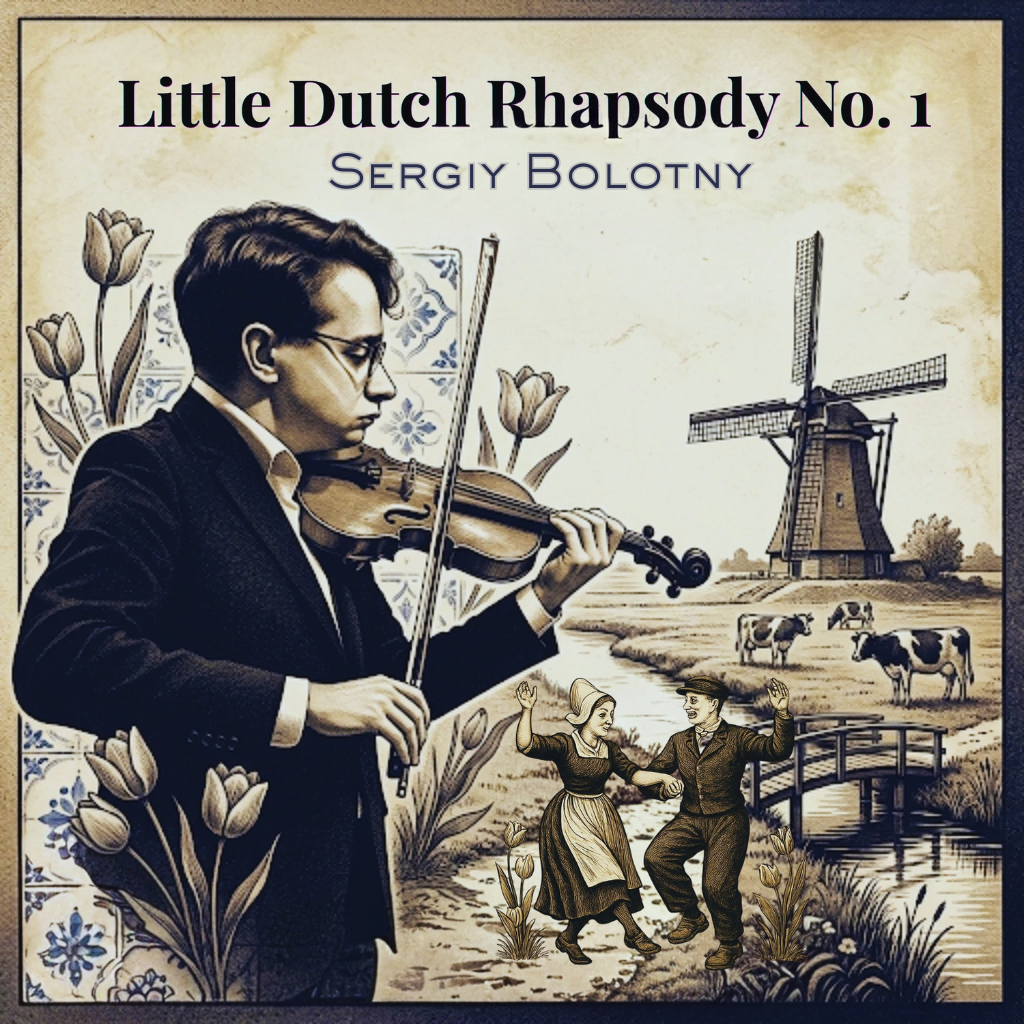
The artistic vision driving the release forms part of a dedicated musical series exploring traditional Dutch folklore through the lens of classical solo repertoire. Rather than treating regional folk songs as simple historical artifacts, the violinist seeks to honor their living cultural spirit by wrapping them in complex, expressive arrangements. For this initial installment, he chose to build the rhapsody around the famous, lighthearted Groningen folk tune titled Ain boer wol noar zien noaber tou. The humorous historic narrative tells the rustic tale of a farmer stubbornly heading out to visit his neighbor while wearing only a single wooden clog, creating a playful, eccentric character study that translates effortlessly into violin performance.
What immediately commands your attention upon listening is the sheer physical mastery and athletic dexterity required to execute the composition. Serving as both composer and performer, the soloist transforms the rustic melody into a thrilling concert rhapsody filled with spirited dance rhythms, rapid string crossings, and flying staccato passages. He weaves sudden harmonic shifts and intricate double stops throughout the arrangement, challenging the performer while keeping the central folk melody clear and infectious. The piece balances these dizzying technical feats against moments of deep, lyrical contrast, allowing the instrument to sing with broad, romantic sweeps before darting back into joyful, fast-paced momentum.
Delivering such an unvarnished solo performance demands an recording environment that respects the true voice of the instrument. Tracked with natural acoustic resonance rather than artificial reverb or digital enhancement, the recording allows every subtle nuance of wood, string, and bow friction to shine through cleanly. Listeners can feel the physical tension of the bow gripping the strings, the warm resonance of the instrument body, and the quiet breaths taken between demanding phrases. The acoustic staging creates an intimate, front-row experience that makes you feel as though you are sitting inside a historic European hall alongside the performer.
The release also highlights a profound personal journey of cultural integration and artistic dialogue. Bringing his rich Ukrainian classical training into his adopted home in the Netherlands, the soloist constructs a meaningful bridge between Eastern European virtuosity and Dutch heritage. The composition celebrates the quiet humor, resilience, and warmth of Groningen regional culture, demonstrating how music can help an artist put down deep roots in a new homeland while contributing to its vibrant artistic tapestry.
Musically, the rhapsody operates as a single, continuous dialogue between centuries of oral tradition and modern concert hall standards. The arrangement avoids rigid classical structures, allowing the rhapsody format to bend, stretch, and flow with spontaneous freedom. By constantly varying the dynamics, tempos, and timbres of the violin, the soloist keeps the listener completely engaged from the opening flourish to the final, triumphant chord. It stands as a brilliant reminder that classical instruments can be just as humorous, lighthearted, and entertaining as any modern pop record when guided by a master craftsman.
What makes the single stand out so brilliantly in today’s classical music landscape is its unpretentious commitment to pure, solo performance. In a music industry that frequently relies on massive orchestra backings, digital loops, and heavy studio production tricks, choosing to stand completely alone with a single violin is a brave artistic statement. The single demonstrates that a skilled soloist needs nothing more than four strings, a bow, and a great story to capture the imagination of audiences around the world.
As the single continues to earn warm praise across classical curator circles, violin enthusiasts, and Dutch cultural communities, it establishes an exciting benchmark for the violinist’s ongoing solo series. It offers a soothing, intellectually stimulating, and deeply comforting sanctuary for music lovers who appreciate classical technique, regional history, and violin craftsmanship.
Surrendering to the final decaying violin notes and quiet bow lift leaves a warm, glowing stillness hanging softly in the quiet room. The natural acoustic resonance gradually tapers off into a peaceful, reflective silence that leaves you smiling at the farmer’s journey. Little Dutch Rhapsody No 1 achieves its noble artistic mission with flying colors, delivering an essential, heartwarming classical single that proves when traditional folklore meets virtuoso passion, timeless music will always flourish.