
There is a particular kind of album that only becomes possible once someone has spent decades doing something else entirely, and Trouble in Mind carries the specific weight of Sophie Moore‘s very long detour. Before this record, before the two decades working as a therapist across physical and mental health services, before the folk venues and the acoustic support slots for Labi Siffre, there was Foggy Cry, the London indie group Moore toured internationally with alongside her brother Julian back in the 1980s, sharing stages with acts like Hawkwind during a genuinely different era of British music. That history matters enormously here, since Trouble in Mind does not sound like a debut or a comeback attempt chasing relevance. It sounds like unfinished business finally being allowed to finish.
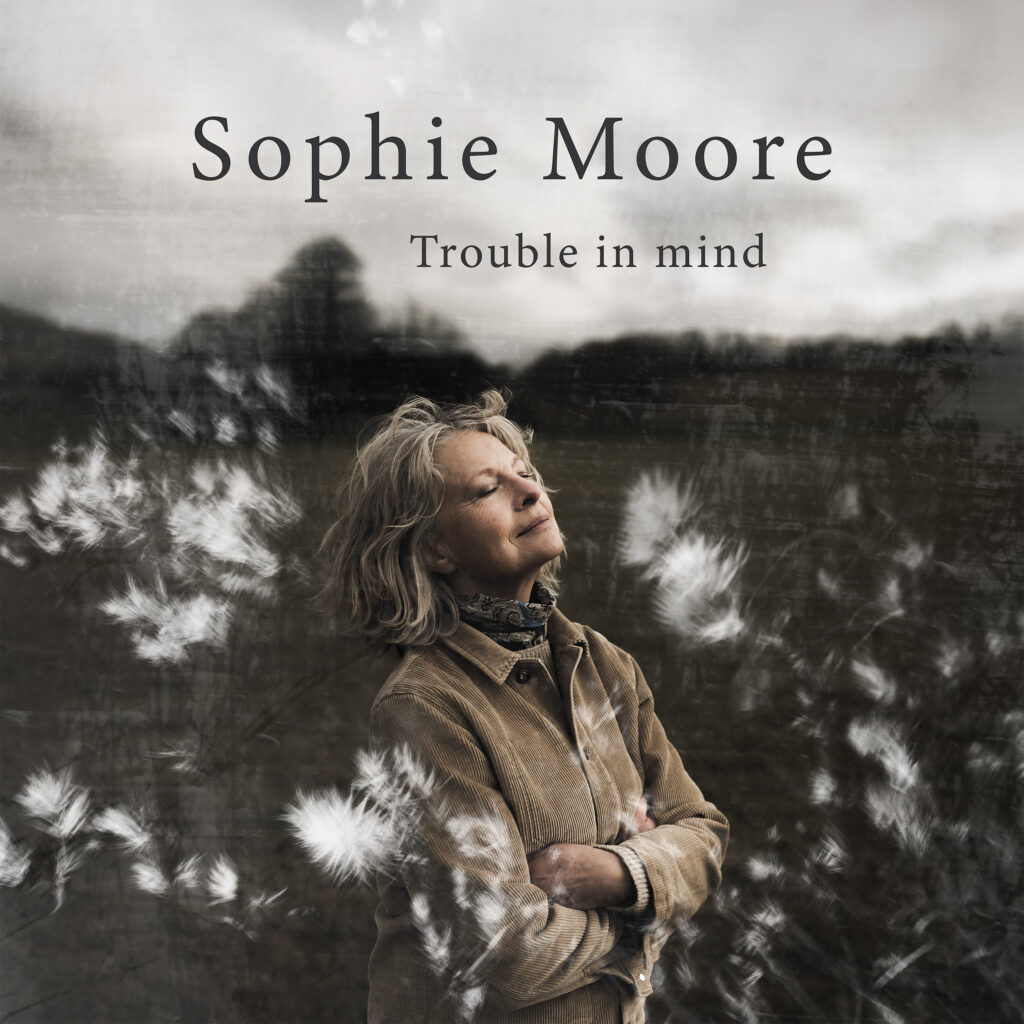
Closer Than opens the record and functions as the album’s clearest statement of intent, both musically and thematically. The song’s central lyric, urging listeners not to stop taking chances and to live fully before time runs out, reads almost uncomfortably direct given Moore’s own biography, an artist who spent decades supporting other people’s wellbeing through therapeutic work before finally returning to her own longest creative passion. That is not incidental phrasing. It is someone who has clearly sat with the cost of delay long enough to write about it with real authority rather than borrowed sentiment. The wistfulness noted around this single carries genuine earned weight rather than performed nostalgia.
Down The Road follows with what the title suggests is a continuation of that same forward looking sensibility, and the sequencing decision to place it second reinforces an album more interested in momentum than dwelling. Working with producer Mark Nevers, whose credits include shaping Lambchop’s most celebrated records Nixon and Is a Woman, gives Moore access to a very specific sonic vocabulary, unhurried, warmly arranged Nashville adjacent Americana built on space and restraint rather than volume. That influence shows up clearly in these early tracks, arrangements that trust silence and gentle instrumentation to carry emotional weight rather than reaching for obvious dramatic gestures.
Maybe I’ll Be Here Again carries a title that speaks directly to Moore’s own circumstances, an artist returning to music after such a substantial absence that the very possibility of still belonging in this world required genuine reckoning. There is something quietly moving about an album this far into its own creation still asking whether return is possible, rather than simply assuming it. That uncertainty gives the record real emotional honesty, avoiding the trap of presenting a comeback as an inevitable triumph rather than something genuinely uncertain until it actually happened.
The title track Trouble in Mind arrives at the album’s structural center, and its placement here suggests real thematic importance beyond simply lending its name to the record. Given Moore’s professional background in mental health work, a title this direct about psychological unrest carries additional resonance, someone who spent two decades helping other people navigate their own difficult internal states now turning that same attention toward her own. The track likely benefits from genuine expertise informing its emotional accuracy, avoiding vague gestures toward struggle in favor of something more precisely observed.
All The Small Secrets and The Real Thing, positioned at different points across the tracklist, both suggest an album concerned with authenticity and the gap between what gets shown publicly and what actually exists underneath. That preoccupation fits naturally with an artist who spent so long working in therapeutic contexts, professionally attuned to the difference between presented selves and genuine internal experience. If The World, sitting between these tracks, seems to gesture toward something more speculative or conditional, perhaps examining possibility and constraint simultaneously, consistent with a record built around questions of what might still be achievable given enough courage to pursue it.
Different Now marks what feels like an important pivot point in the album’s emotional arc, a title suggesting genuine transformation rather than simple return to a previous state. This distinction matters considerably for how Trouble in Mind ultimately positions itself. Moore is not simply picking up where Foggy Cry left off decades ago. She is arriving as someone genuinely changed by everything that happened during the intervening years, the therapeutic work, the collaborations with artists like Jeb Loy Nichols, the accumulated life experience that inevitably reshapes how a person writes and sings even when returning to a passion abandoned long ago.
I Use to Cry continues that reflective, backward glancing energy, examining past emotional states from a vantage point of some distance and presumably some hard won perspective. Recording this material required real logistical commitment, ten tracks completed in just three days at Pawleys Island in South Carolina with a four piece band built from Lambchop associates including pianist Tony Crow and guitarist William Tyler, before overdubs were finished across studios in Nashville and Sussex. That compressed recording timeline speaks to the caliber of musicians involved, seasoned enough to lock down performances quickly once they connected with strong material, and Moore’s songs were evidently strong enough to earn that kind of immediate professional confidence.
When the Storm Breaks closes the record, and ending on an image of weather finally releasing its built up pressure feels entirely appropriate for an album so concerned with decades of accumulated, unexpressed creative energy finally finding genuine outlet. There is real symbolic weight in choosing a storm breaking as closing imagery for a record marking someone’s return after such a substantial creative hiatus, suggesting release rather than resolution, the relief of pressure finally given somewhere to go after building for so long.
What ultimately makes Trouble in Mind land as more than simply a well produced comeback album is how genuinely earned every moment of reflection feels given Moore’s actual documented history. Mark Nevers has spoken about how quickly Sophie’s talent became obvious once she actually started singing in the studio, difficult to fully grasp from demos alone but immediately apparent in person, and that account tracks with an album that clearly benefits from decades of lived experience informing songs that could not have been written by a younger version of the same artist. This is not nostalgia dressed up as new material. It is someone who genuinely stepped away from her greatest creative passion for the better part of a career, spent that time helping other people through their own difficulties, and has now returned with considerably more to say than she likely could have offered the first time around. The English rose blooming again is not simply repeating its earlier bloom. It has grown into something the intervening years alone could have shaped.


