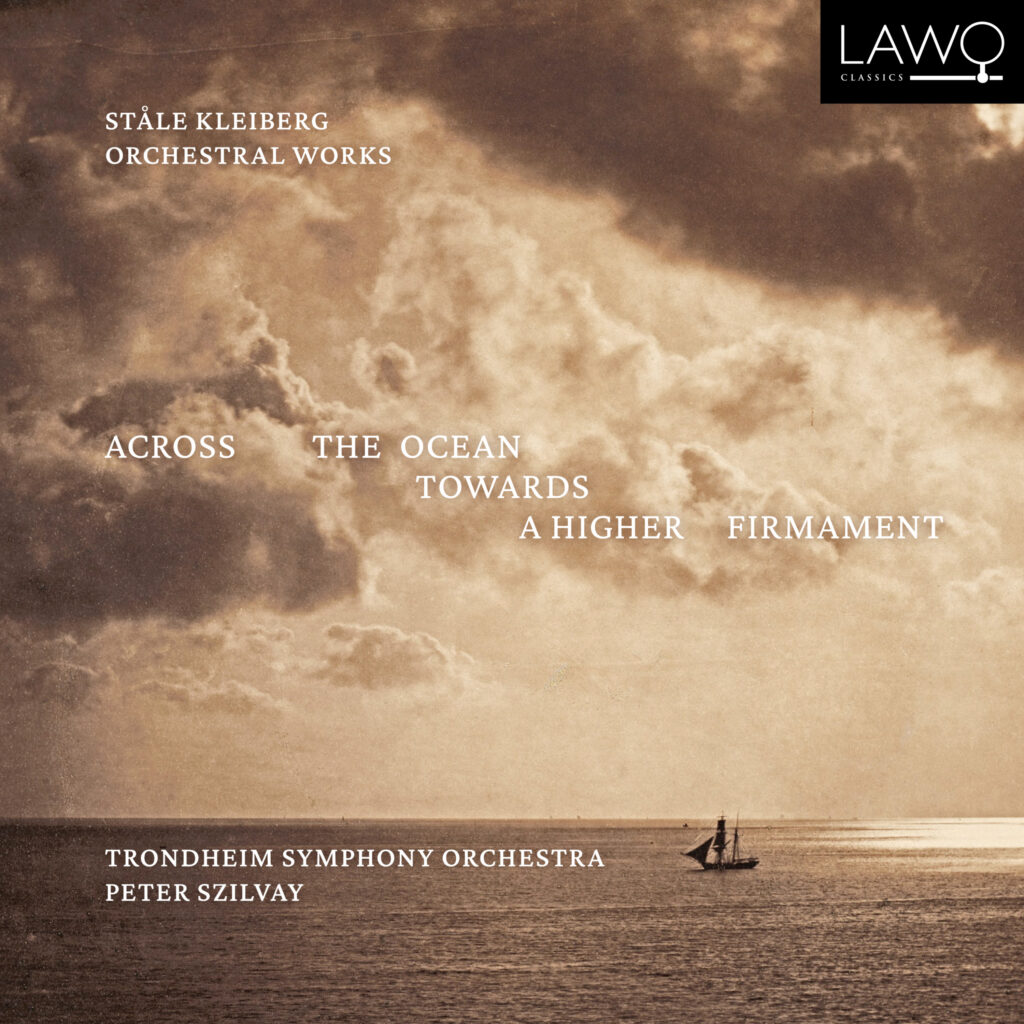
Capturing the vast, sweeping currents of human migration, tragedy, and cultural identity requires a composer who possesses both masterly orchestral architecture and a deeply empathetic heart. When a major symphonic creator translates historic journeys across centuries into orchestral tapestries, the resulting music becomes far more than an impressive classical record, turning into a living monument to human endurance. Internationally acclaimed Norwegian composer Ståle Kleiberg achieves that exact breathtaking milestone on his mid-August five-track orchestral album titled Across the Ocean towards a Higher Firmament. Recorded alongside his long-standing artistic partners, the Trondheim Symphony Orchestra under the sensitive direction of conductor Peter Szilvay, the album delivers a moving, cinematic portrait that travels seamlessly from intimate personal grief to expansive epic storytelling.
As one of Norway’s most accomplished living classical creators and Professor Emeritus of Music at NTNU in Trondheim, Kleiberg has spent decades refining a distinctive, warmly expressive tonal language. His major orchestral works, including Requiem for the Victims of Nazi Persecution and the opera David and Bathsheba, have earned widespread international acclaim for their rich harmonic depth and profound thematic weight. On this five-part recording, his music demonstrates a remarkable ability to honor dark historical shadows while maintaining a steady, glowing thread of hope, inviting the listener to reflect on the fragile threads of memory, displacement, and belonging that unite us all across generations.
The thematic centerpiece of the album is Kleiberg’s monumental Symphony No. 3, titled Across the Ocean towards a Higher Firmament. Commissioned by the Trondheim Symphony Orchestra and premiered under Peter Szilvay in April 2025, the work was written in connection with Norway’s National Jubilee 2030, with 2025 focusing specifically on migration and identity. The symphony explores the great historical wave of Norwegian emigration to North America during the nineteenth and twentieth centuries, capturing the complex emotions of millions who left their ancestral homeland to chart unknown paths across the Atlantic Ocean.
Spanning three expansive movements across the latter half of the tracklist, Symphony No. 3 follows an extraordinary dynamic and emotional arc. The first movement, Espressivo e rubato Andante, opens the symphonic journey with a delicate, yearning pulse. Sweeping string lines and expressive woodwind solos weave together to evoke the painful beauty of farewell, mirroring the bittersweet sensation of standing on a northern shore watching a familiar homeland recede into the horizon. The orchestral textures expand with organic grace, capturing the quiet hesitation and deep courage required to step into the unknown.
Moving directly into the second movement, Tranquillo Drammatico Misterioso, the symphony shifts toward darker, more turbulent acoustic waters. The composition layers tense brass fanfares and sharp percussion accents over subterranean string swells, painting a vivid picture of ocean storms, physical hardship, and the psychological uncertainty of the voyage. Yet even amidst the dramatic swells, quiet solos emerge from the woodwind section like moments of private prayer, highlighting individual human resilience inside a massive historical tide.
Reaching its triumphant destination, the third movement, Maestoso Quasi corale, brings the symphonic masterpiece to a soaring, hymn-like conclusion. The orchestra unites in a majestic, full-bodied celebration of arrival and spiritual transformation, honoring the perseverance of those who built new lives across distant shores. The swelling brass chords and shimmering string arpeggios build an undeniable wall of sound that feels both cathartic and deeply reverent, leaving a sense of lingering light hanging over the entire recording hall.
Before diving into the epic scale of the third symphony, the album opens with two deeply moving standalone orchestral works that establish Kleiberg’s extraordinary narrative range. The opening piece, Lamento Cissi Klein in memoriam, originally written in 2001, serves as a tender, haunting tribute to a young Jewish girl from Trondheim who was murdered during the Second World War. Forming a vital part of Kleiberg’s trilogy addressing Nazi persecution alongside his Requiem and cello concerto Dopo, the composition uses delicate string lines and weeping woodwind melodies to honor an innocent life cut short, transforming personal tragedy into a universal prayer for peace.
Slipping smoothly into the second track, The Town and its People, composed in 2022, the album completes a fascinating movement from the deeply intimate to the communal. The piece paints a vibrant, affectionate portrait of urban life, capturing the bustling energy, quiet corners, and shared stories of Trondheim’s citizens. By positioning this warm reflection of community directly between a solemn historical lament and a vast migration symphony, the album crafts a complete, interconnected narrative about how individuals, towns, and global movements shape our collective human story.
Executing such a complex, wide-ranging orchestral production demands exceptional spatial balance and audio engineering discipline in the recording hall. The master recording preserves a pristine acoustic soundstage where every quiet violin solo, warm French horn entry, and thunderous timpani roll occupies an intentional, three-dimensional space. The deep low-end bass frequencies and crisp brass transients hit with warm physical weight without ever smothering the delicate woodwind detail or natural room air. The result is a luxurious, headphone-ready listening experience that translates with equal power across home high-fidelity setups and concert halls alike.
What makes the release stand out so brilliantly on Apricot is its complete lack of pretense and absolute dedication to profound human storytelling. In a fast-paced modern world often obsessed with fleeting digital novelties, Ståle Kleiberg offers a timeless, heartwarming masterpiece built on organic instruments, deep historical scholarship, and genuine emotional truth. The album functions as an essential, comforting sanctuary for lovers of classical music, symphonic storytelling, and art that honors the enduring strength of the human spirit.
As momentum continues to build around this landmark mid-August release across international classical blogs, orchestral radio programs, and curator circles, Across the Ocean towards a Higher Firmament establishes an elevated benchmark for the Norwegian composer’s expanding catalog. It highlights a mature, deeply observant master operating at the absolute peak of his creative powers, laying down a monumental foundation for future generations to appreciate.
Surrendering to the final decaying brass chords and trailing orchestral echoes of the closing movement leaves a warm, deeply comforting stillness hanging softly in the quiet room. The grand symphonic pulse slowly tapers off into a serene, reflective silence that leaves your spirit elevated, your heart light, and your mind filled with quiet reverence for the journey. Across the Ocean towards a Higher Firmament achieves its noble creative mission with quiet, radiant grace, delivering an essential, heartwarming album that proves great music will always guide us home across the widest seas.