There is a particular kind of courage in building something from a tool the world has already decided to distrust. Joseph Schwartz, a Chicago-based artist working in the increasingly thorny territory of AI-assisted music, released his debut album Maybe I Belong on April 24, 2026, into a cultural climate that greets the phrase AI-generated with the same warmth afforded a broken string at a sold-out show. But Schwartz is not interested in the tribunal. He is interested in the work, and the work is stranger and more earnest than anyone expecting algorithmic sterility has any right to anticipate. This is a record built from hundreds of discarded attempts, surgical edits in open-source software, and a conviction that the origin of a sound matters far less than what it makes you feel. He is telling a creator’s daily story, track by track, in full. The result is seven pieces that argue, loudly and sometimes beautifully, for the right to exist.
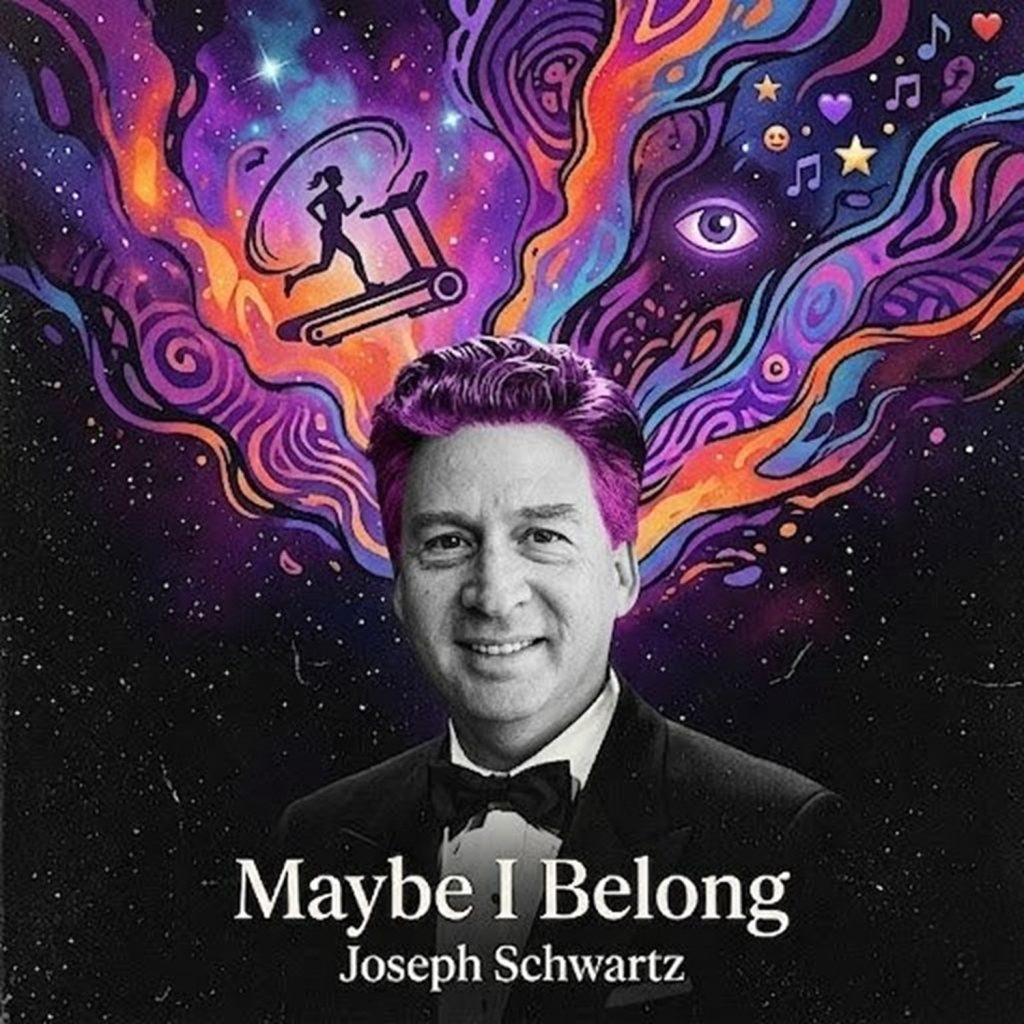
Schwartz operates entirely alone, functioning simultaneously as composer, director, and lead engineer, using Suno AI as his primary generative instrument and Audacity as the place where intention finally overtakes automation. The distinction is not merely technical but philosophical, and it matters more than most critics will allow. Where most AI music discourse collapses into binary camps of authentic and fraudulent, Schwartz plants himself in the uncomfortable and more honest middle ground, what he calls a Hybrid-Human workflow, a term that sounds clinical until you hear what it actually produces. The album opens with Treadmill of Hope, a track soaked in a saxophone voice unmistakably descended from the Clarence Clemons school of emotional enormity, the kind of playing that does not decorate a song so much as insist upon it. That a saxophone of this weight and urgency emerged from an iterative generative process only makes the question more interesting, not less. Schwartz ran the numbers until the feeling arrived, and that is not so different from any other composer who has ever revised obsessively at midnight.
Poison Darts arrives second, its title indicating exactly who it is addressed to, and Schwartz does not dress the target in metaphor or offer the trolls the dignity of a soft landing. The remastered version carries a tightness that suggests he returned to it not out of insecurity but with sharper tools, a clearer sense of where the bone was and how to cut cleanly to it without losing velocity. What is Art? follows with a confrontational directness rare even in explicitly political records, posing the title question not rhetorically but with the patience of someone who has genuinely been refused an answer and is still waiting at the door. The track is a reckoning with gatekeeping, the particular brand exercised not by labels or radio programmers but by listeners who have decided that the medium disqualifies the message before the first note resolves. Schwartz does not rage against this so much as document it with the precision of someone keeping receipts. Vanity enters midway through as a necessary exhale, a quieter study of ego and its seductions, the album momentarily turning inward before the larger reckoning resumes.
The title track appears twice, first in its abridged radio form and then in full at the record’s close, complete with an extended instrumental introduction that runs a minute and forty seconds before the song fully declares itself. This structural choice is deliberate and slightly theatrical, and it works because the patience it demands from the listener mirrors the patience the album is fundamentally about. The Rachmaninoff influence Schwartz cites, specifically Op. 32, No. 12, is not ornamentation but architecture, a classical skeleton beneath the rock musculature. The melodic thinking inside Maybe I Belong has the weight of something composed rather than generated, which is precisely his argument rendered in real time. Between those two versions sits Rock Superman, a track that functions as the album’s chest-out moment, the point where the imposter syndrome catalogued across the first six songs tips into something closer to defiant confidence. It is the record’s most overtly exhilarating piece and, in the context of everything that precedes it, it earns that release rather than simply asserting it.
What separates Maybe I Belong from the surrounding noise of AI music discourse is that Schwartz never asks for absolution, never positions himself as a reluctant participant dragged into controversy. He does not frame his process as a workaround or apologize for the tools, treating them instead as legitimate extensions of musical intent the way a film director treats a camera. He has also developed a proprietary mastering protocol designed to ensure the record registers as human or hybrid on detection software, which in the current moment is less a deception than a provocation, a way of asking whether your ear or your algorithm is the final authority on feeling. That question does not have a clean answer, and Schwartz is wise enough not to offer one. He is a studio artist with no live performances planned, which means the album has to do all the lifting entirely on its own terms. Maybe I Belong does. It is the sound of someone iterating through failure until something true falls out, and then having the nerve to press it to record. Somewhere in all those hundreds of discarded generations is a ghost that never got to finish, still running toward a feeling that Schwartz finally caught.