There is an image that captures the weight of military service more powerfully than any speech or statistic, the empty chair at the dinner table where a loved one should be sitting, the absence made visible in the most ordinary of domestic settings, the family gathering for a meal with one place unfilled. From exactly this image, The Sonic Travelers built a song, and Home To Stay, released June 5, 2026, grew from that empty chair into a country ballad exploring the impact of military service on families and veterans and those waiting for loved ones to return home. Rather than focusing on the politics of war, the song centers on the people whose lives are changed by it, both those who serve and the families who carry on at home, telling a story of separation and uncertainty and injury and recovery and hope.
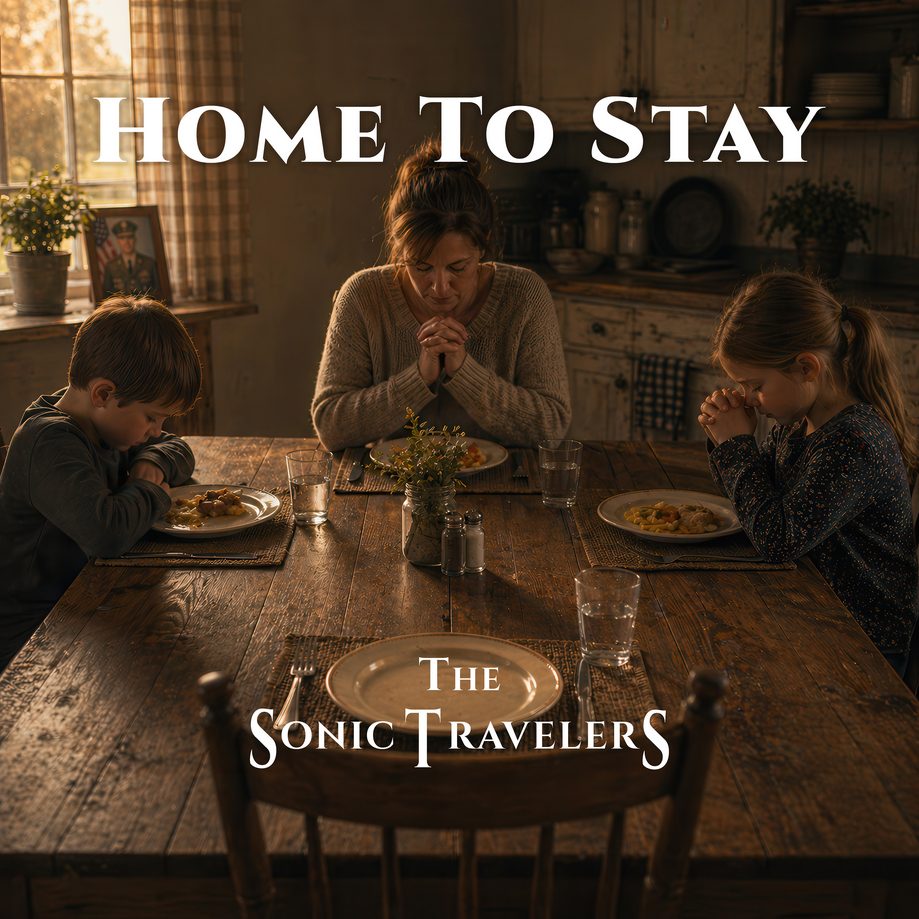
The decision to focus on the human story rather than the politics is the song’s defining choice and its greatest strength. War and military service are subjects that can easily become politically charged, but Home To Stay deliberately sets the politics aside to focus on the people, the families living through the separation and the soldiers trying to make their way home. This focus on the human cost and the human experience, regardless of one’s views on any particular conflict or policy, allows the song to honor the genuine sacrifices and struggles of military families and veterans without becoming entangled in political debate. The empty chair at the table belongs to every family that has sent a loved one to serve, and the song speaks to that universal experience rather than to any particular political position.
The narrative that songwriter George Aiello developed from the empty-chair image follows both sides of the separation, the family waiting at home and the soldier trying to return. This dual perspective is what gives Home To Stay its depth, the song honoring both the service member and the family, recognizing that military service affects not only those who serve but everyone who loves them and waits for them. The family carrying on at home, managing the uncertainty and the fear and the daily reality of absence, bears its own kind of burden, and the song gives voice to this often-overlooked experience alongside the experience of the soldier. The journey the soldier makes back home, through injury and recovery, is matched by the journey the family makes through the waiting, the two narratives intertwining toward the hope of reunion that the title promises.
The arc of the song, moving through separation and uncertainty and injury and recovery and hope, traces the full emotional journey of a military family’s experience. The separation is the initial reality, the loved one gone and the chair empty. The uncertainty is the constant companion of those waiting, never knowing what each day might bring. The injury introduces the genuine danger and cost of service, the recovery represents the long and difficult process of healing, and the hope is what sustains the family through all of it, the hope that gives the song its title, the hope of the loved one coming home to stay. This emotional arc gives the song a narrative completeness, the journey from the empty chair toward the hoped-for reunion structuring the entire ballad.
The country genre arrangement is well suited to this material. Country music has a long and honorable tradition of honoring military service and giving voice to the experiences of veterans and their families, the genre’s commitment to storytelling and its connection to working communities making it a natural home for songs about service and sacrifice. The country ballad form provides the emotional directness and the narrative clarity that Home To Stay requires, the genre’s storytelling tradition allowing the song to tell its story of separation and hope with the kind of straightforward emotional honesty that the subject demands.
The tribute dimension of Home To Stay extends the song beyond art into genuine support for the community it honors. As a tribute to wounded veterans and military families, the release highlights several nonprofit organizations that support wounded veterans and their families, including the Wounded Warrior Project and the Fisher House Foundation and the Gary Sinise Foundation and Operation Second Chance. This practical dimension transforms the song from a meaningful tribute into a vehicle for actual support, the release directing attention and potentially resources toward organizations that provide real help to the veterans and families the song honors. This commitment to supporting the community the song celebrates reflects a genuine care that goes beyond artistic gesture.
The Sonic Travelers’ broader artistic identity shapes the song’s character. Founded by songwriters George Aiello and John Ingram, the project explores stories and memories and relationships and places through original music that blends country and folk and rock and Americana and pop. Drawing inspiration from the great singer-songwriters of the 1960s through the 1980s, the project places stories and characters at the center of the listening experience, and Home To Stay exemplifies this storytelling focus, the song being built around the characters of the waiting family and the returning soldier rather than around abstract sentiment. The project’s guiding idea, that every song is a destination and every listener travels a different road to reach it, reflects a commitment to music that is genuinely listened to rather than merely heard.
While The Sonic Travelers embrace modern production tools, including AI-assisted music technology, every song begins with human songwriting, the melodies and lyrics and arrangements and creative direction developed by the songwriters themselves. This approach uses technology to help bring the human-written songs to life as they were originally imagined, the human creativity remaining at the center while the tools serve the realization of the songwriters’ vision. The story and the emotional truth of Home To Stay are human creations, the empty chair and the family’s journey and the soldier’s return all emerging from genuine human songwriting.
Home To Stay is the sound of an empty chair at the table and the hope that it will one day be filled again, a country ballad that honors the genuine sacrifices and struggles of military families and veterans. The Sonic Travelers have focused on the people rather than the politics, telling a story of separation and recovery and hope that speaks to every family that has waited for a loved one to come home. The chair sits empty, the family waits, and the hope endures. The Sonic Travelers have made a tribute that honors both those who serve and those who wait, and in supporting the organizations that help wounded veterans and their families, they have turned a song of hope into an act of genuine care.