There is a particular and painful realization that can arrive at the end of a relationship, the moment when you understand that the help you thought you were providing was no help at all, that the role you imagined yourself playing as healer or rescuer or support was a comforting story you told yourself, and that in truth you were not part of the solution but part of the problem. This is among the hardest truths to accept, because it requires surrendering the flattering image of yourself as the good partner, the one who was trying to help. Rumour Den have built a song around exactly this realization, and Part of the Problem, released May 1, 2026, tells the story of a relationship between two damaged people and the protagonist’s devastating recognition that he was mistaken in thinking he was helping, a melancholic and human piece of storytelling that shows how far this Northern Irish duo have grown as songwriters.
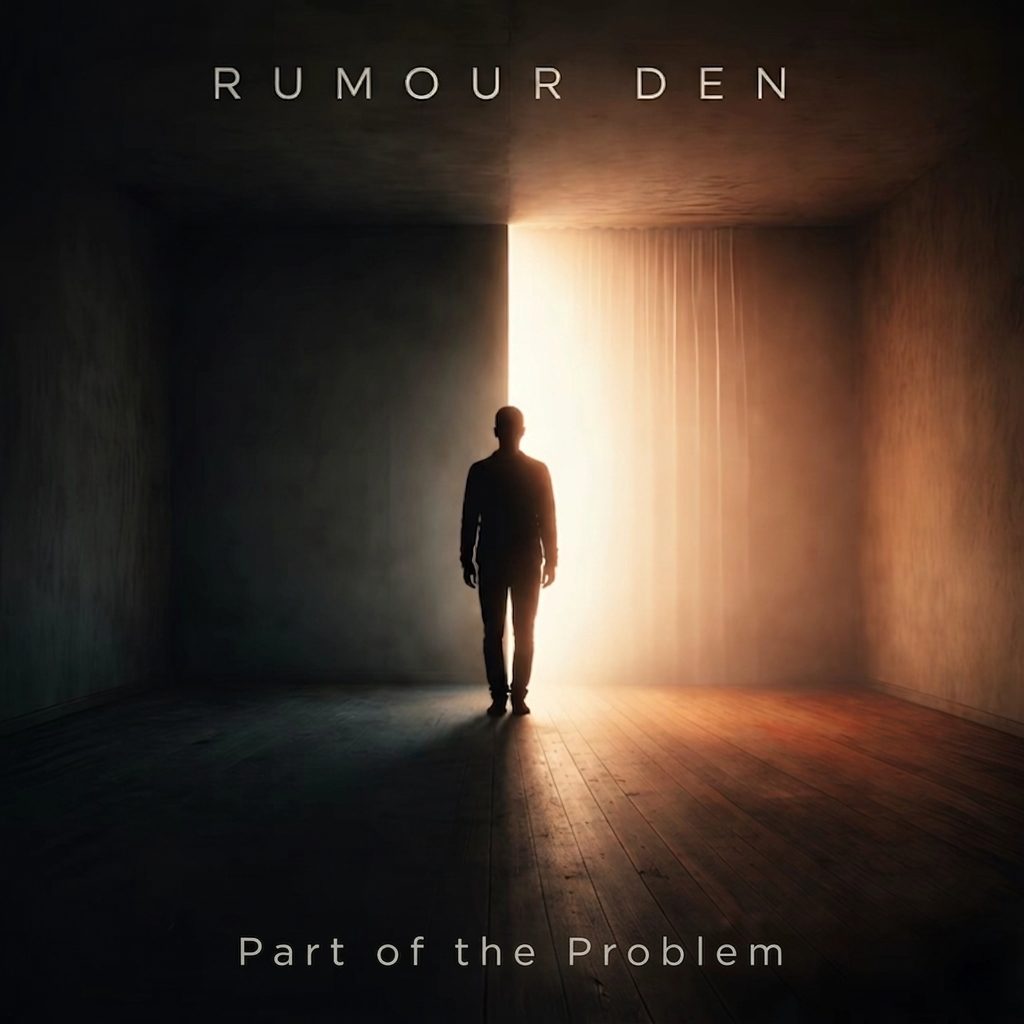
Rumour Den is the vehicle for the melancholic, dark, reality-infused songs written by AJ Gilmore on lyrics and vocals and Steve Simms on guitar and music, a partnership that stretches back to 1990. Their themes of love and loss and loneliness and alienation are universal, and while they hail from Northern Ireland, their songs could be about anyone anywhere, the human truths they explore transcending any specific place. Part of the Problem exemplifies this universality, the painful realization at its center being something that anyone who has examined a failed relationship with genuine honesty might recognize, the specific story opening onto a universal experience of self-deception and its undoing.
The emotional core of Part of the Problem is the protagonist’s hard realization, and the song’s treatment of it is sophisticated and unflinching. The nature of the relationship is deliberately left unspecified, the song refusing to tell us whether it was an illicit affair or a long-term relationship gone stale or a short-term one that burned bright and died. This ambiguity is a strength, allowing the song to speak to any kind of relationship, the focus remaining on the realization rather than the specifics. As the relationship ends, the protagonist finally understands that what he thought was a healing process was nothing of the kind, that at best the relationship was a holding pattern and at worst it delayed the beginning of the other person’s healing. The recognition that he was part of the problem rather than the solution is a genuinely difficult truth, the kind of self-knowledge that requires real courage to accept.
The song’s wisdom deepens in its treatment of the protagonist’s resistance to this truth. He argues his case, as the song describes, attempting to defend his role and his intentions, but the song delivers a profound insight in response, the recognition that love is not a debate to be won or lost. The protagonist’s argument, however reasonable it might seem, cannot change the fundamental reality that how the other person feels is simply how she feels, her emotional truth not subject to his persuasion or his justification. This is a mature and important understanding, the recognition that we cannot argue someone into feeling differently, that another person’s emotional reality exists independent of our explanations and our intentions, and that respecting this reality means accepting it rather than debating it.
The musical approach that Rumour Den brings to Part of the Problem reflects their distinctive philosophy. From the outset of their partnership, Simms recognized Gilmore’s natural talent for compelling lyrics, and rather than asking Gilmore to fit words over completed compositions, Simms chose to compose music to serve the lyric, creating the right musical backdrop and sonic atmosphere for each subject. This lyric-first approach is central to the band’s identity, the music existing to serve the story rather than the story being squeezed into a predetermined musical form, and Part of the Problem demonstrates this philosophy in practice, the music shaped to carry the specific emotional journey of the lyric.
The song’s structure embodies this service to the story. Part of the Problem has purpose and drive and rhythm, beginning with urgency before shifting as the realization hits the protagonist, the dynamic movement of the music mirroring the emotional movement of the narrative. This is sophisticated songwriting, the music tracking the protagonist’s journey from the initial urgency of his self-justification to the deflation of his realization, the shifts in the music embodying the shifts in his understanding. The song is catchy and accessible to a broad cross-section of rock and alt-rock lovers without relying on clichéd choruses or wailing guitar solos, the accessibility coming from genuine craft rather than from formula.
Gilmore’s rich, melancholy-tinged vocals are the perfect vehicle for this material, carrying the emotional weight of the realization without histrionics or showing off. The restraint of the performance is essential, the story told the way it needs to be told rather than overwhelmed by vocal display, the melancholy in the voice matching the melancholy of the realization. This commitment to serving the story rather than showcasing technique is the essence of Rumour Den, the band prioritizing genuine emotional communication over the impressive but empty gestures that lesser artists rely on.
Part of the Problem follows the single Sea of Trees in the run-up to the band’s forthcoming album, fittingly titled Relapse, a reference to the way that music functions for Gilmore and Simms as something between a blessing and a curse, an addiction that keeps pulling them back in. After reworking older material with a new sound, ideas for new songs poured out, and the pair had well and truly relapsed into the music they could never quite escape. Recording at Einstein Studios in Antrim under producer Frankie McClay, the band is releasing roughly one song a month in the lead-up to the album, and Part of the Problem demonstrates the growth that the long-delayed return to music has produced.
Part of the Problem is the sound of a hard truth finally accepted, the devastating recognition that you were never the cure you imagined yourself to be. Rumour Den have crafted a piece of melancholic storytelling that confronts self-deception with unflinching honesty, the music serving the lyric and Gilmore’s melancholy vocals carrying the weight of the realization.
How she feels is how she feels, and no argument can change it. Rumour Den have made a song about the hard work of seeing yourself clearly, and its honest reckoning with the stories we tell ourselves lingers long after the last melancholy note.