Last opens like a warning already too late to prevent anything. The Pixel Rain do not picture collapse as a distant spectacle, but as the ordinary consequence of people in power treating the future as disposable. Released on June 18, 2026, the single introduces A Sense of Danger through a mixture of political disgust and cold anticipation. Its strength lies in refusing heroic resistance, instead placing the listener inside the uneasy moment when authority still stands, yet the world beneath it has begun to look perhaps permanently damaged beyond repair.
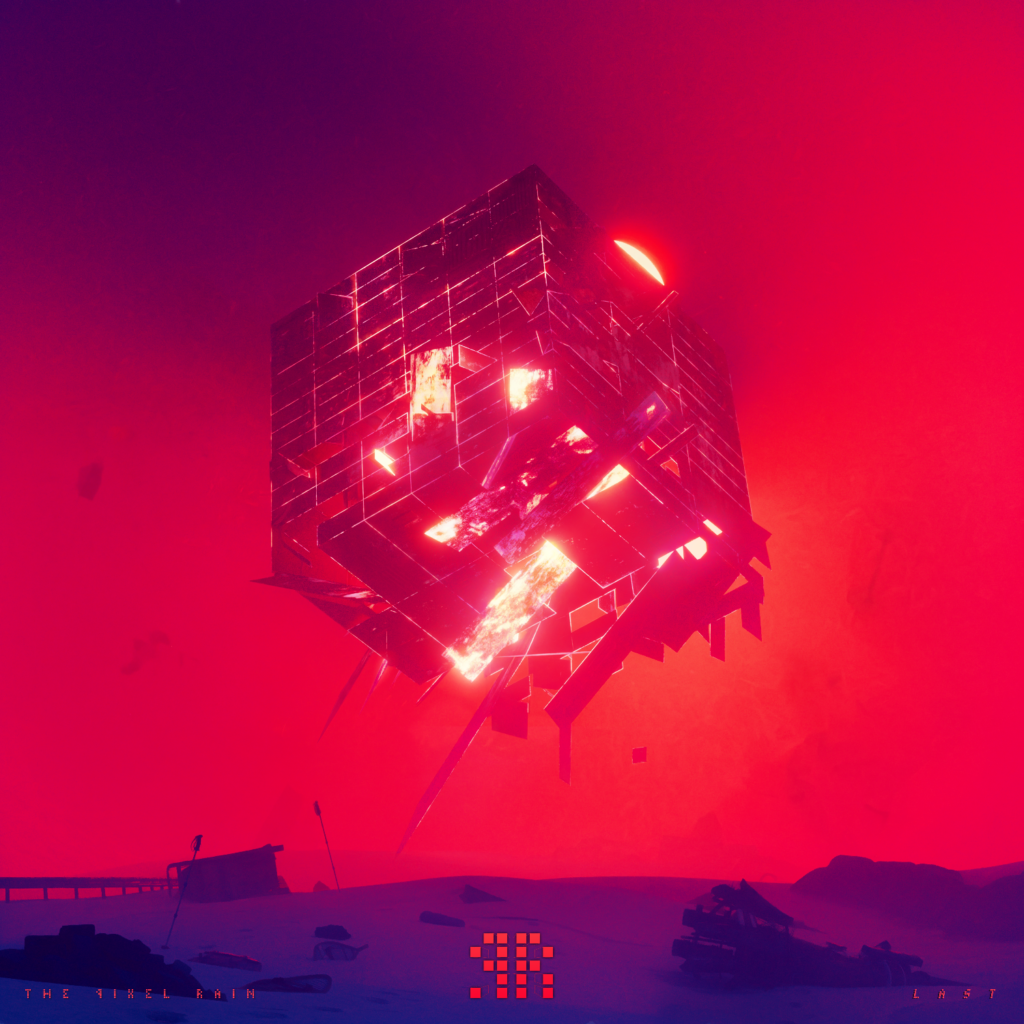
Áron Siegler’s frustration with modern authority gives the song its pressure, but the writing avoids narrowing that anger into one country or one political figure. His Hungarian background adds personal weight, especially when considering how power can shape memory, language, and belonging across borders. Still, Last works because it leaves room for listeners to recognise their own versions of control and decline within their lives. The song does not explain its villains in detail; it sketches the poisoned inheritance they may leave behind and lets that future feel disturbingly plausible.
The most immediate change is musical. Post punk guitars move closer to the centre, giving the track a more physical edge than a purely electronic arrangement could provide. Siegler keeps the industrial textures, atmospheric electronics, and driving rhythms that have defined The Pixel Rain, but the guitar now behaves like a blade cutting through machinery. That balance prevents the song from becoming either a nostalgic rock exercise or a sterile studio construction, allowing abrasion and melody to occupy the same tense space without cancelling each other out in equal measure.
The influence of The Jesus and Mary Chain and The Horrors can be sensed in the song’s preference for damaged beauty, but Last never feels trapped inside borrowed style. Siegler uses guitar noise as emotional architecture rather than decoration. The rougher surface gives the political theme a body, making social unease feel less like an idea and more like pressure against the nerves. Beneath that texture, the melodic instinct remains clear, ensuring the track has enough shape to linger after its harsher elements have finished making their first impression today.
There is something fitting about a song on authority being built through a changed creative process. Siegler deliberately moved away from his usual workflow, and that disruption seems to have opened a less controlled, more immediate side of the project. Once guitar entered the foreground, the rest apparently developed with unusual ease. That natural momentum can be felt in the finished track, which sounds considered without becoming overmanaged, as though the song discovered its own path once the central tension between human friction and electronic order had been fully established.
The title Last is brutally economical. It might refer to survival, finality, endurance, or the last generation forced to inherit consequences created by leaders who will never face them. That ambiguity suits a song concerned with the future because it leaves the listener uncertain about what exactly is ending. The word also carries a challenge: who lasts, what lasts, and what kind of world remains after power has consumed the systems meant to sustain it. The track keeps those questions open, refusing the comfort of a clean or reassuring answer.
Its accompanying video, filmed in Hungary, sharpens the song’s connection between personal origin and public identity. Siegler appears with Balázs Fűr, András Melles, Máté Breier, and Máté Király Gyeőry, presenting The Pixel Rain as a full band rather than a solitary studio construction. That choice matters because the track’s tension becomes communal when performed by visible bodies. Nothing feels ornamental. The video suggests that although the project is largely shaped through Siegler’s writing and production, its live form depends on friendship, shared history, mutual trust, and collective force in motion.
The London and Hungarian dimensions of The Pixel Rain do not compete here; they create useful friction. Southeast London offers the underground context in which Siegler developed the project, while Hungary remains tied to the emotional and political roots behind Last. The result is music that feels displaced without being detached at all. It belongs to more than one place, and that instability deepens a song already concerned with authority, inheritance, and the worlds people carry with them after crossing borders, changing scenes, or watching familiar institutions harden around them.
As the lead single from A Sense of Danger, Last establishes an album world built around power, consumerism, social unease, and post apocalyptic imagery. Yet it does so without cramming every theme into one track. The song functions better as a doorway, revealing the temperature of the coming record rather than summarising its entire argument. Its broadened palette suggests that the album may treat genre as a shifting tool, using guitars, electronics, rhythm, and atmosphere according to the pressure required by each subject rather than maintaining one fixed static formula.
Last ends up feeling less like a prediction than a document sent from the early stages of damage. The systems are still visible, the leaders still speak, and daily life has not yet disappeared, but something fundamental has begun to corrode. The Pixel Rain capture that uncomfortable middle state with discipline, keeping melody close while letting noise stain its edges. What remains after the track is not an image of ruins, but the colder thought that ruins are often designed slowly, in public, by people insisting everything is under control.