Navigating the delicate space between contemporary classical composition and heartfelt acoustic nostalgia requires an artist willing to let go of overproduced perfection in favor of raw, breathing human execution. When vintage analog keyboards, century old upright pianos, and environmental field recordings merge with rich orchestral arrangements, the resulting body of work transcends a standard release to become an essential sanctuary for anyone who values tactile warmth over sterile digital precision. Acclaimed UK composer, producer, and multi-instrumentalist Tim Lea Young achieves that exact remarkable milestone on his expansive September full length project titled A Transformation Of Nature In Art. Released on September 10, 2026, the fifteen track album serves as a brilliant testament to organic musicianship, deep personal history, and an unhurried approach to art.
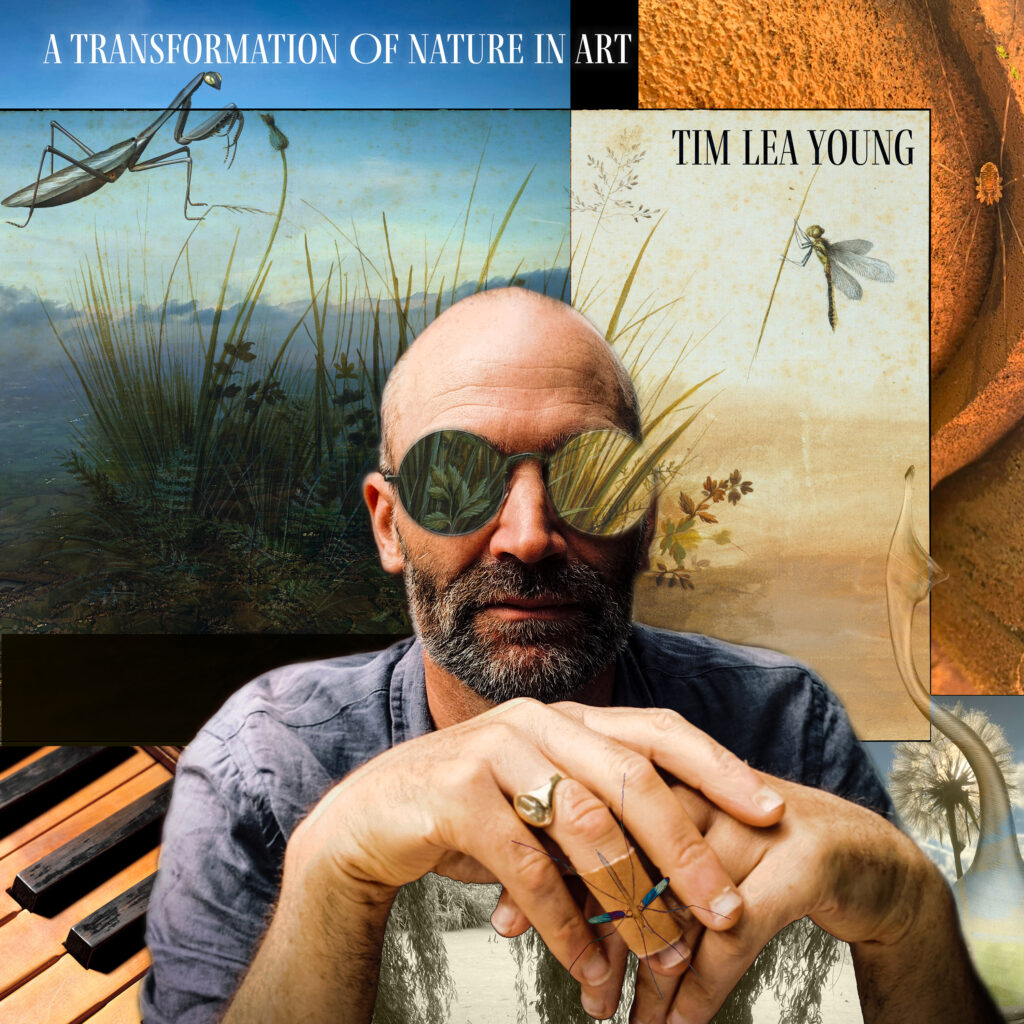
Operating with a distinct analog cast of characters collected over years of dedication, Tim Lea Young treats his equipment not merely as tools, but as living participants in the creative process. The record is built around an extraordinary lineup of instruments, anchored by a magnificent Steinway Concert Grand piano that served as both the catalyst and backbone of the entire project. Alongside it sits a vintage 1966 tone wheel Hammond M102 organ with its Leslie speaker spinning in perfect mechanical harmony, a venerable 100 year old Broadwood upright piano carrying decades of hidden stories, a lush 22 piece string orchestra, eccentric vocal touches, subtle percussive elements, and an acoustic guitar that once belonged to Tim’s late father. Notably absent from the entire tracklist is a single electronic element; everything heard on the record was played, sung, strummed, plucked, or struck by actual human hands.
The story behind A Transformation Of Nature In Art began with an irresistible invitation to record on a pristine Steinway Concert Grand, an opportunity no dedicated composer could ever turn down. Many of the underlying compositions actually began their lives years earlier on his father’s humble acoustic guitar. Translating those old guitar sketches onto the grand piano became one of the most deeply satisfying phases of the creative journey. Over the years, these songs had lived multiple lives, frequently getting dressed up, reworked, overproduced, and fussed over in the way songs often do when an artist struggles to leave them alone. For this record, the guiding philosophy was beautifully straightforward: stop overthinking and just play them with honesty and conviction.
Across its fifteen meticulously crafted tracks, the album balances sophisticated orchestration with a wonderfully playful and unpretentious spirit. Opening with the warm, inviting tones of Greenacres, the record moves gracefully through evocative pieces like The View, Tomorrow Never Comes, and Disappear before guiding the listener into the cinematic expanses of The Free City, Montelimar, Rasavat, and Samata. The journey continues through the serene waterways of The Serpentine, the pastoral charm of Fairy Dell and its gorgeous companion piece Fairy Dell Strings, the rustic pulse of Shipley, the historical resonance of Belloc, the shimmering light of Aureole, and finally concludes with the touching intimacy of Ketita. Every single track on the album is deliberately named after a specific place, a cherished person, a guiding belief, or a lived experience that mattered deeply enough to earn its own musical monument.
Musically, the production manages to treat orchestral grandeur and playful spontaneity as entirely compatible ideas. Piano lines frequently trip over themselves with joyous imperfection, while Hammond organ swells arrive like unexpected but utterly welcome guests in a crowded room. Tim Lea Young does not take himself too seriously, even when surrounded by gear with a combined age of nearly two hundred years and more than a few genuine ghosts lingering in the corners. That playful humility preserves a rare sense of intimacy, making the listener feel as though they are sitting right there in the room while the notes are being born.
Tim Lea Young’s storied career as a composer, producer, and multi-instrumentalist spans contemporary classical music, cinematic arrangements, television scoring, early music commissions, and notable collaborations with artists like UNKLE. Yet, under his own name and through projects like M3ON, this latest offering feels exceptionally personal. The absence of digital sequencing forces every performance to breathe on its own terms, allowing natural micro-timing variations, room reverberations, and acoustic string resonances to shape the listening experience. It is a masterclass in how to capture the living essence of sound without relying on artificial enhancements or modern shortcuts.
What makes the release stand out so brilliantly on Apricot is its complete lack of corporate pretense and absolute dedication to organic artistic expression. In a contemporary musical landscape frequently flooded by plastic loops and rushed production trends, Tim Lea Young offers a sincere, heartwarming contribution that celebrates the sacred bond between composer, instrument, and listener. The album functions as an essential, comforting haven for anyone who understands the deep emotional necessity of acoustic warmth, thoughtful arrangements, and music built on real human history.
As momentum continues to gather around this landmark September release across independent music blogs and contemporary classical playlists, A Transformation Of Nature In Art establishes a formidable benchmark for acoustic storytelling. It highlights a mature, visionary creator operating at the absolute peak of his powers, laying down a solid foundation for an ongoing musical journey that proves authentic craftsmanship will always resonate deeply with the human soul.
Surrendering to the final decaying piano chords and trailing acoustic resonance of the closing track leaves a warm, deeply peaceful feeling hanging softly in the quiet room. The steady, hypnotic progression slowly tapers off into a serene silence that leaves your spirit elevated, your heart light, and your mind completely at peace. A Transformation Of Nature In Art achieves its noble creative mission with quiet, radiant grace, delivering an essential, heartwarming body of work that reminds us why acoustic music was magical in the first place and why its organic beauty will echo forever.