
A record made in adolescence can preserve convictions its creator has spent the rest of his life reconsidering. Anger remains where it was left, the questions sound urgent, and an imagined future carries none of the complications that eventually arrived. Tivoli Boy returns to such a beginning with A Fairytale – Chapter One, a six-track EP released on August 27, 2026, revisiting material whose original chapter dates to 1995. The Oslo-based artist now works primarily as a scientist. This release opens the door to his earlier musical life, when the end of the world seemed a more plausible destination than paradise.
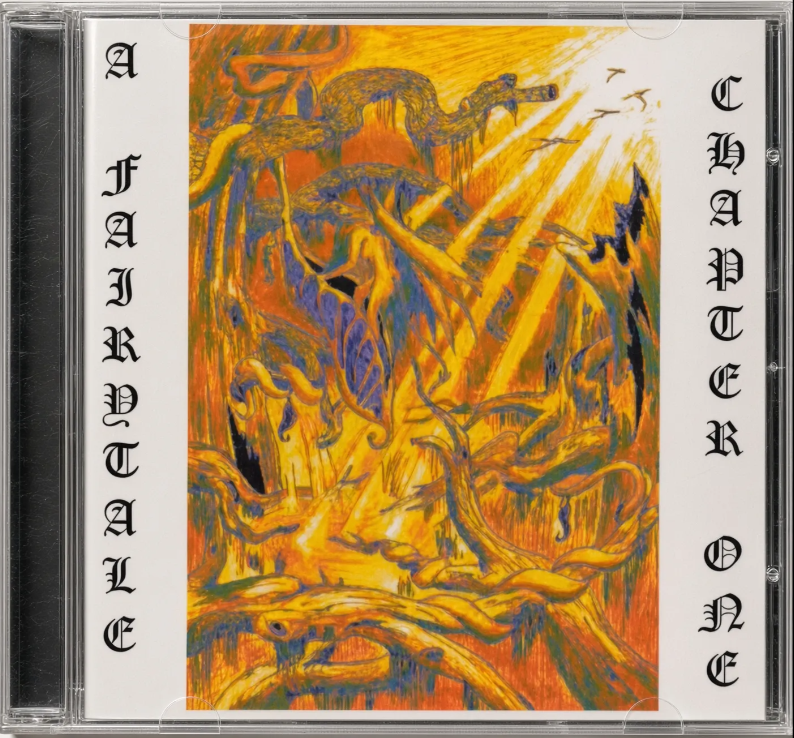
Behind the current name is the former frontman of Mental Illness, a high-school trio active during the early and mid-1990s. Norway’s emerging black metal scene supplied an atmosphere of aggressive rebellion, and the young band initially embraced its confrontational spirit. According to the artist’s account, one founding member became Christian during the earliest rehearsals, a detail that captures the competing beliefs surrounding the project. It is a remarkable piece of band history, though its importance here lies less in the shock value than in what followed. Questions about faith became part of the music’s developing identity.
The decisive change came through discovering Minas Tirith, the Norwegian band whose death-metal and progressive-rock approach gave the frontman another direction to consider. With the drummer’s agreement, Mental Illness began moving towards reflections on catastrophe, abandonment and the possibility of hell or paradise. Rebellion acquired a philosophical purpose. The central assumption was bleak: God had left humanity, and existence appeared to be travelling towards something terrible. That premise gives Chapter One its place within the larger project. These songs belong to the beginning of an argument that would continue changing as their author entered university and built another professional life.
That history is useful because the reissue invites listeners to encounter an early position within an unfinished conversation. The artist connects Mysterious Thoughts, from 1994, and the original Chapter One with the hellish opening of his narrative. The forthcoming Chapter Four, scheduled for November 2026, is intended to reach a very different conclusion, considering whether life might instead be moving towards paradise. Between those points sit three decades of thought. Revisiting the first chapter therefore means returning to uncertainty from the perspective of someone who has continued living with it, rather than treating youthful conviction as a settled verdict.
The tracklist begins with Terminal 10, a title whose numbered destination offers an appropriately ambiguous entrance. A terminal can suggest departure, arrival or something final, and those associations sit comfortably beside a project concerned with where existence is heading. Without assigning the song a narrative its creator has not supplied, its position gives the sequence an intriguing first signpost. The listener then reaches Welcome to Hell, where ambiguity gives way to a direct announcement. As an opening pairing, the titles establish movement followed by destination, introducing the darker side of the conceptual framework before any eventual promise of release.
Welcome to Hell is identified as a ballad, an interesting choice within the band’s abrasive early background. A ballad allows a phrase this confrontational to carry reflection as well as menace, giving the subject room to become personal. The artist also notes that traces of the former Christian member’s contribution remain audible at its very end. That makes the song a small piece of preserved history. A musician whose beliefs diverged from the project still occupies part of the recording, leaving competing spiritual perspectives within the same work. The past has survived in a detail that could easily have disappeared.
Solution Is Near follows, bringing the possibility of an answer into the sequence. Its title has an impatience familiar to anyone who has spent too long wrestling with a difficult question: surely clarity must be approaching. In the context of this project, however, the eventual answer remains decades away. That distance gives the phrase additional interest for a listener arriving in 2026. The early work can be encountered with knowledge of its creator’s later direction, while retaining the uncertainty that belonged to its original moment. The song’s placement offers a suggestion of resolution before The Sorcerer introduces another, more mysterious presence.
Together, those titles show why the fairytale framework is a useful setting for Tivoli Boy’s interests. Fairytales accommodate danger, transformation and powers their characters do not fully understand, allowing enormous questions to enter through recognisable images. The Sorcerer belongs naturally to that vocabulary, while We Are the Youth brings attention back towards the people making the music. The collective wording suits a work that began within a school-age band, carrying the force of a shared declaration. There is poignancy in seeing that youthful identity preserved by an artist whose present life has moved so far beyond rehearsals and performances.
The final title, Darkbell – The Signal to God, returns explicitly to the question of communication. If the project’s early premise involves divine abandonment, a signal suggests some remaining desire to reach whoever has departed. That is an evocative closing idea, even without claiming a specific account of the song’s lyrics or arrangement. It also finds an unexpected connection with the artist’s later explanation of his work. Hearing David Bowie’s Starman and The Man Who Sold the World encouraged him to consider music as a possible means of communication within his own speculative understanding of the universe.
Tivoli Boy describes that understanding through his Paradise Machine theory, imagining the universe as a constructed system whose direction might ultimately be benevolent. This is his personal hypothesis and the conceptual background of the later music. Its interest within the project is the change it represents. A young musician once assumed humanity was approaching hell; the scientist now entertains the possibility of a destination at the opposite extreme. The musical sequence gives that reversal a form through which it can be explored, connecting the emotional force of an adolescent question with the explanations its author developed afterwards.
The original material was recorded in a professional Norwegian studio, giving these ideas a lasting document beyond the band’s immediate circle. The artist has not performed concerts since the period spanning 1993 to 2005, making the return primarily a recording project rather than a renewed stage career. His planned conclusion also changes the instrumental emphasis: Chapter Four is described as an acoustic album built around nylon-string guitar and cello. A preliminary vocal-and-guitar demo offers an early glimpse of that direction. The journey’s endpoint is being conceived through a different musical scale, making the raw origins worth revisiting.
A Fairytale – Chapter One offers something more particular than a nostalgic return to a vanished band. It preserves the moment when rebellion began turning into inquiry, with the musicians still close enough to their beginnings for both impulses to remain visible. Its six titles carry catastrophe, expectation, youth and the wish to make contact, supplying an evocative entrance to the larger story. The most compelling reason to follow Tivoli Boy is the time he has allowed that story to occupy. He has kept the original question alive long enough for his answer to change. The first chapter remains where the search began.


