
There is a specific kind of song that succeeds purely because its central metaphor is so universally applicable that nearly anyone can pour their own particular struggle into it, and Climb That Mountain builds its entire foundation around exactly that accessibility. The mountain here is never defined as any single specific hardship, and that deliberate openness is the song’s smartest choice. Grief, self doubt, starting over after loss, the exhausting effort of simply making it through a genuinely difficult stretch of life, all of it fits comfortably within the same climbing metaphor, and songwriter David Rader has been direct about wanting that universality rather than narrowing the song toward one particular narrative.
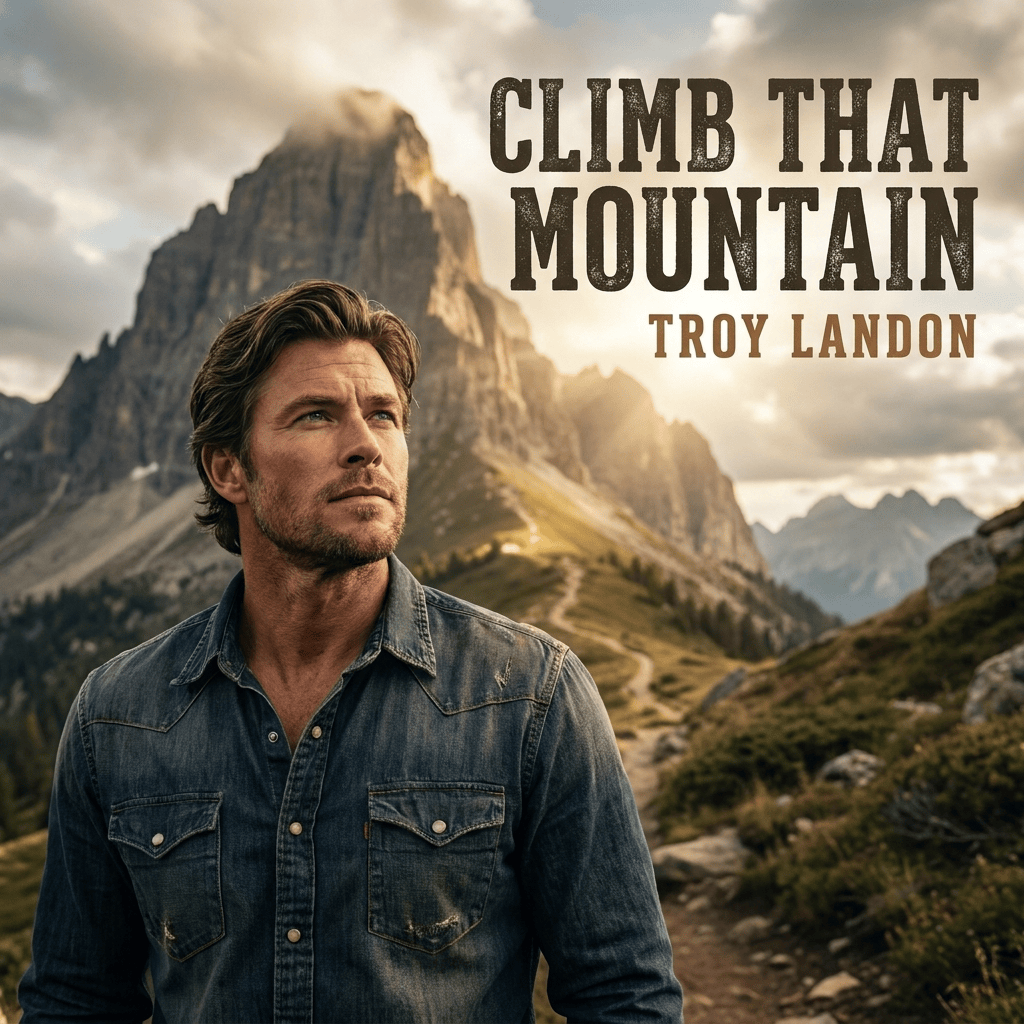
Troy Landon, the virtual country artist created by Rader through Thunderstrike Records, represents a genuinely unusual approach to bringing this material into the world. Rather than a traditional band or solo artist working through conventional studio collaboration, this project grew from Rader’s own decades of songwriting experience, now given voice through AI assisted production tools paired with his direct, hands on creative oversight across every stage of the process. That distinction matters for understanding how Climb That Mountain actually came together, since the songwriting itself remains fully human authored, Rader’s own accumulated storytelling instincts shaping the lyrics and emotional direction, while the technology functions as a tool for realizing that vision rather than generating the underlying creative content independently.
Musically, the track draws from a genuinely deep well of classic and nineties country influence, with Rader citing figures like Johnny Cash, Merle Haggard, Kenny Rogers, and Travis Tritt among the artists whose storytelling traditions shaped his own approach to songwriting over the years. That lineage shows up clearly in the song’s story first construction, prioritizing meaningful lyrical content and genuine emotional connection over flashier production techniques that might otherwise distract from the actual narrative being told. Country music has always valued this kind of directness, trusting a well told story delivered with genuine conviction to carry more weight than elaborate arrangement choices, and Climb That Mountain stays firmly rooted in that tradition even while incorporating considerably more modern production methods than the genre’s earlier eras would have had access to.
What gives the song real emotional credibility is its refusal to promise that climbing gets easier simply because someone keeps trying. Rader has been explicit about wanting the track to feel genuinely hopeful without pretending that overcoming hardship happens without real difficulty attached. That distinction carries real weight, since plenty of songs built around perseverance themes tend toward oversimplified encouragement that can feel hollow to anyone actually in the middle of genuine struggle. Climb That Mountain instead frames strength as something closer to persistence despite fear rather than the absence of fear altogether, a considerably more honest and ultimately more useful framing for listeners who might be reaching for this song during an actual difficult moment rather than simply enjoying it as background listening.
Particular attention was paid to vocal delivery throughout the track’s production, with specific words and phrases deliberately emphasized to carry maximum emotional weight at exactly the right moments. That kind of careful vocal shaping matters enormously for a song built around this kind of universal, metaphor driven message, since the difference between a line landing with genuine resonance or falling flat often comes down to precisely how it gets delivered rather than simply what words appear on the page. Rader has described this emphasis work as central to the entire production process, understanding that the way a specific word gets stressed can fundamentally change how a listener experiences an entire line.
There is something worth noting in how Rader has framed the significance of this release beyond its individual content, positioning Climb That Mountain as representative of what he wants both Troy Landon and Thunderstrike Records to stand for more broadly, music built around genuine purpose and connection rather than simply filling space within a catalog. That stated ambition gives the song additional context as an opening statement for a considerably larger creative vision, one specifically interested in exploring how new technology might allow independent songwriters to bring long developed creative ideas into finished, shareable form without requiring traditional studio infrastructure or conventional band collaboration.
The reaction Rader has described receiving from an early listener, a coworker who told him the song revealed something genuine about his character and his ability to reach people through his writing, speaks to the kind of personal connection this material seems built to generate. That anecdote reinforces the song’s underlying philosophy directly, since Rader has repeatedly emphasized wanting his music to make listeners feel genuinely understood rather than simply entertained, an ambition considerably more achievable when the underlying songwriting carries real emotional specificity even while working through broadly universal imagery.
Working entirely outside traditional recording studio infrastructure, developed instead through a digital, AI assisted production workflow that Rader directed personally from initial concept through final master, Climb That Mountain represents something genuinely novel within country music’s current landscape without abandoning the genre’s core storytelling values in the process. Rader has framed this technological approach not as a replacement for genuine songwriting craft but as a new avenue allowing accumulated creative ideas, in his case years of lyrics and song concepts, to finally reach a real audience. As the opening entry in what he has described as a growing catalog built around distinct human stories told through Troy Landon’s evolving musical identity, Climb That Mountain functions less as an isolated single and more as a genuine statement of purpose, proof that a well told story about persistence can still land with real weight regardless of the particular creative process used to bring it into the world.


