
There is a growing unease at the heart of our relationship with technology, a sense that machines are no longer content merely to run our systems but have begun to encroach on the most fragile and human territories of feelings and emotions and memory. We feel this drift in our daily lives, the way that technology increasingly mediates our emotions and reshapes how we connect, and there is genuine value in art that confronts this mutation directly. Maxwell McFriend, the musical alias of Pasquale D’Amico, has created exactly such a work, and Bipolarismo Tecnologico, released June 12, 2026 via EMIC Entertainment, reflects on the technological drift of the present while imagining a dystopian future in which machines begin to colonize our emotional lives. Across eight tracks of narrative electronic music, the artist from Puglia builds a sonic map of contemporary anxieties, a record that looks to the future in order to speak about the present.
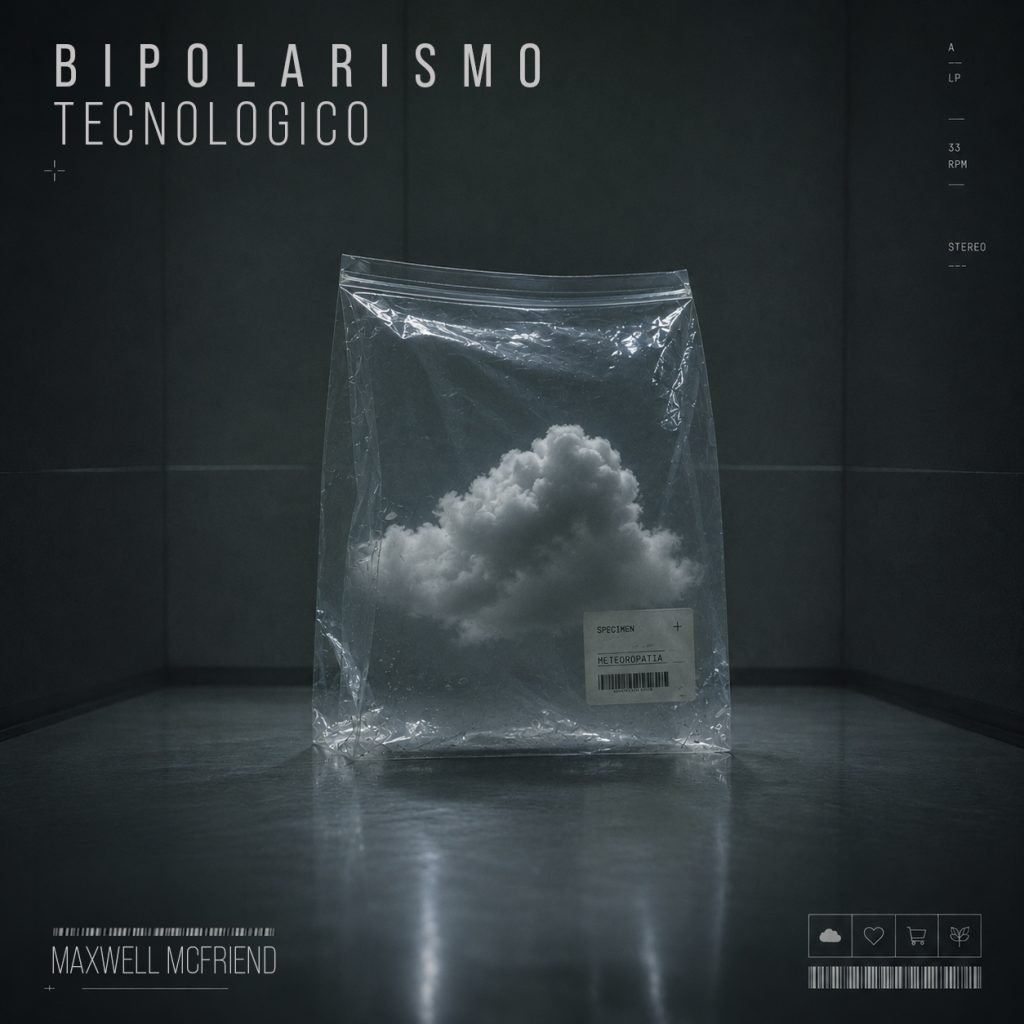
The central vision of Bipolarismo Tecnologico is both timely and unsettling. The album begins from an observation of our relationship with technology as a deep mutation of perception and desire and human connection, imagining a future in which the machine becomes not merely an external presence but an emotional filter, a force that reshapes how we feel and communicate. As McFriend describes it, the album comes from the idea that technology is changing not only the world around us but the very way we experience emotion, imagining a future in which feelings are archived and programmed and replaced. This is a genuinely provocative concept, the prospect of our emotions becoming subject to technological control and manipulation, the most intimate human experiences colonized by the machine. This vision gives the album its conceptual depth, the music exploring a dystopian future that feels uncomfortably close to our present.
The musical approach that McFriend takes perfectly embodies the album’s themes. Bipolarismo Tecnologico is built from layered writing and unstable architectures, the production working through samples and melodic fragments and dark harmonic shifts and structures that keep changing their form. This deliberate instability is central to the album’s purpose, the music itself carrying the same instability that the concept describes, the fragments and short circuits and darker zones all coexisting within the same space. As McFriend explains, he wanted the music to carry the instability of the concept, the fragmented, shifting structures reflecting the disorientation of a world where technology reshapes emotion. This is sophisticated artistic thinking, the form of the music embodying its content, the unstable architectures making the listener feel the very tension between control and disorientation that the album explores.
The title track Bipolarismo Tecnologico opens the album by establishing its central concept. The title, which translates to technological bipolarism, captures the album’s vision of a divided, unstable relationship with technology, the oscillation between control and disorientation, between the human and the automated. This opening track introduces the fractured, dystopian sonic environment that the album inhabits, establishing the tension and instability that will run throughout. The very concept of technological bipolarism suggests the swing between extremes that characterizes our relationship with technology, the simultaneous attraction and unease, the dependence and the fear.
Tumi Ami? follows, its title posing a question in Bengali that asks whether you love, a poignant inquiry into emotion within the album’s technological landscape. This question of love and feeling, posed within the context of the album’s exploration of programmed and archived emotions, carries genuine weight, the question of whether genuine feeling can survive in a world where emotions are subject to technological manipulation. Meteoropatia brings the concept of weather sensitivity, the condition of being affected by atmospheric changes, perhaps suggesting the way that external forces shape our internal states, the human sensitivity to forces beyond our control mirroring our vulnerability to technological influence.
Oracolo, meaning oracle, evokes the ancient idea of prophecy and divine knowledge, perhaps reimagined in the technological context as the algorithmic prediction and the data-driven prophecy of our digital age. The oracle that once spoke for the gods becomes, in the album’s dystopian vision, perhaps the machine that predicts and shapes our desires, the technological oracle that claims to know us better than we know ourselves. Ricordati di Spendere, meaning remember to spend, brings a pointed critique of consumerism, the command to spend reflecting the way that technology and commerce relentlessly push us toward consumption, the imperative to keep spending embodying the commercial forces that drive our technological landscape.
Il Negozio di Giocattoli, meaning the toy shop, shares its title with the novel that McFriend wrote, placing this track at the heart of the album’s dialogue with literature. The toy shop carries unsettling connotations in a dystopian context, the place of childhood innocence and play perhaps transformed into something more sinister, the toys becoming symbols of the manufactured desires and the programmed pleasures of the technological future. This track’s connection to the novel reflects the album’s intermedial nature, the music and the literature touching at this point, the shared title marking the meeting of the two narrative universes.
Lentamente, meaning slowly, brings a different pace to the album, perhaps a moment of suspension or deceleration within the fractured electronic landscape. The slowness suggested by the title offers a contrast to the album’s instability, perhaps a moment of human time amid the acceleration of the technological world, the slowness being a form of resistance to the relentless pace of technological change. The album closes with Botanico, meaning botanical, which brings an intriguing image of the natural world to the conclusion of this technological dystopia. The botanical, the realm of plants and natural growth, offers a counterpoint to the machine, perhaps suggesting the persistence of the natural and the organic even within the technological future, the botanical closing the album with a reminder of the living world that technology threatens to displace.
The dialogue between the album and McFriend’s novel reflects his conception of art as hybrid, multiform matter. Bipolarismo Tecnologico is in direct dialogue with Il Negozio di Giocattoli, the novel written by the same author, which approaches technological dystopia from a parallel perspective. Music and literature become two autonomous yet connected worlds, two narrative universes that touch and influence each other, the album not being simply a soundtrack to the book but a work that shares its imagery and questions and unease. This intermedial approach reflects McFriend’s long practice of bringing music and animation and video art and literature into continuous dialogue, his language treating sound and image and storytelling as different tools for exploring the same emotional core.
The narrative electronic music that McFriend creates gives the album its distinctive character. The result is narrative electronic music, at times bleak and angular, elsewhere bitter and suspended, reflecting in sound the tension between control and disorientation and between human impulse and technological automation. This narrative quality distinguishes the album, the music telling a story and building a world rather than merely providing sonic textures, the tracks moving through the altered environment of the technological dystopia among fractured melodies and sudden harmonic openings that do not resolve the tension but make it feel even more alive. This refusal to resolve the tension is significant, the album keeping its anxieties open and unresolved, mirroring the genuine uncertainty of our technological present.
The album’s place in McFriend’s evolving body of work reflects his deepening artistic exploration. Following Braccia Rubate all’Agricoltura, released by EMIC Entertainment in 2022, the new album expands his research toward a darker, more futuristic and conceptual dimension. Where the previous record intertwined music and animation within a more grounded intermedial narrative, Bipolarismo Tecnologico works with more fragmented and visionary material, building a sonic map of contemporary anxieties. This evolution reflects McFriend’s continued artistic growth, the new album pushing his hybrid, conceptual approach into darker and more ambitious territory.
Bipolarismo Tecnologico is the sound of our technological anxieties mapped in fractured electronic music, an album that imagines a future in which machines colonize our emotional lives. Maxwell McFriend has created a work of genuine conceptual depth, the unstable architectures and fragmented melodies embodying the tension between human feeling and technological control, the music looking to the future in order to speak about the present.
Feelings archived and programmed and replaced, the machine becoming an emotional filter, Maxwell McFriend has built a record that confronts our deepest technological unease. Bipolarismo Tecnologico is a constantly moving emotional machine, and its sonic map of contemporary anxieties resonates as both a dystopian vision and an unsettling reflection of the technological drift we are already living through.


