
There is a particular magic that happens when musical boundaries dissolve, when classical tradition and electronic textures and improvisation and modern composition come together in a shared artistic conversation. In these meetings of the old and the new, the acoustic and the electronic, the established and the emerging, something genuinely fresh can emerge, a music that honors tradition while continually seeking new forms of expression. Hege Høisæter has created exactly such a meeting, and Himmelskygge, the fourteen-track album released June 30, 2026 on LAWO Classics, celebrates the richness and diversity of Norwegian contemporary song. The acclaimed Norwegian mezzo-soprano brings together an exceptional group of performers and composers, creating a musical landscape where classical tradition and electronic textures and modern compositional voices meet.
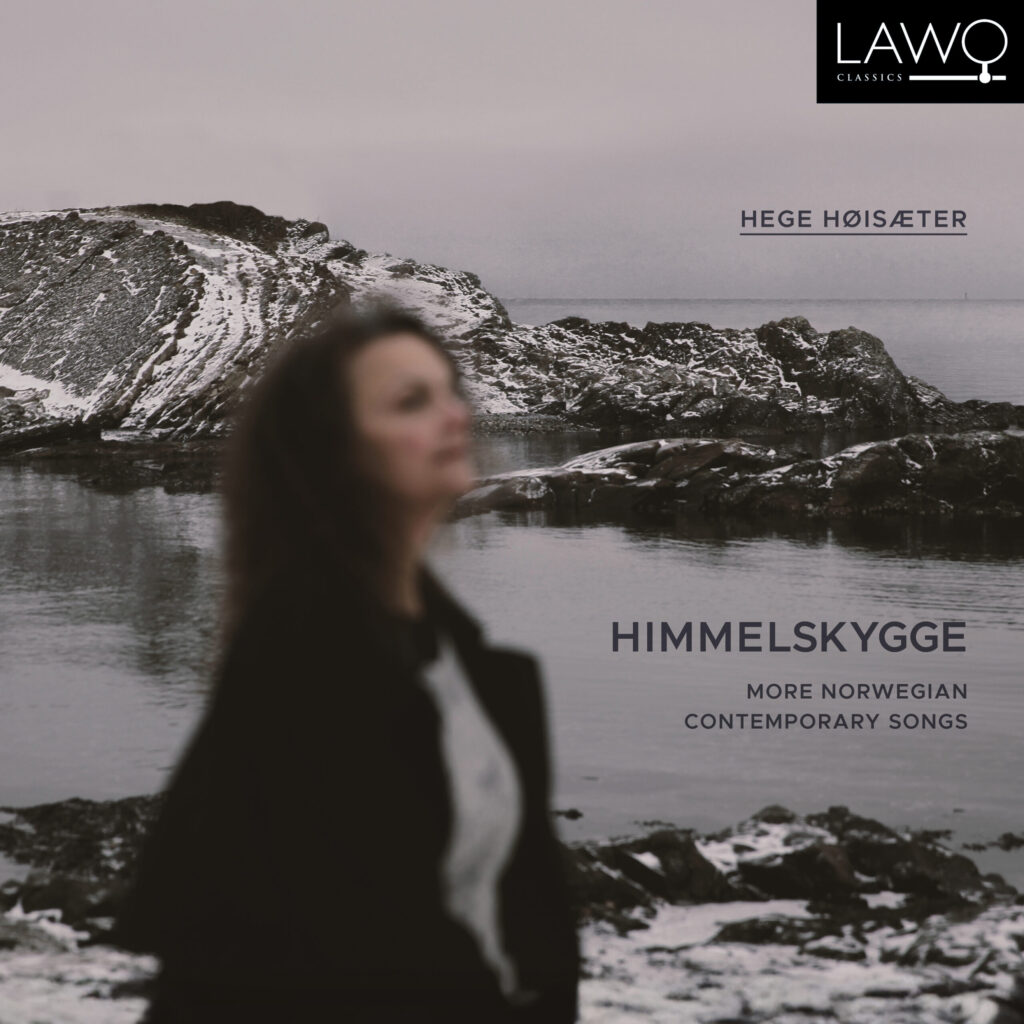
The ambitious vision behind Himmelskygge gives the album its significance. The album celebrates the richness and diversity of Norwegian contemporary song, bringing together classical tradition and electronic textures and improvisation and modern compositional voices. This ambitious vision distinguishes the album, Himmelskygge being not merely a recital but a genuine exploration of the vitality of contemporary Nordic music, the meeting of diverse musical worlds creating a rich, multifaceted landscape. This celebration of contemporary Norwegian song gives the album its purpose, Himmelskygge presenting a compelling portrait of Norwegian contemporary song today, one that embraces tradition while seeking new forms of expression. This ambitious vision reflects Høisæter’s artistry, the album being a genuine artistic statement about the breadth and creativity of contemporary Norwegian music.
The exceptional collaboration behind Himmelskygge gives it its rich texture. Høisæter is joined by pianist Jorunn Marie Bratlie, composer and electronic musician Kari Telstad Sundet, and the jazz ensemble Tov a Vot, consisting of Vetle Nærø on piano and keys, Theis Jakob on bass, and Ola Grindbakken on drums. This exceptional collaboration gives the album its rich texture, the diverse performers bringing together classical and electronic and jazz sensibilities, the collaboration reflecting the album’s spirit of artistic exploration. Tov a Vot play a significant role throughout the project, contributing not only as performers but also as composers, bringing a fresh and genre-defying perspective. This collaboration gives Himmelskygge its distinctive character, the meeting of diverse musical talents creating a landscape where boundaries dissolve, the shared artistic conversation enriching the entire album.
The album opens with Cosima minnes, Olav Anton Thommessen’s dramatic reimagining of Wagnerian material. This powerful opening sets the tone for the album’s adventurous journey, the reimagining of Wagnerian material reflecting the album’s spirit of taking tradition and transforming it into something new. This dramatic opening establishes the album’s ambition, Cosima minnes announcing the adventurous, boundary-crossing journey to come. I denne jord follows, bringing a Norwegian text and a sense of connection to the earth, the title meaning in this earth suggesting themes of nature and mortality and the ground beneath us. This track deepens the album’s exploration, the connection to the earth grounding the album’s more experimental elements in the lyrical Norwegian tradition.
Beati Mortui brings a sacred, contemplative quality, the Latin title meaning blessed are the dead reflecting themes of mortality and blessing and the sacred. This track brings a reverent, contemplative dimension to the album, the blessing of the dead engaging with the profound themes of mortality that run through the collection. Several of the album’s tracks form part of The Drift, a striking song cycle by Kari Telstad Sundet based on texts by Emily Dickinson. I felt a funeral in my brain draws on one of Dickinson’s most powerful poems, the funeral in the brain capturing the poet’s exploration of psychological anguish and dissolution. This track brings Dickinson’s profound poetry to the album, Sundet’s setting combining acoustic instruments and electronics to create an immersive exploration of the poem’s intense psychological imagery.
The only ghost I ever saw continues the Dickinson cycle, drawing on the poet’s characteristically enigmatic engagement with the spectral and the unknown. This track deepens the album’s exploration of Dickinson’s poetry, the ghost embodying the poet’s fascination with the boundaries between presence and absence, the known and the mysterious. Dropped Like Stars brings a beautiful, evocative image, the stars dropping suggesting both beauty and falling, the celestial imagery carrying Dickinson’s characteristic depth. This track brings a luminous, poetic quality to the cycle, the dropped stars embodying the beauty and melancholy of Dickinson’s vision. A certain slant of light draws on another of Dickinson’s most celebrated poems, the certain slant of light capturing the poet’s exploration of despair and revelation in the winter light. This track brings one of Dickinson’s most profound poems to the album, the slant of light embodying the poet’s ability to find deep meaning in a moment of natural observation.
This Is the Hour, subtitled Beati Mortui II, returns to the theme of the earlier Beati Mortui, bringing a sense of a decisive moment and a continuation of the meditation on mortality and blessing. This track deepens the album’s contemplation of mortality, the hour and the return to the blessed dead reflecting the album’s engagement with profound themes. The album then presents three songs from Carl Gustav Sparre Olsen’s Tre sanger, Op. 26, highlighting the lyrical beauty of Norwegian poetry. God natt, meaning good night, brings a tender, peaceful quality, the goodnight suggesting rest and farewell. Bånvise, a lullaby, brings the gentle, soothing quality of a song for a child, the lullaby embodying tenderness and care. Til Min Gyllenlakk, meaning to my wallflower, brings a delicate, floral tribute, the wallflower being celebrated in lyrical Norwegian verse. These three songs highlight the lyrical beauty of the Norwegian art song tradition, bringing tenderness and lyrical grace to the album.
Siren brings an evocative, mythological image, the siren suggesting both alluring song and danger, the mythological figure whose voice draws sailors to their fate. This track brings a note of mythological allure to the album, the siren embodying the seductive and dangerous power of song itself. Before Being Born brings a contemplative, existential quality, the state before birth suggesting the mystery of existence and origin, the meditation on what precedes life. This track brings a philosophical depth to the album, the before being born engaging with profound questions of existence and origin. The album concludes with Gisle Kverndokk’s luminous Ave Verum, bringing a sense of reflection and transcendence to the programme. This sacred piece provides a transcendent conclusion, the Ave Verum being a traditional sacred text that brings the album to a luminous, reflective close, the transcendence offering a sense of resolution and peace after the album’s adventurous journey.
The Drift song cycle at the heart of Himmelskygge gives the album its immersive depth. The striking song cycle by Kari Telstad Sundet, based on texts by Emily Dickinson, combines acoustic instruments and electronics and expressive vocal writing to create an immersive and deeply personal listening experience. Sundet’s dual role as both composer and performer lends a distinctive sonic identity to the album, reflecting its spirit of artistic collaboration and exploration. This song cycle is the heart of the album, the combination of Dickinson’s profound poetry and Sundet’s innovative musical setting creating a genuinely immersive experience, the acoustic and electronic elements blending into something deeply personal. This cycle gives Himmelskygge its emotional and artistic core, the meeting of Dickinson’s timeless poetry and contemporary musical innovation embodying the album’s spirit of dissolving boundaries.
The genre-defying Two Dystopian Songs give the album a contemporary perspective. Tov a Vot’s Two Dystopian Songs offer a contemporary and thought-provoking perspective on modern life, the jazz ensemble contributing not only as performers but as composers. These songs bring a fresh, genre-defying perspective to the album, the dystopian themes engaging with the anxieties and challenges of modern existence, the jazz sensibility adding a contemporary edge. This contribution reflects the album’s collaborative, exploratory spirit, the emerging voices of Tov a Vot bringing their own perspective to the shared artistic conversation. These songs give the album its contemporary relevance, the dystopian perspective connecting the album’s exploration of timeless themes to the concerns of modern life.
Høisæter’s exceptional artistry gives Himmelskygge its expressive power. As an acclaimed mezzo-soprano, Høisæter brings exceptional vocal artistry to the album, her expressive voice carrying the diverse repertoire with skill and emotion. This vocal artistry is central to the album’s power, Høisæter’s mezzo-soprano navigating the classical and contemporary and electronic elements with genuine expressiveness, her voice being the unifying thread throughout the diverse programme. This exceptional artistry gives Himmelskygge its expressive depth, Høisæter’s voice bringing emotional life to the profound texts and the innovative musical settings. This vocal mastery distinguishes the album, Høisæter’s artistry being the foundation upon which the album’s ambitious vision is realized.
The dissolving of boundaries that defines Himmelskygge gives it its distinctive character. Throughout the album, musical boundaries dissolve as established composers and emerging voices come together in a shared artistic conversation. This dissolving of boundaries is central to the album’s identity, Himmelskygge bringing together classical tradition and electronics and jazz and contemporary composition in a genuine artistic dialogue, the different worlds meeting and merging. This dissolving of boundaries reflects the album’s spirit of exploration, Himmelskygge embracing tradition while continually seeking new forms of expression, the meeting of the established and the emerging creating something genuinely fresh. This boundary-dissolving quality distinguishes the album, Himmelskygge being a genuine celebration of the vitality and diversity of contemporary Norwegian music.
Himmelskygge is the sound of musical boundaries dissolving, an ambitious album that brings together classical tradition and electronic innovation in a celebration of contemporary Norwegian song. Hege Høisæter and her collaborators have created a rich musical landscape, the meeting of established composers and emerging voices producing a work of genuine imagination and emotion and innovation.
From the dramatic reimagining of Wagnerian material to the luminous transcendence of Ave Verum, from Dickinson’s profound poetry to genre-defying dystopian songs, Hege Høisæter has crafted a compelling portrait of Norwegian contemporary song today. Himmelskygge embraces tradition while continually seeking new forms of expression, and its dissolving of musical boundaries invites listeners into a world of imagination and emotion, demonstrating the remarkable breadth and creativity of contemporary Norwegian music.


